

To mark World Sight Day, South East Technological University (SETU) is highlighting research that is helping to advance our understanding of eye health and develop new approaches to the treatment and management of eye conditions.
At SETU, researchers are exploring how scientific innovation can be combined with the lived experiences of patients to ensure that new treatments respond to the challenges people face in their everyday lives.
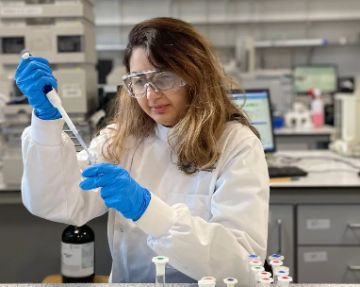
Among this work is research by SETU’s Ocular Therapeutics Research Group (OTRG) into dry eye disease, a common chronic condition affecting millions of people worldwide. Through the integration of Public and Patient Involvement and Engagement (PPIE), researchers are working directly with patients and other stakeholders to better understand their needs and use those insights to inform the development of new therapies and approaches to care.
This World Sight Day, (an annual event to highlight the importance of eye care and raise awareness of avoidable blindness and visual impairment), we take a closer look at this patient-informed research and the work of SETU PhD candidate Dorsa Golestaneh, whose research is helping to bridge the gap between laboratory innovation, patient experience and clinical practice.
Research Insights:
A Patient-Informed Approach to Managing Dry Eye Disease
The Ocular Therapeutics Research Group (OTRG) was founded in 2017 by Dr Laurence Fitzhenry, with a focus on developing and producing new treatments for both chronic and acute eye diseases. The group’s work involves the creation of advanced nano- and micro-formulations, exploring innovative therapies and designing cutting-edge drug delivery systems. Its aim is to improve patient outcomes and quality of life for people living with a wide range of eye conditions.
The group has also been proactive in establishing and embedding Public and Patient Involvement and Engagement (PPIE) into research at SETU. PPIE is a form of engaged research where patients and members of the public play an active role in the research process. It shifts the focus from research being done for or on patients to research being carried out with patients. This approach empowers patient contributors and can help develop solutions that better reflect the unmet needs of the people who will ultimately use them. This year, SETU has joined PPI Ignite, the national network for PPI, network as a member university.
Exploring Innovative Treatments for Dry Eye Disease
One condition the group is working to develop new solutions for is dry eye disease (DED), a common condition where the eyes do not make enough tears or when tears dry up too fast. DED can have a significant impact on people’s daily lives and quality of life and affects more than 340 million people worldwide, being one of the most common reasons people seek care from eye health professionals.
Although a range of treatments are available, from over-the-counter artificial tears to anti-inflammatory medications, they do not always work effectively for everyone. For some people, treatments may provide only short-term relief, while others continue to experience significant symptoms despite treatment. As a chronic condition, DED can affect much more than eye comfort. Persistent symptoms can have a considerable impact on quality of life, highlighting the need for solutions that better reflect the experiences and needs of people living with the condition.
From patient experiences to new therapies and care pathways
SETU PhD candidate Dorsa Golestaneh, a member of the OTRG and supervised by Dr Laurence Fitzhenry, Dr Evan Matthews, Prof Martina Gooney, Dr Muhammad Sarfraz, and Ms Tess Ames (advisor) is exploring how a more patient-informed approach could help improve the management of DED. Currently, Dorsa is in her early fourth year of her PhD, entitled “Developing a Patient-Informed Nano Therapy for the Treatment of Dry Eye Disease by Integration of PPIE”.
Dorsa’s project brings together multiple disciplines (evidence-based, qualitative research, and laboratory experimental work) and stakeholder views. This transdisciplinary research combines evidence from previous projects within the OTRG, longitudinal interviews with people living with DED and drug delivery laboratory research. By listening directly to patients about their experiences and perspectives, the research is helping to inform the development of potential new therapies, particularly artificial tears, which are among the most common therapies for this condition. The research is also contributing to potential new care pathways for people with DED, who usually experience other coexisting disorders (including mental, systemic and ocular), with the aim of developing more personalised approaches to care.
Embedding PPIE into research
By embedding PPIE throughout the research, Dorsa aims to ensure that future approaches to DED management reflect the needs and experiences of people living with the DED condition. Collaboration of the PhD candidate and supervisory team with patients and PPIE contributors (including two patient representatives, a member of a patient advocacy research organisation, and two clinical specialists), as well as an industry stakeholder can help bridge the gap between laboratory research and clinical practice, supporting the development of more effective and patient-centred approaches to care.
Dorsa has actively built her research profile through engagement with both national and international research communities. In June 2026, she attended the European Dry Eye Society Congress (EuDEC) in Milan, where she presented her research to an international audience of dry eye researchers and clinicians. She has also shared her work at the University Hospital Waterford Annual Research Day in January 2026 and the United Kingdom and Ireland Controlled Release Society meeting in June 2025. Her research has also been recognised through her selection as a winner of the 2024 Fighting Blindness Career Development Awards.
This growing body of work has also resulted in new publications. Her latest publication from her PhD research, Comorbid health conditions among adult individuals with dry eye disease: A systematic review of quantitative and qualitative studies was published in the Expert Review of Ophthalmology journal on 10 August 2026.