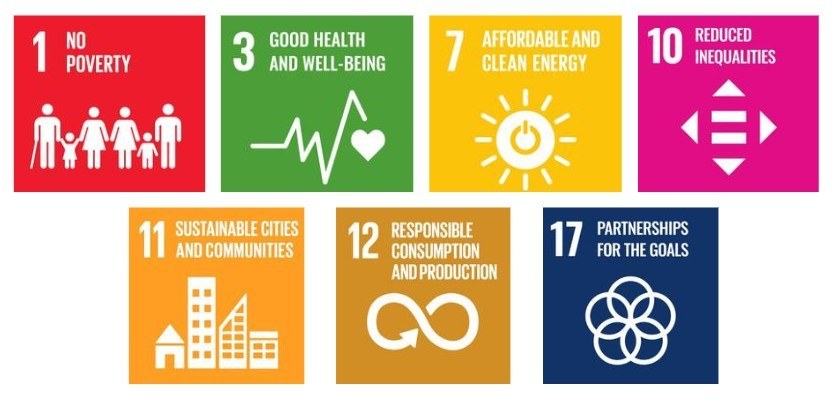

Research team: Antoinette Jordan, Brian Ogilvie.
Challenge
SMEs in the South East of Ireland and in Wales face shared challenges in driving innovation, creating sustainable jobs and supporting regional development in rural and coastal areas. While strong sectoral clusters exist in food and drink, life sciences and renewable energy, collaboration across borders remains limited. Many small business owners respond creatively to challenges but lack access to structured, practical training in innovation management.
Most engage only with early-stage start-up supports and have little opportunity to connect with researchers or innovation networks. There is a clear need for targeted, co-designed entrepreneurship training that equips SMEs with the skills, tools and connections to innovate effectively. Strengthening these cross-border links will build long-term capacity, support new product development and help drive inclusive economic growth.
Impact Summary:
From 2017 to 2021, the BUCANIER project supported 132 SMEs across the South East of Ireland and Wales to strengthen their innovation capacity in the food and drink, life sciences and renewable energy sectors. Using a bespoke Innovation Analysis Tool, each business received tailored support, including over 2,800 hours of mentoring, one-to-one consultancy, group training and cross-border learning events. SMEs were also connected with academic partners such as SETU and Swansea University, enabling access to research supports like Design+, Innovation Vouchers and New Frontiers. The project delivered strong results: 22 new-to-market and 62 new-to-firm products were introduced, and 15 full-time equivalent jobs created. BUCANIER also responded rapidly to COVID-19 with over 1,000 additional support hours, digital workshops and resources to help businesses adapt to online marketing and trading. The project has created lasting value through stronger cross-border networks, enhanced SME-research collaboration and the embedding of innovation practices that continue beyond the project’s lifetime.
Between 2017 and 2021, this cross-border research and support programme significantly strengthened innovation capacity among SMEs in Ireland and Wales, particularly in the food and drink, life sciences, and renewable energy sectors. By facilitating clusters and networks of SMEs, local authorities, and higher education institutions, the project addressed a key gap in innovation management training for rural and remote businesses across both regions.
The initiative empowered 132 SMEs to adopt an innovation mindset through tailored training, mentoring, and peer learning. Using a bespoke Innovation Analysis Tool, the project customised support for each business, including one-to-one specialist mentoring, group workshops, and cross-
border networking events. This combination of in-person and online delivery created a supportive, practical learning environment that enhanced SMEs’ ability to design, develop and bring new products and services to market.
Academically, partners including IT Carlow/SETU and Swansea University gained deeper insights into rural SMEs’ innovation challenges, leading to the development of an online training course with workbook that continue to benefit businesses beyond the project.
The project helped create 15 full-time equivalent jobs and launched 22 new-to-market and 62 new-to-firm products in the cross-border project area. This represents 42% of the overall employment target across all funded projects of the INTERREG Ireland Wales Cooperation Programme, which funded the project - with just 0.3% of the total programme budget, while supporting 11% of the targeted SMEs in the region. These achievements illustrate both microeconomic growth for individual enterprises and wider macroeconomic benefits for the Ireland-Wales cross-border region.
The social impact is equally significant. By fostering sustainable employment and economic activity in rural and coastal communities, the project contributed positively to local welfare and quality of life.
Key activities included over 2,800 hours of mentoring, 10 cross-border events, 1,500 hours of tailored mentor support, 800 meetings, 50 live events, and more than 1,000 additional support hours during COVID-19 lockdowns. Bespoke online workshops, factsheets, and digital days helped businesses rapidly adapt to new market challenges and online trading.
Sector-specific events strengthened cluster collaboration and business development:
· Food and Drink: Exhibitions at regional trade events in Wales, the Food and Drink Expo in Dublin, and the Farming Seaweed workshop in Ennis.
· Life Sciences: Innovation Voucher workshops, technology transfer conferences, and exhibitions at MediWales Conference connecting SMEs with NHS and UK healthcare innovators.
· Renewable Energy: Seminars, industry shows, and exhibitions at the Energy Show in Dublin and the Energy in Agriculture show in Tipperary.
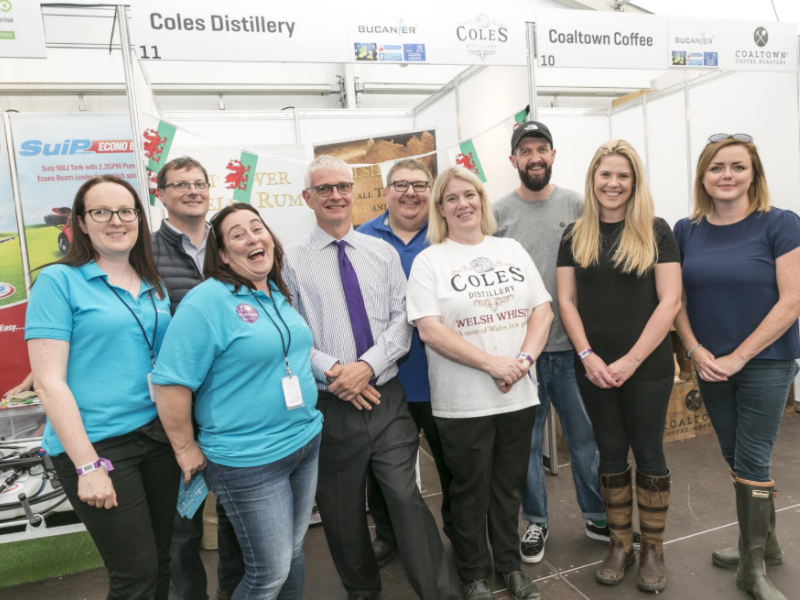
A highlight was supporting 16 enterprises to exhibit at the 2019 National Ploughing Championships in Carlow, Europe’s largest outdoor trade fair with 200,000 visitors. This involved comprehensive pre-event training, funding, networking with EU officials, and extensive media exposure.
The BUCANIER EU project (Building Clusters and Networks in Innovation Enterprise and Research) delivered innovative, bilingual digital entrepreneur education to 132 SMEs across Ireland and Wales.
Focused on cross-border innovation, the project targeted smart specialisation within regional innovation systems, concentrating on the key growth sectors of food and drink, life sciences, and renewable energy, as identified by the Ireland-Wales EU Programme.
BUCANIER facilitated entrepreneur education in both English and Welsh, combining online and in-person delivery. Core themes included design thinking, innovation, equality, diversity and inclusion (EDI), and sustainability. The project developed bespoke resources, such as an Innovation Masterclass Video Series on YouTube, printed Entrepreneur Innovation and Mentoring Workbook, a cross-border Facebook network, worksheets, and workshops delivered before and during the COVID-19 lockdowns. Traditional one-to-one mentoring and consultations with higher education institutions and local authorities complemented these digital offerings.
This blended approach provided tailored support highly valued by participating SMEs. The project created 301 new connections among 173 stakeholders, reinforcing cross-border networks and collaborations. It also contributed to 15 full-time equivalent jobs, 22 new-to-market products, 62 new-to-firm products, two cross-border clusters, and five collaborative partnerships.
The research demonstrated the critical importance of carefully managing entrepreneurship education, clusters, and networks to respect participants’ time, language preferences and delivery modes to maximise impact. Digital education played a key role in supporting rural microenterprises with limited resources and time.
A common cause of innovation failure is ineffective innovation process management. To address this, BUCANIER employed an Innovation Analysis Tool (IAT) to design bespoke work packages tailored to each SME’s unique needs. This Innovation Management Tool (IMT) helped practitioners customise support from one-to-one consultancy through to group learning sessions and cross-border seminars.
Local authority and higher education partners used the IAT before, during and after the project to ensure ongoing, responsive support. This approach adds to the academic and educational impact of the work, demonstrating the value of innovation management tools across diverse sectors, regions and countries.
Overall, the BUCANIER project showcases how digital entrepreneur education, when combined with targeted mentoring and cluster facilitation, can build sustainable innovation ecosystems in cross-border regions, driving economic growth and supporting SME resilience.
Testimonials
Pruex Ltd, Wales: “The first activity we took part with on BUCANIER was the Ploughing event in Ireland [National Ploughing Championships in Carlow, 2019]. That enabled us to meet new target customers that developed into customers, which is great for cashflow in a different country. But it also enabled us to touch base with new suppliers.”
“The biggest thing to propel us from a small to medium-sized enterprise to an international company, which is what we are now, was the IP help [intellectual property] and legal help we were able to ascertain as part of the BUCANIER project. We’ve been able to sell a franchise to South Africa, and based from that office in South Africa we’re now distributing in 6 southern African countries, that is helping us with our objective of leading the fight against anti-microbial resistance.”
Media
Press Release: New EU-funded support for small businesses in Wales and Ireland
The Skibbereen Food Company Matthew Brownie (The Kiwi Culchie) Releases a New Pork Crunch Snack Range
From Local Store to International Markets
Conference presentations
Cross-border bilingual Digital Entrepreneurship Education with the BUCANIER project - Building Clusters and Networks in Innovation Enterprise and Research in Ireland and Wales
Reports
Ireland Wales Territorial Cooperation Programme 2014-2020: MidTerm Evaluation Report. Cardiff: Welsh Government, GSR report number 36/2020.
Videos
BUCANIER Legacy YouTube Video 2017-2021
Innovation Mindset and Design Thinking Training Course Youtube Video
Book
Recipe Book: “Taste of BUCANIER | Blas BUCANIER” - Recipes from Food and Drink Companies in Ireland and Wales
Design+ Technology Gateway at SETU, Applied Bioscience Research Gateway at TUS/MTU, Wexford Local Enterprise Office, Carlow Local Enterprise Office, BIM Bord Iascaigh Mhara, Swansea University: School of Business, Pembrokeshire County Council, Carmarthenshire County Council, British Embassy Dublin.