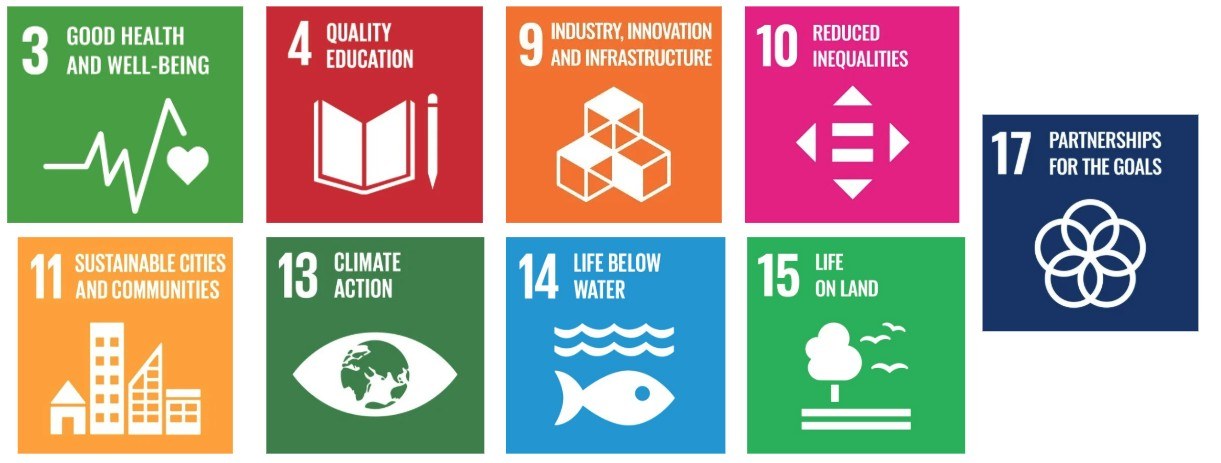

Researchers: Dr Zeta Dooly, Dr Gina Noonan, Dr Paul O'Leary, Dr David Denieffe, Dr Frances Cleary (Walton Institute), Dr Brian Casey, Dr Aisling Tuite, Damien Raftery, Kate O'Keeffe, Dr Ray Griffin, Dr David Allen, Dr Deanna Santoro, Antoinette Jordan, Dr Nataliya Romanyatova, Dr Yvonne Kavanagh.
Challenge:
Rapid technological changes and the diversification of learner needs require higher education institutions to adopt more inclusive, adaptive, and evidence-informed teaching strategies. Educators often lack the structured support and cutting-edge insights necessary to integrate innovations like Universal Design for Learning (UDL), Artificial Intelligence (AI), and Immersive Technologies into their teaching. The SETU Digital Education Conference (DEC) addressed this challenge by creating a sustained national platform for dialogue, co-creation, and knowledge exchange, enabling educators, researchers, policymakers, and industry partners to respond proactively to these educational disruptions.
Impact Summary:
Since 2023, the SETU Digital Education Conference (DEC), delivered by the Faculty of Education and Lifelong Learning and SETU South East Education Research Lab (SeerLab), has become a national focal point for digital education, research and practice. The conference has engaged over 350 delegates from academia, industry, and broader society, influenced institutional and national digital education strategies, and built strong research–industry-social enterprise collaborations with partners including Sanofi, Advance HE, Foróige, Brickfield Education Labs, EIRMERSIVE, PEStech, Better Examinations, Entire, and the Teaching and Learning National Forum.
Regarding the advancement of digital education, SeerLab has promoted the uptake of innovative technologies through school visits, delivered six research projects and four VR pilots (including applications in entrepreneurship and pitch ideation training), and invested in learning resources such as 25 headsets and supporting infrastructure. The group has presented at over 18 conferences (including the Generative AI and Academic Integrity Conference, Mary Immaculate College, 2024) and contributed to policy networks, advisory committees, and forums such as the Department of Education Working Group on Education Research and Futures (with the IUA) and the Civil Service Research Network (CSRN).
The conference has attracted strong political engagement, with speakers including Marc O’Cathasaigh TD, Grace O’Sullivan MEP and an event launch by Dara Calleary TD. By showcasing research, enabling co-designed innovations, and fostering communities of practice, DEC has enhanced educator professional development, improved teaching quality, and elevated SETU’s national and international profile as a leader in digital education.
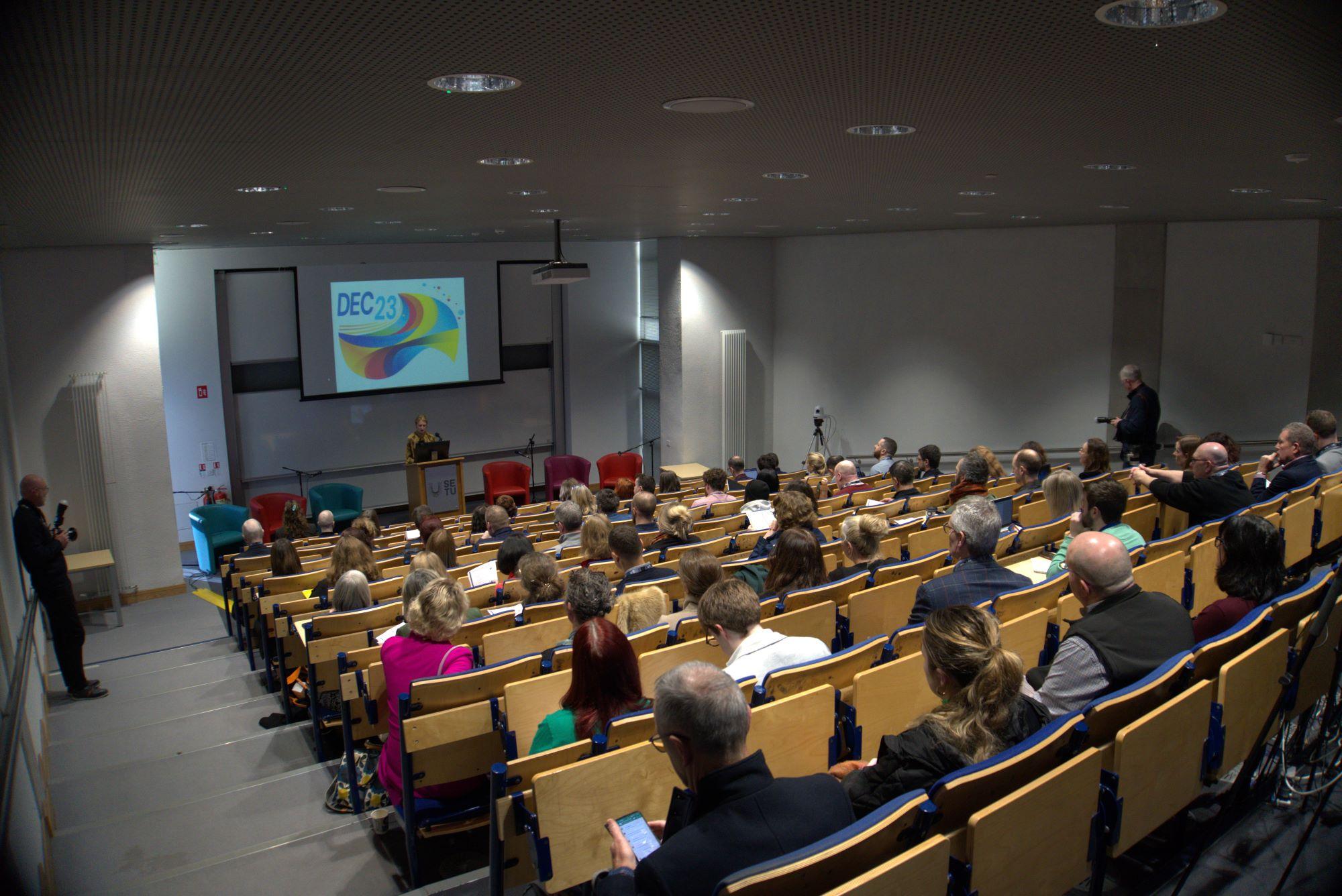
Since its launch in 2023, DEC has transformed Ireland’s digital education landscape by bridging research, policy, and practice. It responds to a fragmented approach to educational innovation and provides a national forum for inclusive, digitally transformative teaching and learning.
DEC has driven educator professional development by showcasing applied research in Universal Design for Learning, AI, immersive learning (VR/AR), and assessment redesign. Attendees include higher education faculty, school educators, policymakers, and EdTech leaders. The inaugural doctoral colloquium engaged over 35 PhD scholars, boosting SETU’s profile and attracting researchers from outside the university. Importantly, DEC is student focused and fosters active student engagement and promotes student governance (e.g. student led panels).
The conference has fostered over 15 industry partnerships (e.g., EdTech Ireland, Eirmersive), leading to successful funding bids, co-authored publications, and collaborative involvement in national proposals such as Research Ireland’s E-AI theme. Dara Calleary TD, Minister of State for Trade Promotion, Digital and Company Regulation, officially launched the Eirmersive network at DEC 2024 where he met with the Irish immersive companies demonstrating at the event, and addressed the audience on the government’s recognition of the Irish immersive technology sector’s importance.
DEC’s policy papers have been presented by Dr Zeta Dooly to Dara Calleary TD and the government. Further policy workshops have influenced debates on responsible AI, UDL policy, and sustainability pedagogy. Collaborations extend across Ireland and Europe (e.g., Trinity College Dublin, TU Dublin, TUS, MTU, ATU, DKIT, EU CONEXUS). The group has presented at over 18 conferences and participated in:
- Government of Ireland, Department of Education:
- Education Research and Futures Working Group member with Department of Education in collaboration with the Irish Universities Association (IUA) 2025
- Evidence for Policy Unit, HEI Research Advocates and Civil Service Research Network (CSRN) 2024
- Appointed by National Adult Literacy Agency (NALA) to the Technical Advisory Committee 2024
- Appointed by Government of Ireland, Department of Environment, Climate and Communications to the Sustainable Development Goals National Stakeholder Forum Committee 2024.
- SETU and SeerLab are members of the National Immersive Education Working Group, established by Eirmersive, with the support of Meta.
- Delivered recommendations on Immersive Learning for Education to Dara Calleary TD, Minister of State for Trade Promotion, Digital and Company Regulation, in 2024 at Outreach event in Dublin.
The work of Seerlab and DEC has resulted in the development and integration of technologies into curriculum modules at SETU including ‘Digital Education and Digital Creativity in Classroom’ (part of the Education and Lifelong Learning master's in education), ‘Management of the Burns Patient' (Faculty of Nursing module) and modules in the Faculty of Business. Seerlab members have also provided external training on digital education.
Evidence of impact is seen in DEC participant evaluations, uptake of DEC outputs on SETU’s Moodle CPD community, and integration of tools into curricula and learning systems. DEC’s wider reach includes media coverage (Irish Independent, Beat FM), a podcast with H2Learning/ETB.
Overall, DEC has enhanced educator confidence, advanced digital transformation readiness, and aligned education policy across sectors, positioning SETU as a national and international leader in digital education.
SeerLab’s research underpinning DEC spans educational innovation, immersive technologies, and inclusive pedagogy. The group draws on interdisciplinary theories and frameworks, including the Community of Inquiry (Garrison, 2010), An Entangled Pedagogy (Fawns, 2022), and UDL principles.
The research addresses critical challenges in learner engagement, equity, and the responsible
integration of digital tools.
In preparation for DEC, SeerLab members engaged in design-based research and action research projects that explored how emerging technologies such as VR, AI, and adaptive platforms impact learner outcomes and educator practices. National SATLE projects (e.g. IGNITION, DDS-Map) and Erasmus+ collaborations (e.g. CITO, EBSN-PDS) provided a foundation for scalable pilot studies and demonstrator tools.
The conference themes and workshops were informed by these research projects, which
demonstrated that inclusive design and adaptive technologies enhance learning access,
particularly for neurodiverse and adult learners.
The group’s work on policy-informed pedagogies led to significant contributions to national UDL implementation guidelines and engagement with frameworks like the UNESCO AI Competency Framework and EU AI Act.
Research findings show that immersive and co-designed learning environments improve learner
motivation, digital literacy, and completion rates in both traditional and lifelong learning settings.
These insights have been translated into conference content that equips educators with concrete pedagogical strategies.
Notably, the DEC was shaped as a research-led initiative, embedding real-time feedback, digital
artefact analysis, and participant-led inquiry. Insights from over 600 attendees across three years have created a robust data set that informs SeerLab’s ongoing research into digital transformation, policy influence, and educational design.
- Technological University Dublin,
- Munster Technological University,
- Atlantic Technological University,
- Technological University Shannon,
- Trinity College Dublin,
- EU CONEXUS partner universities,
- EdTech Ireland,
- Eirmersive,
- HSE Ireland,
- Local enterprise offices and external partners,
- Department of Further and Higher Education, Research, Innovation and Science,
- Department of Education,
- Higher Education Authority.
Digital Education Conference 2024 Report
Digital Education Conference 2023 Report
Research outputs
Dooly, Z. (2024). Immersive Education Working Group Report - Recommendations to Government, 2024.
Dooly, Z., Lodge, E., Moran, L., & Wall, P. J. (2024). Searching for application areas for using AI and VR in HE classroom in Ireland. EDEN 2024, Graza, Austria. https://doi.org/10.5334/uproc.150
Dooly, Z. (2023). Building communities of teachers; stories from the classroom, how to scaffold learning adventures through trust, In Eden Conference
Media
SETU’s inaugural Digital Education Conference explores innovative learning
SETU’s inaugural Digital Education Conference explores innovative learning opportunities
Eirmersive Launch their Network and Celebrate Ireland’s Thriving Immersive Technology Sector
Eirmersive Launches with a Celebration of Ireland’s Thriving Immersive Technology Sector
YouTube
- Technological University Dublin,
- Munster Technological University,
- Atlantic Technological University,
- Technological University Shannon,
- Trinity College Dublin,
- EU CONEXUS partner universities,
- EdTech Ireland,
- Eirmersive,
- HSE Ireland,
- Local enterprise offices and external partners,
- Department of Further and Higher Education, Research, Innovation and Science,
- Department of Education,
- Higher Education Authority.
Researchers: Dr Daithí Ó Murchú, Education Consultant, Dr Gearóid O’Suilleabhain (MTU), Dr PJ Wall (TUD), Dr Moira Maguire (DKIT), Dr Carina Ginty (ATU).
External partners: Sunlife, Advance HE, Better Examinations, SOLAS, NTUTORR, EHID, ALL, EdTech Ireland sponsorship, National Forum T&L, SANOFI, Foróige, Brickfield Education Labs, PESTech.
SETU SATLE internal grants
SETU President’s Scholarships (PhD students)
Erasmus+ KA2
Research Ireland