
Researchers: Dr David Culliton, Dr Phuoc Huyn (SETU engCORE)
Partner enterprise: FLI Global, supported by Design+ Technology Gateway
Challenge:
Aging subterranean concrete containment structures pose a critical risk. Over time, they deteriorate, leading to cracks and leaks that allow aggressive chemicals to escape into surrounding soils, groundwater, and even municipal water supplies. The environmental and public health implications are serious and far-reaching.
Traditional sealing methods, such as liners or spray-on coatings, are inconsistent, labour-intensive, and often ineffective. With increasing regulatory and performance pressures, the industry urgently needs more reliable solutions.
To tackle this challenge, FLI Global, an environmental solutions and technology business, partnered with engCORE at SETU Carlow. Through intensive discussions, the collaboration advanced under the Enterprise Ireland Innovation Partnership Programme, setting the stage for a more robust and scalable solution.
Impact Summary:
The Enterprise Ireland-funded Innovation Partnership Project between FLI Global and SETU Carlow exemplifies how collaboration between academia and industry can deliver applied solutions to complex challenges. The work has led to the development of a novel industrial-grade liquid-containment technology that combines the reliability of geo-engineered surfaces with the strength of a concrete base. Representing a significant innovation in the built environment, the solution addresses critical challenges in the storage and management of fresh water, wastewater, and corrosive liquids. A patent application is currently in progress, reflecting the unique and commercially valuable nature of the technology.
This research enables the creation of more reliable and durable containment systems, supporting improvements in environmental protection, public health infrastructure, and industrial liquid management. Early applications of the new technology will include installation in flocculation tanks, drinking water and service reservoirs, contact tanks, secondary containment systems, and potentially within the mining sector and waterway conveyance systems. The technology not only contributes to sustainability and safety goals but also opens new avenues for commercial exploitation, with the potential to generate a robust stream of intellectual property and revenue.
This research delivers a major advancement in liquid-containment technology, improving the reliability and sustainability of systems used across industry. It meets the EU definition of Industrial Research by enhancing products and processes that carry medium to high technical risk, while also generating patentable intellectual property. The technology is progressing toward patent protection with FLI Global as industry license holder.
The innovation will support FLI Global’s export growth and strengthen local and regional employment. By enabling faster construction of water and wastewater treatment plants, it reduces labour requirements, shortens installation times, and minimises site disruption. These efficiencies improve operational performance, reduce the carbon footprint of traditional methods, and deliver higher standards in health, safety, and long-term structural quality.
At the centre of this work is a hybrid modular system that combines a prefabricated structural unit with a new smart, flexible tile. Traditional containment membranes are prone to bulging, weak bonding, and eventual failure. This system produces a secure fused installation that is more durable and dependable. An embedded leak detection grid enables real-time monitoring, predictive maintenance, and early intervention, reducing costly system failures and downtime.
By adapting technologies from other sectors, this design introduces a disruptive alternative to existing repair methods such as paints or cement kits. It converts passive containment surfaces into intelligent, responsive infrastructure and sets new standards for industries including water, wastewater, mining, and processing.
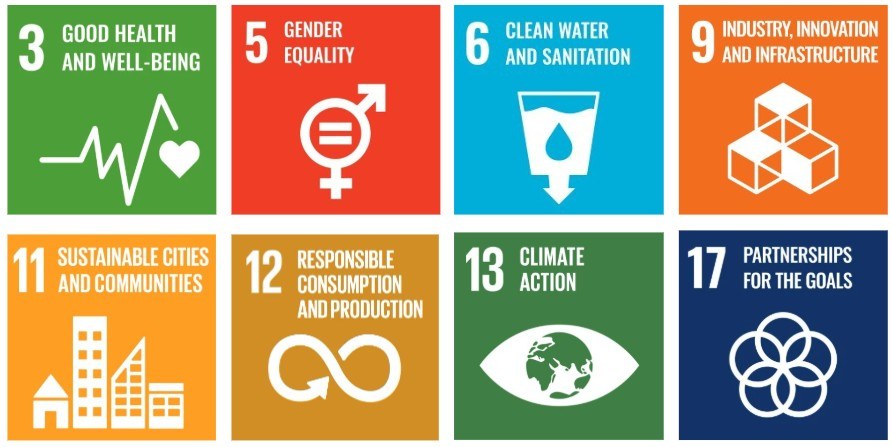
The environmental benefits are significant. The technology contributes to Ireland’s Climate Action Plan 2024 and the EU Green Deal by supporting emission reduction targets for 2030 and 2050. It will enable the rehabilitation and reuse of ageing infrastructure, reduce waste and reliance on cement-based materials, helping to lower emissions in the construction sector.
In recognition of its impact, the project’s principal investigator, Dr David Culliton, received the 2025 Engaged Research and Impact Award for Industry and Commercialisation at SETU’s annual Research Excellence Awards.
This project establishes Ireland as a leader in sustainable, smart infrastructure and lays the foundation for an emerging global field.
This research project developed a sustainable smart technology to address the persistent issue of leak failures in large, subterranean concrete water containment structures. The concept was born from discussions around the lack of effective, long-term protective solutions for ageing infrastructure exposed to corrosive environments, particularly soft water. The core challenge was to create a surface technology that offers durable mechanical protection for internal concrete facades.
The solution took the form of a hybrid modular tile system, designed for both new and retrofit applications. The research team explored the potential of combining pre-cast concrete components with a novel, flexible, fibre-reinforced tile that could adhere to existing structures. This flexibility was critical to enable installation on complex or profiled surfaces such as those found in water and wastewater systems.
Preliminary investigations confirmed the absence of existing systems offering comparable protection and functionality. A key innovation in the research was the integration of an embedded leak detection grid. This enables remote, real-time monitoring of structural integrity and supports predictive maintenance. Designing this system presented unique challenges, as the leak detection layer needed to function without compromising the tile’s flexibility or durability.
The final concept is a geohybrid concrete-based system that is modular, scalable, and adaptable. For existing infrastructure, the tile format provides a retrofit solution for large and otherwise irreplaceable underground assets. In new installations, the technology offers an engineered alternative to current loose-laid geomembrane systems, which suffer from bonding issues and frequent failure.
The research required an interdisciplinary approach, drawing on materials science, structural engineering, and sensor integration. Initial prototypes demonstrated strong potential, and further development refined the system into a practical and commercially viable product. This innovative solution contributes to the protection and extension of critical water infrastructure, offering both environmental and economic benefits through increased resilience, reduced maintenance, and enhanced sustainability.
This project was funded by Enterprise Ireland Innovation Partnership Project.