


"Integrate Education for Sustainable Development into our teaching, learning, assessment and research across all disciplines, equipping our students with the knowledge and skills to navigate a complex and rapidly evolving world, and empowering our graduates to embody sustainability and embrace the opportunities it offers in their careers and in their daily lives."
Sustainability Strategy, Priority 3
SETU is committed to embedding sustainable development across teaching, learning, research, operations and the wider student experience through a whole-institution approach to Education for Sustainable Development (ESD). Sustainability is central to the SETU Strategic Plan Connecting for Impact, which commits SETU to driving sustainable economic, environmental, cultural and social development across the South East region. This commitment is further reflected in the SETU Sustainability Strategy 2026–2030, which positions Education as one of four interconnected strategic priorities alongside Climate, Nature and Impact.
‘Education for Sustainable Development (ESD) empowers learners with the knowledge, skills, values and attitudes to take informed decisions and make responsible actions for environmental integrity, economic viability and a just society, for present and future generations, while respecting cultural diversity. ESD is a lifelong learning process and an integral part of quality education that enhances cognitive, social, emotional and behavioural dimensions of learning. It is holistic and transformational and encompasses learning content and outcomes, pedagogy and the learning environment itself.’
UNESCO, 2021
ESD is explicitly recognised within the United Nations Sustainable Development Goals (SDGs) through Target 4.7 of SDG 4: Quality Education, alongside Global Citizenship Education (GCE). UNESCO further highlights the crucial importance of ESD across all 17 SDGs, recognising that the development of cross-cutting sustainability competencies is essential to achieving a more sustainable, just and resilient future.
Ireland’s National Strategy on Education for Sustainable Development to 2030 further highlights that ESD is grounded in principles of social justice, equity and respect for human rights, and seeks to foster engaged and active citizens of all ages who are motivated to take action towards a sustainable future.
Aligned with UNESCO’s ESD for 2030 Roadmap, Ireland’s National Strategy on Education for Sustainable Development to 2030 identifies five priority action areas:
- Advancing Policy
- Transforming Learning Environments
- Building Capacities of Educators
- Empowering and Mobilising Young People
- Accelerating Local Level Actions
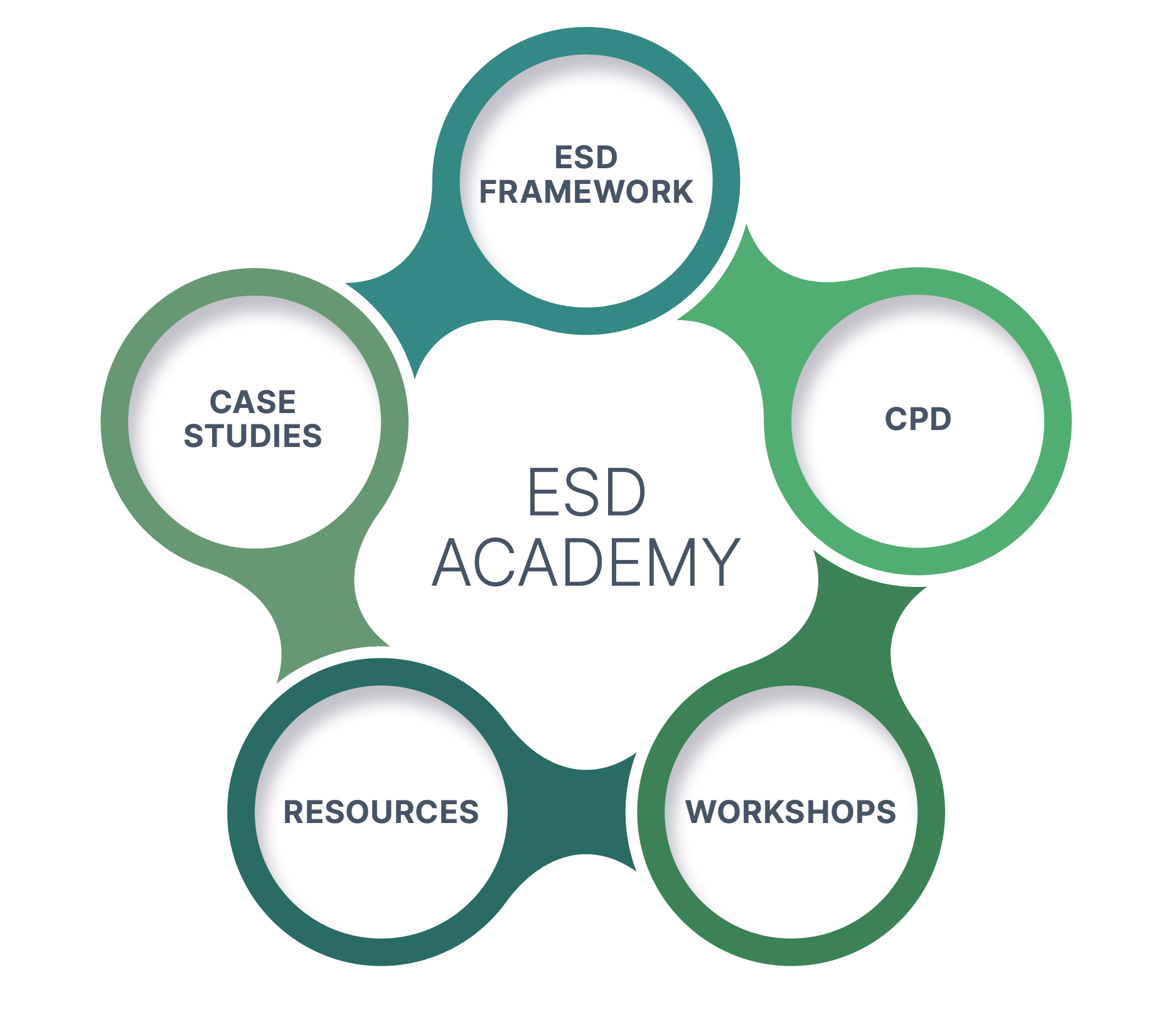
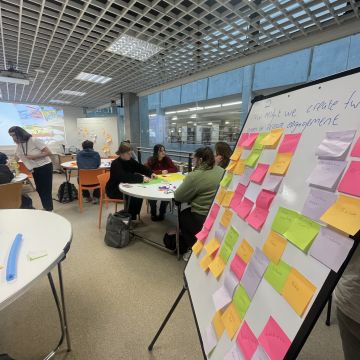
To support implementation across the university through a whole-institution approach, SETU has developed the SETU ESD Academy. The Academy supports staff and students through professional development, curriculum integration support, workshops, collaboration opportunities, practical resources and the implementation of the SETU ESD Framework.
Education for Sustainable Development (ESD) Academy



References
- UNESCO (2020). Education for Sustainable Development: A Roadmap. Paris: UNESCO.
- UNESCO (2021). Education for Sustainable Development for 2030.
- Department of Education (2022). Second National Strategy on Education for Sustainable Development – ESD to 2030. Government of Ireland.
- Advance HE & QAA (2021). Education for Sustainable Development Guidance.
- United Nations (2015). Transforming our World: The 2030 Agenda for Sustainable Development.
- SETU (2023). Connecting for Impact: SETU Strategic Plan.
- SETU (2026). SETU Sustainability Strategy 2026–2030.