
Researchers: Tess Ames, Dr Laurence Fitzhenry (Ocular Therapeutics Research Group, PMBRC, SETU).
Challenge:
Public and Patient Involvement and Engagement (PPIE) involves collaborating with patients and the public throughout the research process to shape priorities, methods, and outcomes. It is essential in pharmaceutical and healthcare research to ensure treatments meet real-world needs. In vision science, particularly in pre-clinical drug development, there is a significant gap in PPIE integration. Complex laboratory processes and limited patient interaction create barriers for both researchers and contributors. This disconnect can result in less relevant and less effective therapies. Integration of PPIE in pre-clinical vision research demands new structures, training, and communication methods to ensure that patient contributions are both informed and impactful at the earliest stages of innovation, leading, ultimately, to better outcomes for patients living with ocular disease.
Impact Summary:
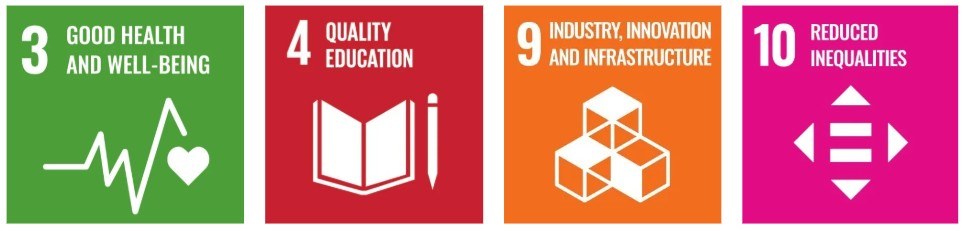
This research pioneers structured PPIE in pre-clinical ocular drug development, addressing a key gap in early-stage pharmaceutical/biomedical research. Through co-designed workshops, tailored training, and embedded PPIE in lab-based PhD programmes, it is reshaping how researchers at SETU and beyond integrate patient priorities into therapeutic innovation. Beneficiaries include academic researchers, patient contributors, and institutional leaders seeking to align science with societal needs. The work advances inclusive, ethical, and impactful research practices, contributing to SDGs on health, education, and innovation, and laying a foundation for more relevant, trusted, and accessible healthcare technologies.
"I am hopeful that my experience and being involved can help drive further advancements."
Adrian Barry - Patient Contributor
This research has introduced structured, meaningful Patient and Public Involvement and Engagement (PPIE) into pre-clinical pharmaceutical and biomedical research, particularly ocular studies, where it has historically been absent. By embedding patient perspectives into the earliest stages, including hypothesis generation, study design, and assessment of translational relevance, it is closing the gap between laboratory discovery and lived experience.
The change is already visible at SETU’s Ocular Therapeutics Research Group (OTRG) and Faculty of Science, where PPIE training is now embedded into PhD programmes such as 'Ocular Nano-Therapeutics through Engagement and Developmental Research Of PPI (ONE-DROP)' and the 'AI Powered In Vitro and In Cell Correlation Model for Drug/Product Efficacy Testing of Anticancer Drugs.' In these projects, patient contributors sit on steering committees, review funding applications, and guide experiments through surveys and interviews. The OTRG Principal Investigator has committed to including PPIE in all future projects. The approach has also been integrated into SETU’s undergraduate and postgraduate curricula, including the new Master’s in Pharmacy, where a patient steering committee will guide programme development.

Patients report feeling empowered to influence future therapies, and researchers are now designing more relevant, ethically grounded studies. For example, Adrian Barry a patient contributor with chronic dry eye disease, stated “I am hopeful that my experience and being involved can help drive further advancements.”
Outputs include a public facing PPIE Framework website, tailored workshop materials, and training now available on the SETU website. Since 2023, four training sessions and multiple roundtables have been delivered, with external partners such as the Dry Eye Foundation and Fighting Blindness. Over 700 members of the patient and public community have engaged with this work, and many have remained involved through advisory roles, research participation, and long-term collaborations.
Impact has extended beyond individual projects to institutional change. SETU has joined Ireland’s national PPIE network, PPI Ignite, becoming one of the first Technological Universities to commit to co-developing embedded, sustainable PPIE practice. Public awareness of eye health issues has also been significantly accelerated through targeted media coverage, public talks, and engagement activities across the South East, nationally and internationally, helping to demystify research processes and highlight preventable causes of vision loss.
These achievements have been enabled by institutional support, cross-disciplinary collaboration, and alignment with national frameworks. By moving beyond tokenism, this work provides a replicable model for patient-informed innovation in health research, setting a precedent for more inclusive, transparent, and impactful science at SETU and beyond.
The foundation for this approach was laid during the ORBITAL (Ocular Research by Integrated Training and Learning) MSCA Innovative Training Network (2019–2024), which brought together universities, clinical partners, and industry to train 15 doctoral researchers in developing new treatments for ocular diseases. ORBITAL was among the first international pre-clinical programmes to formally integrate a Patient Advisory Board and pilot systematic patient involvement. The Ocular Therapeutics Research Group (OTRG) coordinated this work, embedding PPIE into doctoral projects, supervision, and interdisciplinary communication. These early models directly shaped later initiatives at SETU, including NO TEARS and ONE-DROP.
The novelty of this research lies not in the laboratory methods themselves but in how patients were involved in shaping them. Contributors engaged at the planning stage through mapping exercises, co-design workshops, and direct dialogue with researchers. This influenced the selection of meaningful endpoints, acceptability of delivery methods, and consideration of ethical and tolerability issues.
Key insights include:
- Pre-clinical relevance – Patient involvement improves the likelihood that therapies will translate to real-world benefit.
- Communication skills – Researchers and contributors both required structured support, such as glossaries and briefings, to facilitate mutual understanding.
- Accountability – Knowing research would be discussed with patients encouraged greater reflection on societal relevance and ethical responsibility.
- Institutional change – Persistent barriers such as time, funding, and recognition highlight the need for parallel policy work.
This research also generated practical outputs, including the PPIE Framework website and tailored resources guiding both researchers and contributors. Methods and outcomes have been documented, evaluated, and integrated into national and international training platforms such as EUPATI and IPPOSI. Notably, Dr Laurence Fitzhenry was invited to speak at the European Dry Eye Congress in 2024 to discuss Patient Involvement in Dry Eye Research.
Overall, this work has strengthened SETU’s national profile. The university will join the PPI Ignite Network in its next funding cycle, becoming one of the first Technological Universities in Ireland to participate. This positions SETU as a leader in patient-informed, pre-clinical health research and provides a replicable model for embedding PPIE into scientific discovery.
Publications
Ames T, Matthews E, Reynolds A et al. How patient/public involvement impacts the research journey – an overview of the visual impairment research field. Open Res Europe 2023, 3:135 https://doi.org/10.12688/openreseurope.16057.1
Conference proceedings
Media
https://www.setu.ie/news/celebrating-three-years-of-ocular-therapeutics-research-with-orbital
Public and Patient Involvement Project
Adrian Barry, Yvonne Desmond, Mary Bradly, Donna McGreevy, Bram Pietrs (Patient Contributors); Professor Martina Gooney, Dr Evan Matthews, Dr Sharon Kinsella, Dr Geraldine Canny (SETU); Dr Rachel Birmingham, Dr Shannon Lee (Fighting Blindness); Rebecca Petris, Aidan Moore (Dry Eye Foundation); Edel Murphy, Dr Emma Dorris, Dr Michael Foley (PPI Ignite Network).
This research is funded by the MSCA (ORBITAL), the SETU Interdisciplinary Seed Funding Scheme, the SETU PhD Scholarship Award (ONE-DROP), and the TU Rise PhD Scholarship Award.