

Researchers: Dr Evan Matthews, Dr Suzanne Denieffe, Dr Barry Lambe.
Challenge:
People with severe mental illness receiving support from specialist mental health services experience a 15–20-year life expectancy gap, predominantly due to physical health issues. Meaningful lifestyle interventions, such as physical activity are part of the necessary solution to address this challenge. In essence, the noted life-expectancy gap is avoidable and thus is an issue of inequality. To effectively reach people with severe mental illness, therapeutic intervention needs to be integrated into services, as the barriers to physical activity are significant for this population due to complex health and social challenges. Therefore, the 2030 Agenda for Sustainable Development and the SDG principle, “Leave no one behind” is at the essence of this work.
Impact Summary:
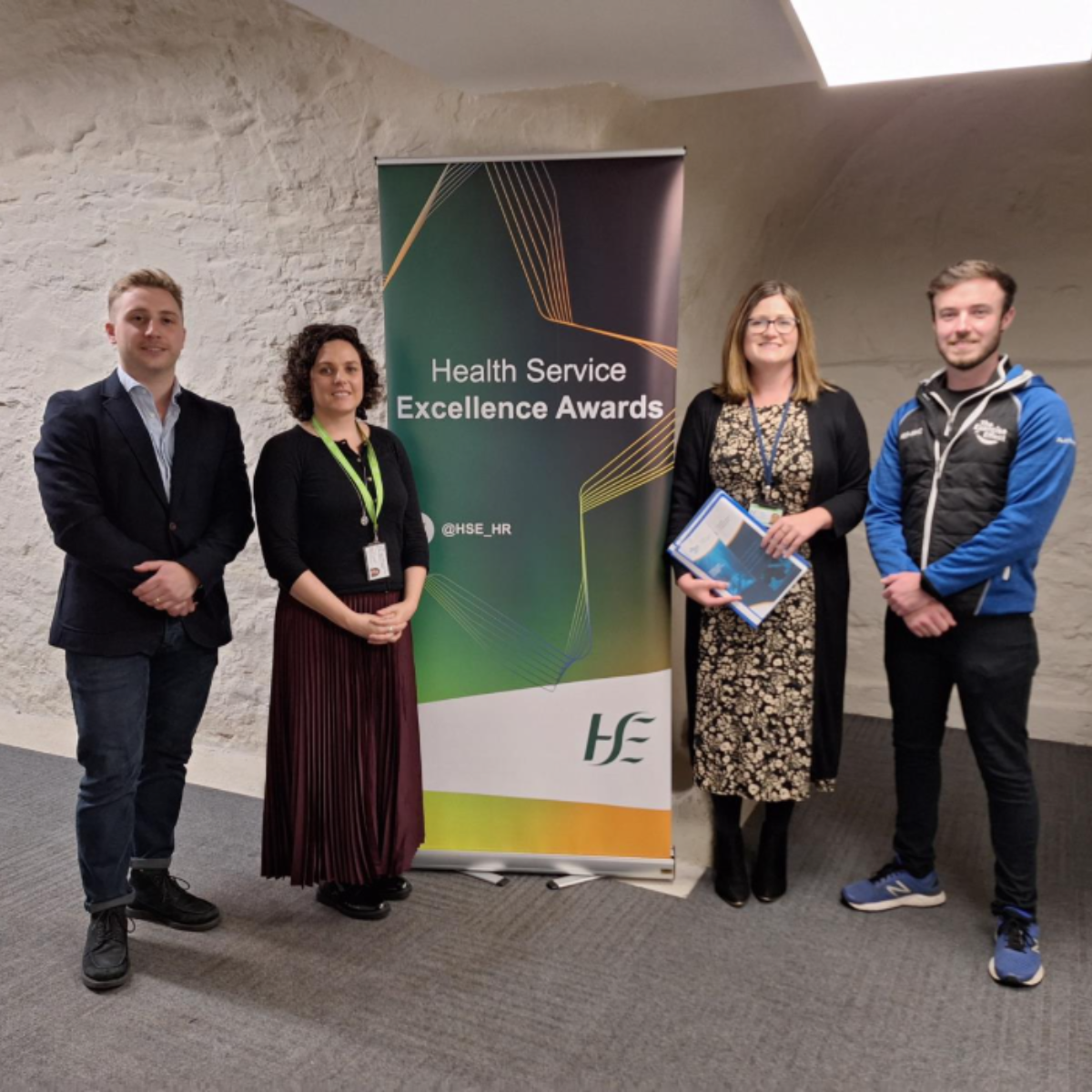
Through the team's prior ‘needs’ research, pilot work to integrate exercise practitioners into Wexford mental health services and concurrent implementation research, they directly reached 369 mental health service users in 2024, improving health and wellbeing of these underserved people. The data predicts that this reach is set to continue. The teams' efforts to create a new way of working, making physical activity accessible in mental health services was recognised by a nomination for the HSE Excellence Awards in 2024. From the team's public engagement work, services in Dublin are now adopting the model of service provision similar to the relevant project, indicating ripple effects of changes in mental health services in Ireland.
Addressing Inequality in Mental Health Through Exercise
This research responded to low levels of physical activity and associated poor health outcomes among individuals using mental health services in Ireland. It also identified that healthcare professionals often felt under-skilled in supporting exercise-based interventions, and that service users faced complex barriers to participation. Informed by this evidence, a collaborative, solution-focused approach was adopted to integrate structured physical activity into routine mental health care.
Working in partnership with Wexford Mental Health Services (HSE), Sports Active Wexford, and later, Mental Health Ireland, a pilot project introduced the role of an integrated exercise practitioner. A steering group was formed and funding secured, leading to the development of a replicable model of service delivery. The initiative, now known as ‘The Exercise Effect’, marked a novel shift in Irish mental health services.
Transforming Practice and Policy
The European Psychiatric Association and the Lancet Psychiatry Commission published guidance advocating for the routine integration of exercise in mental health treatment in 2018 and 2019 respectively. The current described research built on those recommendations, identifying gaps in skills and support in Irish services, thus paving the way for The Exercise Effect pilot.
As of 2024, the project has expanded to include four integrated practitioners across Wexford and Dublin. More than 350 individuals with severe and enduring mental health needs in Wexford accessed this service in the past year, showing improvements in physical activity levels, independent exercise confidence, and overall wellbeing. Qualitative data revealed additional value: exercise sessions provided a therapeutic space for those who may not respond to traditional talking therapies. Staff also reported increased awareness of the benefits of exercise as a tool for mental health support.
Nationally, The Exercise Effect is now mental health service funded and embedded in the current Mental Health Ireland strategy, ensuring sustainability. The project team has supported six additional mental health services nationally in exploring similar models, promoting system-wide learning and change. It was also shortlisted for the 2024 HSE Excellence Awards, reflecting its contribution to delivering effective, person-centred care.
The project lead’s involvement alongside 30 international experts from 19 countries in the Lancet Psychiatry Commission’s implementation report 'Implementing lifestyle interventions in mental health care' further highlights the international relevance of this work. This global report emphasises the need for urgent lifestyle changes in mental health care to help close the 15-year life expectancy gap for people with mental illness.
The Exercise Effect has transformed how therapeutic exercise is understood and delivered in national and international mental health care. By embedding physical activity into service delivery, it has created a sustainable, scalable model of care. It exemplifies the integration of research, policy, and practice to improve outcomes for individuals, support workforce development, and influence national and international strategies.
Following the European Psychiatric Association and the Lancet Psychiatry Commission issued guidance, the SETU team conducted a survey involving individuals with severe mental health conditions and identified low levels of physical activity among service users in Ireland. Following this, in-depth qualitative interviews were carried out with both service users and staff, revealing that existing professionals often feel under-skilled to deliver exercise interventions, and that barriers faced by individuals are complex. These findings on the lack of physical activity within mental health policy were presented through a clinician-focused journal article, laying the groundwork for the development and piloting of a new project. During the pilot phase, the research team informed the definition and scope of the exercise practitioner role in mental health, drawing on the best available evidence.
Robust evaluation of the pilot was undertaken using both qualitative and quantitative methods, following a recognised framework. Data was collected from over 40 participants, including service users engaged with the exercise practitioner and staff supporting implementation. The findings demonstrated increases in average physical activity levels, improvements in depression, anxiety, stress, and quality of life, alongside psychosocial benefits such as enhanced motivation, confidence, mood, and social engagement. The research also provided valuable insights into the practical challenges and enablers of implementation.
A ‘research report’ was launched with support from the Minister for Mental Health Mary Butler in 2022. The work was further communicated at key conferences, including the PROGRESS Study meeting, St Vincent’s University Hospital (2024), The International Health Promotion Conference, Galway (2023), the RCSI University Hospital Waterford Annual Research Day (2022), and Trinity College Dublin Health and Education Conference (2022), and the HSE Excellence Awards. The team visited six other services to engage with mental health teams to inform replication efforts. In 2023 Research Masters Student Megan Cooney began continued case study work to track project adaptations supported by the team.
Media
Kilkenny Live: Physical activity is among the strongest predictors of health for people with mental illnesses
SETU researcher contributes to global report in mental health care
Lancet Report
Implementing lifestyle interventions in mental health care: third report of the Lancet Psychiatry Physical Health Commission
Relevant publications
Denieffe S, Cowman M, Mulhare B, Banville E, O`Riordan C, Harrison M, et al. Evaluation of The Exercise Effect: A pilot project integrating an exercise practitioner into outpatient mental health services in Ireland. Waterford; 2021.
Matthews E, Cowman M, Mulhare B, Banville E, Kissane S, Lederman O, et al. A qualitative evaluation of an exercise practitioner in an outpatient child and adolescent mental health service. Ir J Psychol Med. 2022;1–5.
Mental Health Ireland. Mental Health Ireland Strategy 2025- 2027: Educating, Empowering and Connecting Communities. Dublin; 2025.
Matthews E, Cowman M, Brannigan M, Sloan D, Ward PB, Denieffe S. Examining the barriers to physical activity between active and inactive people with severe mental illness in Ireland. Ment Health Phys Act. 2018;15:139–44.
Matthews E, Cowman M, Denieffe S. Exploring the Experiences of Physical Activity among Key Stakeholders in Rehabilitation and Recovery Mental Health Services. Issues Ment Health Nurs. 2020;1–10.
Matthews E, Cowman M, Denieffe S. The next step: a strategic focus on physical activity and sedentary behaviour in Irish mental health care. Ir J Psychol Med. 2018;1–3.
Stubbs B, Vancampfort D, Hallgren M, Firth J, Veronese N, Solmi M, et al. EPA guidance on physical activity as a treatment for severe mental illness: a meta-review of the evidence and Position Statement from the European Psychiatric Association (EPA), supported by the International Organization of Physical Therapists in Mental. Eur Psychiatry. 2018;54:124–44.
Mental Health Ireland, Mental Health Services in Wexford, Mental Health Services Executive for the South East Region, Local Sports Partnership (Sports Active Wexford).
This project was funded by Sláintecare Integration (2019), and then the Health Service Executive (HSE).