


Researcher: Fiona Redmond, SETU Department of Computing.
Challenge:
Despite decades of outreach efforts, female participation in computer science (CS) remains critically low in Ireland and internationally. Short-term interventions and culturally generic approaches fail to address systemic barriers such as stereotypes, limited subject access, and low confidence. This research responds to a pressing need for context-sensitive, co-designed outreach that fosters sustained engagement and creates inclusive computing pathways, particularly in underrepresented regional areas.
Impact Summary:
This research led to the co-design and implementation of a three-year computing curriculum at Tullow Community School, with delivery supported by familiar teachers and SETU mentors. Female engagement increased, with students reporting improved confidence and awareness of computing careers. Regionally, the research informed the Cyber Schools Initiative, reaching over 1,500 students in 20 schools. The project reshaped SETU’s outreach strategy, transitioning from one-off events to long-term partnerships. Beneficiaries include students, teachers, and outreach practitioners, with lasting changes in practice and perception.
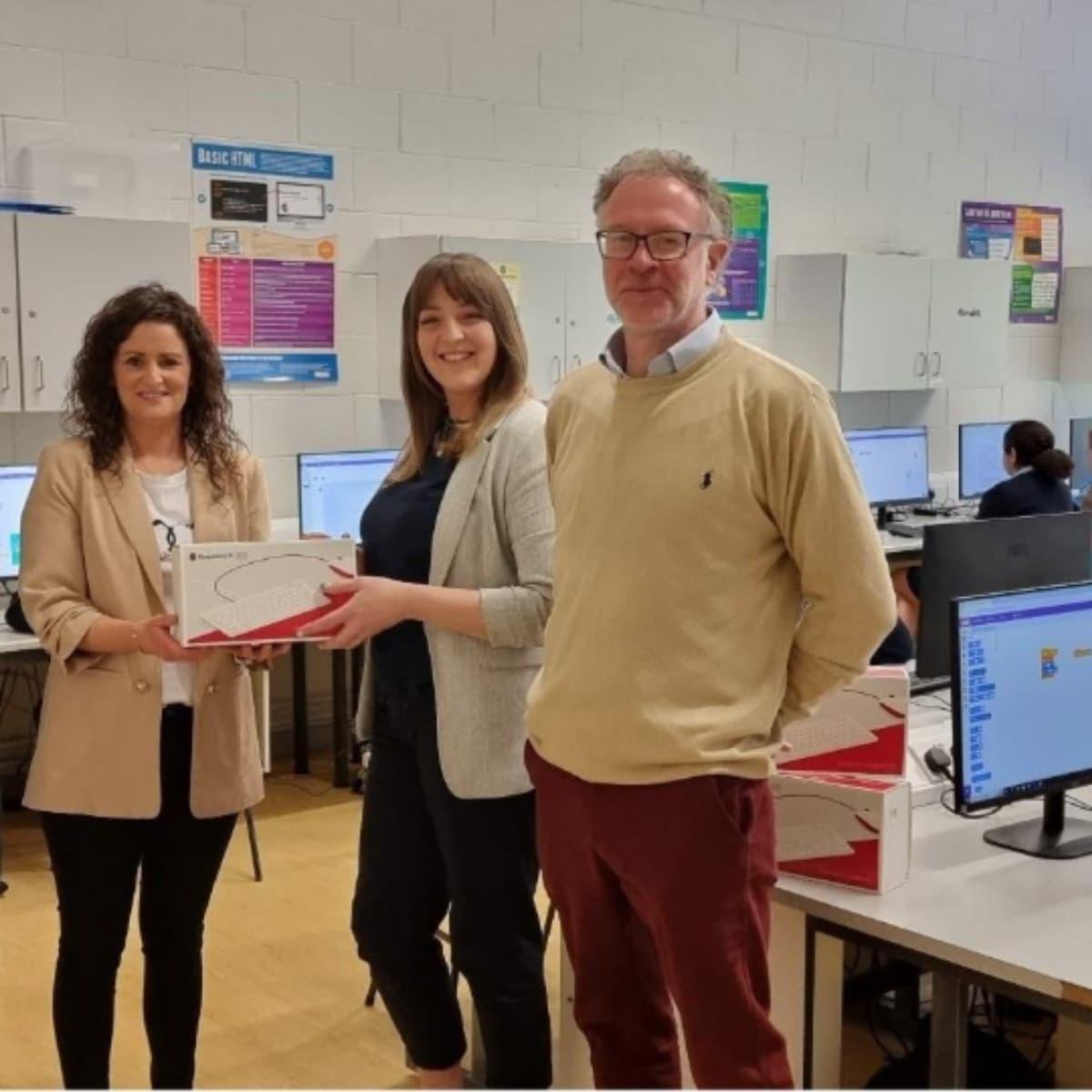
This research catalysed significant educational and cultural change by developing a sustained, stakeholder-led outreach programme addressing gender disparity in computing. In partnership with Tullow Community School, it replaced sporadic events with a structured, three-year curriculum for all junior cycle students, implemented in 2022 and formally launched in April 2024.
The impact was immediate and multi-dimensional:
- Students: Female students reported increased confidence and interest in computing. Teachers noted a rise in female uptake of Leaving Certificate Computer Science, with earlier misconceptions around computing visibly challenged.
- School: The outreach model, integrated into existing timetables and delivered by familiar staff, ensured accessibility and long-term sustainability. Staff reported improved student engagement and alignment with the school's wider inclusion goals.
- SETU: The Department of Computing adopted a new outreach approach, informed by this research, shifting from one-off engagements to school-university partnerships. The project has influenced how SETU approaches inclusion in STEM education, embedding co-design in broader institutional outreach.
Beyond the original school, the project inspired and directly informed the Cyber Schools Initiative, co-led by SETU and Calmast, which reached over 1,500 students across 20 secondary schools through interactive, industry-supported workshops (see Evidence Items 3 & 4). The researcher’s involvement in this initiative ensured that research insights on gender equity and sustained engagement were embedded in its design. Media coverage, national conference presentations, and stakeholder feedback further demonstrate the visibility and influence of the work. The collaborative process also contributed to ongoing partnerships with local schools and internal discussions about revising SETU’s Women in Tech Society approach.
This case shows how research-driven outreach, rooted in local realities and co-designed with practitioners, can drive systemic change. The project’s impact continues to grow as other schools express interest in adapting the model.
This doctoral research investigated how collaborative co-design using the Change Laboratory method could create more effective, sustainable outreach initiatives in computing education. Traditional outreach efforts often fail due to lack of stakeholder involvement and contextual misalignment. This project introduced a novel application of Cultural Historical Activity Theory (CHAT) to reform outreach as a shared, evolving activity system rather than a fixed intervention.
The study involved six Change Laboratory sessions with university faculty, schoolteachers, undergraduates, and management. Participants explored barriers to female participation, including the lack of sustained exposure, limited computing options, and entrenched stereotypes. Through questioning, modelling, and iterative dialogue, the group developed a tailored outreach initiative: a progressive, three-year junior cycle computing curriculum supported by SETU staff and mentors.
The co-design process allowed participants to identify and resolve contradictions in existing outreach practices. For example, the school’s timetable constraints and SETU’s ad-hoc outreach were addressed by embedding computing into regular class schedules and developing shared mentorship strategies.
The research contributed novel insights into how educational outreach can be reimagined as a collaborative, systemic redesign. Rather than evaluate an existing programme, it traced the formation of an initiative, offering rare visibility into how sustainable outreach is constructed in practice. Data included workshop transcripts, artefacts, and reflective diaries analysed through a CHAT-informed thematic approach.
Media
SETU empowers female students to study computer science through new outreach programme
LinkedIn Post – Official Launch
Cyber Schools Initiative Launch
LinkedIn Post – Cyber Schools Initiative Regional Impact
Publications
Redmond, F. (2025). Co-Designing a Context-Sensitive Outreach Initiative to Address Gender Imbalance in Computer Science Education [PhD thesis, Lancaster University].
Redmond, F. (2022). The Co-Design of An Outreach Initiative to Attract Females into Higher Education Computer Science. In Proceedings of the 27th ACM Conference on Innovation and Technology in Computer Science Education (ITiCSE 2022). https://doi.org/10.1145/3502717.3532118
Tullow Community School: Cleona McCann (ICT teacher) and wider teaching team.
SETU Department of Computing: (Head of Department, faculty and undergraduate student volunteers).
