
SETU Researcher: Susan Barnes.
Community Research Partners: Laura Hardiman, Mary Connors, Lucy Hartnett, Rose Lister (Better Together); Jim O’ Dwyer (SERDATF); John Whelan (HSE).
Challenge:
The COVID-19 pandemic exposed and intensified systemic gaps and service-led gaps in mental health and substance use recovery supports in Ireland. Across Ireland, service access was severely disrupted as assessments and in-person supports were suspended to protect staff and service users. These restrictions left many without essential recovery pathways, exacerbating isolation, relapse risk, and the breakdown of support networks. The crisis revealed an over-reliance on face-to-face models, a lack of contingency planning for service continuity, and limited integration of peer-led, community-based approaches. At the time, there was also no clear evidence on the effectiveness of peer-led recovery communities in addressing these challenges, leaving policymakers and providers without a proven framework for inclusive, sustainable recovery support.
Impact Summary:
The Better Together research project, academically led by Susan Barnes, generated significant impact across health, policy, education, and service innovation. Using a rigorous, ethical, and inclusive co-research methodology, the project examined the effects of an online recovery community for individuals with substance use and/or mental health challenges. The co-produced community improved participants’ wellbeing, connection, and recovery, while influencing regional policy. SERDATF committed to embedding co-production in future research and established a Lived Experience Ethics Committee. Advisory panel members gained practical research skills, and funding was secured for a full-time manager and Senior Peer Worker, ensuring long-term sustainability. The initiative also built enduring partnerships, strengthened research capacity, and created lasting resources, including the Better Together website.
The Better Together project has generated strong, regional evidence-based knowledge on co-production in peer-led recovery support during the COVID-19 pandemic, addressing critical gaps for people facing substance use and/or mental health challenges. The inclusive research model, led jointly by professionals and people with lived experience, ensured findings reflected real needs. Key outcomes included 86.4% of participants reporting reduced self-harm or relapse. The group’s ethos of welcoming all forms of recovery equally created a non-judgmental environment that shaped both the methodology and results.
Community and Social Impact
The project strengthened participants’ connection, self-worth, and confidence. One participant reflected, “Better Together kept me alive during the pandemic. It gave me a reason to get up and stay clean.” Its inclusive culture broke down gender barriers, with 66% female participation, more than double the national average, providing a safe space for women in recovery. “The group felt like a safe place. As a woman in recovery, I don’t often feel that.” These outcomes reinforced the relational value of peer-led recovery co-designed by those with lived experience. Another participant reflected, “You taught me to speak up because what I say matters too.”
Institutional, Educational and Professional Development Impact
The research catalysed systemic change. The South East Regional Drug and Alcohol Task Force (SERDATF) adopted co-production as a requirement for future research tenders and committed to creating a Lived Experience Ethics Committee. This shift marked a move toward inclusive service design, embedding lived voices in governance and policy.
Advisory panel members gained training in ethics, research design, and data analysis, directly influencing findings and interpretation. Their experience will inform teaching materials at SETU and is being shared with educators and professionals sector-wide, promoting inclusive research practices.
Sustainability and Future Impact
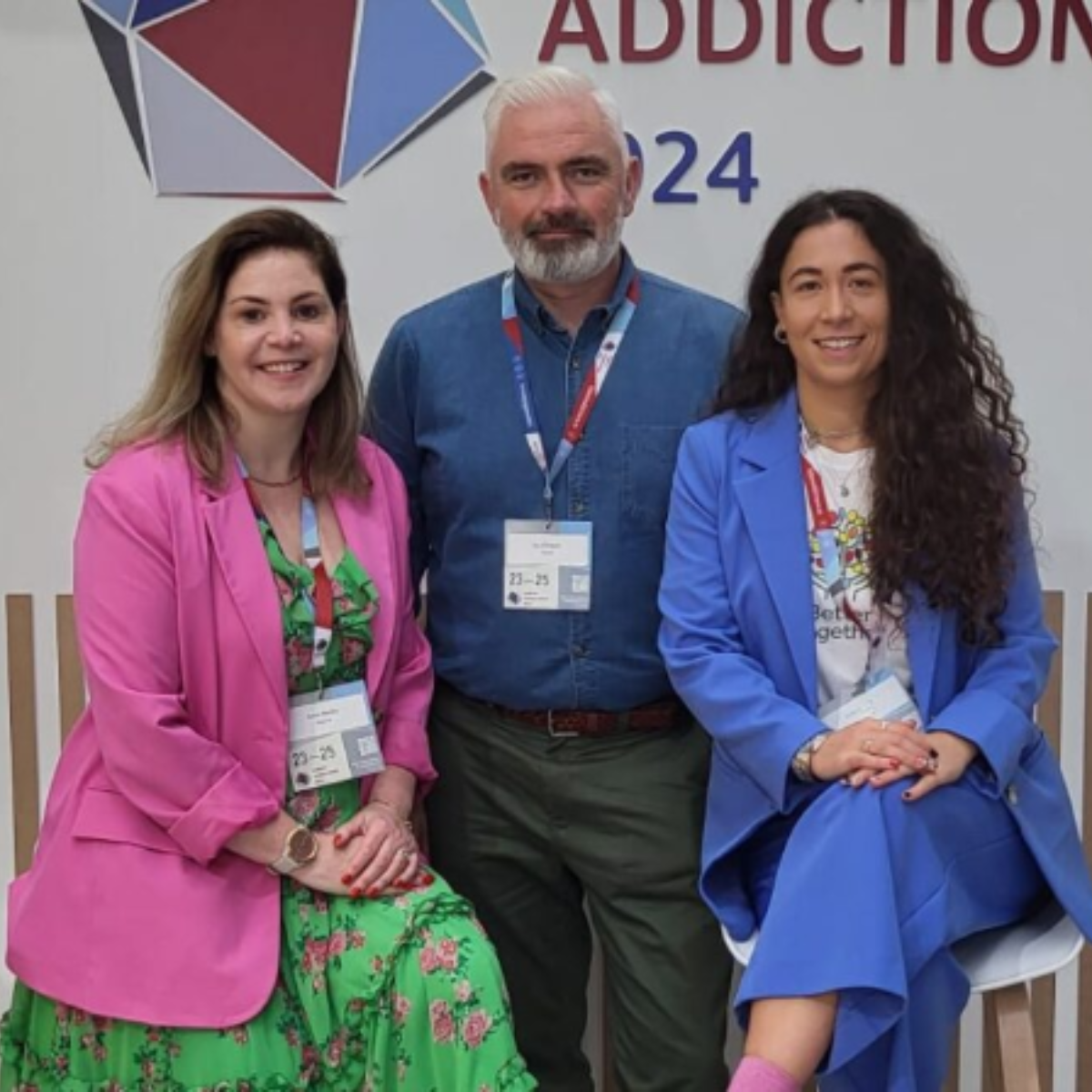
Originally a voluntary initiative, Better Together secured funding for a full-time Manager and Peer Support Worker, embedding lived experience into daily practice. A co-produced website and online forum now provide lasting recovery infrastructure. Launched by Minister Hildegarde Naughton and presented at Lisbon Addictions 2024, the project has gained national and international recognition. Supported by regional partners including the HSE, Substance Misuse Team, CBDI, CE Special Schemes Carlow and Kilkenny, and funders, the community has expanded from regional to national reach. Better Together was the winner of the Irish Enterprise Awards 2025 for ‘Best Mental Health Support Organisation’. Co-produced research provided the evidence base demonstrating the effectiveness and social value of a peer-led recovery model, enabling its transition from a voluntary initiative to a sustainable service with two full-time paid roles. Funding also supported resources, training, and outreach. A Social Return on Investment analysis found that the WhatsApp peer support group alone generated €396,265 in community benefit, delivering nearly €2 in impact for every €1 invested.
The Better Together project used a rigorous, ethical, and inclusive co-research methodology to examine the impact of an online recovery community for individuals with substance use and/or mental health challenges. Grounded in the six principles of co-production, the project was developed collaboratively by academics, professionals, and people with lived experience.
The research responded to COVID-19, which disrupted traditional recovery services, prompting Better Together to provide online peer support, recovery education, and connection. The study aimed to evaluate the effects of this innovation on individual well-being, social connectedness, and regional recovery practices.
A voluntary Research Advisory Panel of eight individuals with lived, living, or learned experience, alongside professionals from the HSE, South East Regional Drug and Alcohol Task Force (SERDATF), CBDI, and SETU, guided all stages of the research. Panel members participated in 34 hours of structured sessions covering ethics, research design, and data analysis. Ethical approval was secured from both HSE and SETU Ethics Committees.
The study adopted a mixed-methods approach, including an online survey completed by 50 participants and a focus group of four. Data were analysed through a co-production lens, highlighting participants’ increased self-worth, reduced isolation, and improved coping skills, alongside the exclusionary tendencies of conventional services. Integrating lived experience into design, analysis, and interpretation validated co-production as both a methodological and ethical imperative.
Key outputs included a formal research report, a co-produced website and online forum, and funding for a manager and senior peer support worker. The project also informed the development of a lived experience-led Ethics Committee and a Community-Based Research Framework for SERDATF.
This study demonstrates how authentic participatory research can generate actionable knowledge, influence institutional practice, and empower individuals often marginalised by traditional research approaches. By centering lived experience throughout, Better Together offers a model for ethical, inclusive, and impactful recovery research.
Southeast Regional Drug and Alcohol Task Force (SERDATF), South East Regional Substance Misuse Team (SMT), County Wexford Substance Misuse Team, County Wexford Community Based Drugs Initiative (CBDI), Special CE Scheme La Nua Carlow, Special CE Scheme Amarach Nua Kilkenny, Father McGrath Centre Kilkenny.
Testimonials from Better Together Participants
“The group felt like a safe place. As a woman in recovery, I don’t often feel that.”
“This was the first time I’ve been treated as an equal in a professional space.”
“Better Together kept me alive during the pandemic. It gave me a reason to get up and stay clean.”
“You taught me to speak up because what I say matters too.”
“We are not just a number or a label,”
Media
New online peer support service for people in recovery launched in Kilkenny
Better Together at Lisbon Addictions Conference
Minister Naughton Better Together Launch
Conference proceedings
Barnes, O. S. (2024). A digital approach to peer led recovery and social connection to address substance use and/or mental health challenges. Poster session presented at Lisbon Addictions 24 Conference, Lisbon, Portugal.
Better Together secured €202,396 in funding from partners including HSE Social Inclusion and Regional South East Substance Misuse Team, South East Recovery, South East Regional Drug and Alcohol Task Force (SERDATF), SETU Research Connections, and Young Irish Film Makers.