Researchers: Dr Bernadette Flanagan, Dr Noelia Molina, Dr Padraic Hurley, Dr Paul Clogher, Tara Travers (PhD Candidate), Sue Saunders (PhD Candidate), Liz Murray (PhD Candidate) - Spirituality in Society & the Professions (SpirSoP) group.
Challenge:
Ireland faces significant public health and wellbeing challenges, which erode individual resilience and place substantial demands on health services. International research indicates that spirituality can support survivorship and recovery from conditions such as eating disorders; however, most studies are drawn from US and Australian contexts and often overlook eco-Celtic and locally grounded perspectives. Additionally, those engaged in demanding social and environmental work, such as caregiving and climate activism, lack access to supportive spiritual practices. The South East, rich in historical and cultural heritage including ancient pilgrimage routes and maritime pathways, remains underutilised for wellbeing interventions. There is a pressing need for locally grounded, spiritually informed approaches that draw on Ireland’s unique heritage to enhance resilience, recovery, and holistic wellbeing.
Impact Summary:
The Spirituality in Society and the Professions Research Group at SETU has advanced spirituality research and practice across health, wellbeing, and community engagement. The group played a fundamental role in the development of the Wexford–Pembrokeshire Pilgrim Way which was launched in March 2023 and saw 6000 pilgrims walk parts of the new route in 2024. The group are also making spiritual heritage accessible and inclusive, through the development of new micro-pilgrimage routes in the South East.
Regarding health and wellbeing, SpirSoP promotes spiritual practices to support recovery from eating disorders. The group collaborates with Bodywhys, the national support group for people with eating disorders, and has provided research findings, specific to Ireland, to policymakers, including the HSE, in developing spiritually based interventions for eating disorder recovery.
“From my over 25 years’ experience as an eating disorder specialist, I believe unequivocally that the spiritual aspect of a woman’s recovery from her eating disorder is one of her most important resources yet least acknowledged and supported by the health care professionals.”
- Advanced nurse practitioner for eating disorders in adults.
Additionally, the group has worked on the development of eco-spiritual toolkits tailored for different groups such as carers, psychiatrists and students, to promote self-care. SpirSop has been active in the roll out of the Inner Development Goals (IDGs) at national level and using these tools to empower climate activists to build resilience, hope, and compassion.
“SETU are doing remarkable work in Applied Spirituality in Ireland – innovative, creative, and welcoming to so many different professions and perspectives."
Professor John Markey - SETU Fulbright Scholar
Development of Pilgrimage Routes
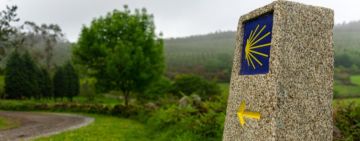
Members of the Spirituality in Society and the Professions Research Group were actively involved in the development of the Wexford–Pembrokeshire Pilgrim Way, an ancient maritime pilgrimage route linking the South East of Ireland with Wales and celebrates the Celtic connections between Ferns, Co. Wexford, and St Davids in Pembrokeshire. As part of this process, SpirSoP provided academic leadership from the South East context, contributed to roundtable discussions with stakeholders throughout the route’s development and co-designed pilgrimage resources such as maps, routes and supports. This collaborative approach has shaped the route’s character, deepened community engagement, and ensured that local traditions and narratives remain central.
The pilgrimage was officially launched in March 2023 in Enniscorthy as part of an international pilgrimage symposium organised by Ancient Connections. This event, titled “Pilgrimage Today – Routes to Flourishing Communities and Enterprise”, marked a significant milestone in the project. In 2024, around 6,000 pilgrims walked sections of this new pilgrimage route. This initiative forms part of a wider effort to develop pilgrimage routes in the region and to attract the growing global market for spiritual tourism.
Similarly, SpirSoP doctoral researcher Liz Murray has been engaging with returned Camino de Santiago pilgrims as co-researchers in designing spiritual activities, supports, and services for contemporary pilgrims in the South East who could benefit from Camino-inspired experiences. This work reflects the group’s inclusive approach to pilgrimage, pioneering in Ireland a model that is not necessarily long or costly, but instead accessible to a wide range of people and experiences.
In collaboration with the University of Valencia, which has created a wheelchair-accessible pilgrimage pathway, SpirSoP are developing Ireland’s first inclusive micro-pilgrimage routes (3 km) in Waterford and Wexford. These routes incorporate symbolic practices such as bringing home a stone or token of hope from the journey. Doctoral researcher Liz Murray is leading the development and preparing maps and guidance notes for the new micro-pilgrimages, further opening up the South East’s ancient spiritual heritage to diverse groups.
Incorporating Spiritual Practices into Eating Disorder Recovery
The group has been assessing the spiritual practices used by women managing their eating disorders. Through collaborations with Bodywhys, SpirSoP is the main point of contact for those seeking to explore spiritual practices for eating disorder recovery.
On 26 February 2024, SpirSoP and Bodywhys co-hosted a roundtable at SETU on the role of spiritual practices in eating disorder recovery. The event, launched by Mary Butler TD, Minister of State for Mental Health and Older People, marked the opening of the 2024 National Eating Disorders Week. It also featured the first presentation of Irish research data to policymakers: PhD candidate Tara Travers delivered a keynote on psychospiritual approaches to treating eating disorders. She emphasised that many Irish women with eating disorders travel abroad in search of spiritual treatment and the practices they find most effective. Following this event, the National Eating Disorder Recovery Centre partnered with Tara to deliver a research-led weekly yoga classes for patients, integrating embodied spiritual practice into clinical recovery.
Speaking at the event, an advanced nurse practitioner for eating disorders in adults highlighted the importance of SpirSoP’s approach: “From my over 25 years’ experience as an eating disorder specialist, I believe unequivocally that the spiritual aspect of a woman’s recovery from her eating disorder is one of her most important resources yet least acknowledged and supported by the health care professionals”
As part of this PhD project, a suite of evidence-based spiritual practice interventions for eating disorders are being developed, with support provided to the HSE in implementing its national eating disorder strategy. In addition, the Research and Policy Officer at Bodywhys is exploring national and international opportunities for training focused on spirituality in eating disorder recovery, in response to growing demand for expertise in this area. Some of these spiritual interventions have already been integrated into treatment by healthcare practitioners in the South East. The group is also actively exploring the application of such practices in addiction recovery.
Eco-Spiritual Toolkits
The group has been supporting the development of Eco-Spiritual-Self-Care Toolkits by students in the MA in Applied Spirituality, tailored to groups in need of self-care and spiritual resilience, including psychotherapists and caregivers. One carer who completed the MA in focused her study on creating a Toolkit for carers, drawing on her own experiences of sustaining herself over two decades of caring. In 2022, nearly 300,000 people in Ireland provided regular unpaid care, representing 6% of the population. Some of the toolkits incorporate micro-pilgrimages, which, as mentioned, are designed to be accessible and available to all. The toolkit has also been introduced by an MA Graduate to students, through a pilot launch for Transition Year students at a South County Dublin school.
Supporting Sustainability Through the Inner Development Goals
SpirSoP and SETU are early adopters and champions of the United Nations Inner Development Goals (IDGs) at national level. Through their collaboration with the IDG movement, SpirSoP has been identifying inner and spiritual practices that can empower climate activists to become more resilient in promoting sustainable practices and addressing the growing social impact of climate anxiety among young people. The International Online Launch of IDG Research at SETU took place on 10 September 2024, with 89 academic and activist attendees from 12 countries. The SETU Sustainability Office has also incorporated the IDGs into the University Sustainability Strategy. SpirSoP researchers sit on an international review panel for publications emerging in this new field.
The work of SpirSoP is unique in Ireland and equivalent work remains relatively underdeveloped globally, though there are comparable centres at Santa Clara University (health and spirituality) and Jindal University, India (sustainability and spirituality). The group employs collaborative, inductive methodologies that prioritise participants’ worldviews and testimonies, particularly in areas such as eating disorder recovery.
Central to SpirSoP’s approach are spiritually attuned methodologies that engage authentically with vulnerable populations. To support this, the group recently published The Routledge Handbook of Research Methods in Spirituality and Contemplative Studies (Flanagan & Clough, 2024), building on earlier foundational work on spirituality and wellbeing in professional practice.
The research group operates on the principle that wellbeing, spiritual and awareness practices are mutually reinforcing. Grounded in the bio-psycho-social-spiritual paradigm endorsed by the World Health Organization, SpirSoP examines how spirituality supports resilience and recovery across professions and society. Evidence from frameworks such as the 12 Step Addiction Management Programme and initiatives like the Higher Power Project at the University of Chester underscores spirituality’s role in fostering hope and inner strength in contexts including cancer recovery and addiction treatment.
SpirSoP also explores the broader societal impact of spiritual practices, for example the potential of pilgrimage to stimulate local economic resilience and innovation. A key research challenge lies in developing instruments that accurately capture participants’ language and transpersonal experiences, rather than relying on tools borrowed from unrelated disciplines.
In September 2024, SpirSoP facilitated the online IDG Research Launch and promoted the integration of the IDGs into the SETU sustainability strategy. An IDG-focused PhD research project is currently implementing three interventions designed to strengthen the emotional and spiritual wellbeing of NGO leaders and activists, who require resilience, hope, and compassion to sustain their efforts for a more sustainable planet.
Internationally, the group is advancing awareness and research in spirituality and recently hosted the first International Network for the Study of Spirituality (INSS) conference outside the UK, titled Spirituality, Critical Reflection and Professional Practice in an Uncertain World. The conference brought together academics and activists from across the globe.
Media
Ancient Connections in collaboration with British Pilgrimage Trust
SETU researchers attend Sacred Sea conference in Zadar
Exploring opportunities for local pilgrimage in the South East
Spirituality, Critical Reflection and Professional Practice in an Uncertain World
SpirSoP Research Group welcomes Fulbright senior specialist scholar
Books
The Routledge Handbook of Research Methods in Spirituality and Contemplative Studies
- The European SPES Institute .
- The Scientific and Medical Network.
- Centre for Atheist Spirituality.
- The Enhancing Nurses’ and Midwives’ Competence in Providing Spiritual Care through Innovative Education and Compassionate Care (EPICC) Network.
- The Spirituality Research and Innovation Group (TCD).
- The spirituality and psychiatry special interest group.
- Perspectiva.
- Spirituality in Education Alliance UK.
- The Research Institute for Spirituality and Health.
- The Spiritual Capital and Moral Leadership Institute.
- Government of Ireland Postgraduate Scholarship Programme
- South East Regional Development Scholarship Fund
- SETU Research Connexions Pathway 7: Research Dissemination Activity Fund
- SETU Research Connexions Pathway 8: Conference Participation Fund
- EU-CONEXUS Seed Funding
- Fulbright Specialist Program
- SETU PhD Scholarship Programme
- N-TUTORR Students as Partners in Change and Innovation Fellowship Fund