

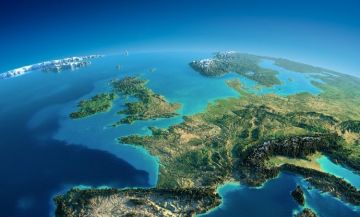
Regional action for global challenges.
Lead by example, influence and impact and strengthen cohesive, sustainability-focused and locally informed, strategic partnerships to drive integrated socioeconomic and environmental development across the South East.
Impact in Action - Sustainability Case Studies:
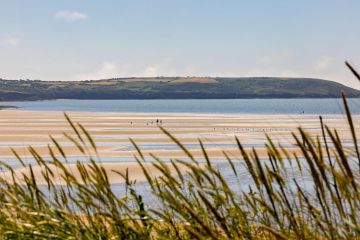
EU-CONEXUS European University for Smart Urban Coastal Sustainability
SETU is one of nine universities of the EU CONEXUS European University Alliance for Smart Urban Coastal Sustainability. The Alliance is developing joint education, research and knowledge-sharing opportunities to sustainably address societal challenges experienced by communities from river and coastal regions. Through EU CONEXUS, SETU is collaborating with its partners to provide sustainable, smart, nature-based solutions to achieve key sustainability goals, reduce impact on coastal ecosystems, respond to present regional challenges, and anticipate future ones.
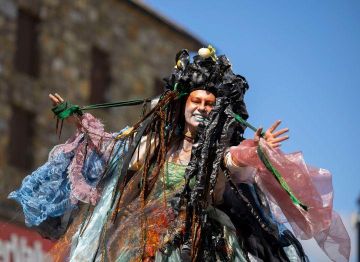
Community engagement through CALMAST
CALMAST, the SETU STEM engagement centre, devises, delivers and coordinates activities to promote sustainability, creativity and critical thinking across the South East, engaging with an annual audience of approximately 35,000. Initiatives include the Bealtaine Living Earth Festival, STEM clusters and Science Week. CALMAST’s Action Climate Targets (ACT) brings artists and creatives together with communities to deepen public understanding of climate change and support sustainable lifestyle practices.

Research with impact
Collaborative, multi-disciplinary research at SETU is advancing the just transition towards a sustainable, circular economy and society, helping to decouple resource use from economic growth. Working in partnership with industry, policymakers and communities, our researchers are future-proofing agri-food systems through the DEMETER and CITIES2030 projects at the SETU Walton Institute, building healthier communities through the National Centre for Men’s Health (NCMH), and accelerating progress on offshore renewables through the CLEERblade project. These initiatives reflect SETU’s commitment to delivering real-world impact and actively progressing the UN Sustainable Development Goals (SDGs) across the region and beyond.
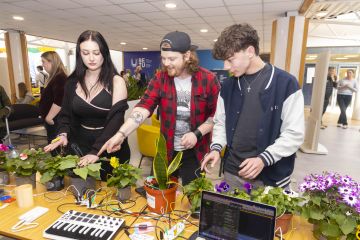
Sustainability in the Arts Festival
The annual SETU Sustainability in the Arts Festival showcases the power and potential of the Arts in addressing global challenges and progressing the UN SDGs. The festival facilitates multidisciplinary student collaborations from visual art, graphic design, music, culinary arts, sociology, languages, and postgraduate research in developing and communicating their unique perspectives on how the UN SDGs apply to them. Active learning methodologies support staff in embedding sustainability principles into their teaching practices to provide dynamic sustainability education and foster leadership in interdisciplinary collaboration. Community engagement, strategic external and international partnerships, and a multicampus format combine to both inform and enhance the festival's reach and impact. Participants in the festival have included Irelands former UN Ambassador David Donoghue, one of the main authors of the UN SDGs and Dr John Barimo of the UN Sustainable Development Solutions Network. In 2025 the festival won national recognition, winning the inaugural SATLE Impact Award recognising the festival’s significant impact in progressing national priority areas.
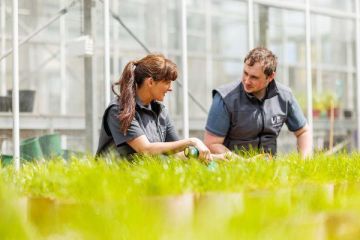
The Living Lab at Carriganore
The land science Living Lab at the SETU west campus in Carriganore is a collaborative space which integrates sustainable development in teaching, learning, innovation, knowledge creation and community engagement and provides a practical model for sustainable land management. The Living Lab fosters hands-on learning, applied research, and collaboration across the region to both address environmental challenges, showcase and drive real-world sustainability solutions. Home to Ireland’s National Biodiversity Data Centre, and an access point to the Waterford Greenway, the Living Lab serves as a multi-functional platform for teaching, research, nature restoration, biodiversity and public engagement. The living lab also incorporates the SETU Biodiversity and Sustainability forum providing a collaborative space for the enhancement of a bioregional approach to biodiversity, nature restoration and sustainability practices across the South East.
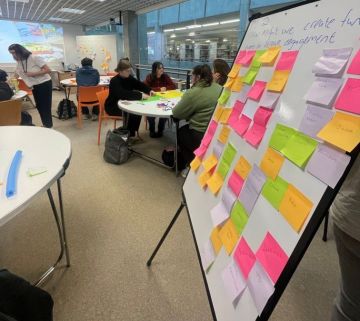
Design thinking for students at GrowthHub
The SETU GrowthHub is a HCI funded project which enables the development of student entrepreneurial competence. Entrepreneurship and sustainability are closely intertwined, with sustainable entrepreneurship emerging as a key driver of sustainable development as it addresses economic, ecological, and social goals. Through multi-disciplinary events, GROWTHhub encourages students to recognise sustainable opportunities in the face of complex, interrelated regional and global sustainability challenges. GROWTHhub is currently rolling out the HEA funded Innovate4Sustainability project across Waterford, Wexford and Carlow campuses, engaging students in a series of design sprints. Students exercise design thinking skills to explore sustainable challenges, develop workable solutions and engage in feedback cycles to refine their ideas.
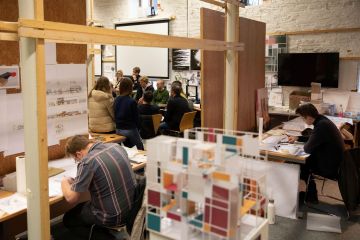
Embedding sustainable development in the curriculum
The team at the Department of Architecture and Built Environment at SETU have embedded the UN SDGs across its Architecture programme. Students use the SDG framework as an inspiration to explore global architectural projects and the relevance of the goals to the role of an architect in, for example, designing carbon out of buildings both in terms of emissions but also in construction, designing water in to buildings through rainwater harvesting and minimising waste, and considering nature preservation and restoration by considering building projects also as landscape projects, thereby future proofing architectural concepts.
Waterford: Unesco Learning City
Waterford was designated a UNESCO Learning City in 2024 and is now part of a global network of learning cities committed to lifelong learning. As a UNESCO Learning City, Waterford recognises that lifelong learning can contribute to sustainable development by supporting communities to adapt to social, economic, and environmental challenges.
Led by SETU, WWETB, Waterford City and County Council, Kilkenny County Council, Buíon Phortláirge, the Southern Regional Assembly, and Waterford Chamber, the designation reflects a collaborative, city-wide approach to celebrating and strengthening lifelong learning across Waterford, and contributes to the development of a learning region for the South East of Ireland.