Researchers:
Dr Aisling McGrath, Professor Niamh Murphy and Dr Noel Richardson.
National Centre for Health Behaviour Research, Faculty of Health Sciences Waterford and the Centre for Men’s Health, Faculty of Health Sciences Carlow.
Challenge:
Men in Ireland experience poorer health outcomes than women and on average, die 3.6 years earlier, with life expectancy of 80.4 years compared with 84.0 years for women. Older, socially isolated and socioeconomically disadvantaged men can be particularly underserved by conventional health promotion and preventive services. Men’s Sheds emerged in Ireland in the early 2000s as community spaces for men to meet, socialise and participate in practical activities, developing into a nationwide network. While increasingly recognised as trusted settings, there was limited evidence on how structured health promotion could be delivered without undermining their informal ethos or how successful initiatives could be sustainably implemented and scaled. This research addressed this evidence-to-practice gap by developing and evaluating a gender-responsive, community-based health promotion model to improve men’s engagement and wellbeing and inform national scale-up and policy.
Impact Summary:
This research underpinned the development, evaluation and scale-up of Sheds for Life (SFL), Ireland’s first structured health promotion programme co-designed for Men’s Sheds. SFL is a tailored 10-week health and wellbeing programme delivered in Men’s Sheds nationwide, supporting men to enhance their wellbeing by building on the strengths, knowledge and experience of Shed members. Through a large-scale mixed-methods evaluation, the research demonstrated that SFL successfully engaged underserved and marginalised groups of men and significantly improved subjective wellbeing, mental wellbeing, physical activity, social capital and healthy eating (p < 0.05). SFL was particularly effective among men with greater needs at baseline, including men living alone, those with lower mental wellbeing and those who were physically inactive. The research also demonstrated that SFL was cost-effective and could be sustainably implemented through cross-sector partnerships. The findings informed programme refinement, implementation guidance and scale-up strategies, and secured Sláintecare funding enabling scale-up across Ireland. Beneficiaries include older and socially isolated men, Men’s Sheds, the IMSA, health service providers, community organisations and policymakers seeking effective approaches to reducing health inequalities among men.
“The key learning I gained from Sheds for life is people. About people. How they interact together…..the perception out there is that men don’t talk. They do. Men will talk. In the right environment.”
Steve, Sheds for Life Participant
Enda Egan, CEO of the Irish Men's Sheds Association (Irish Times, 2021)
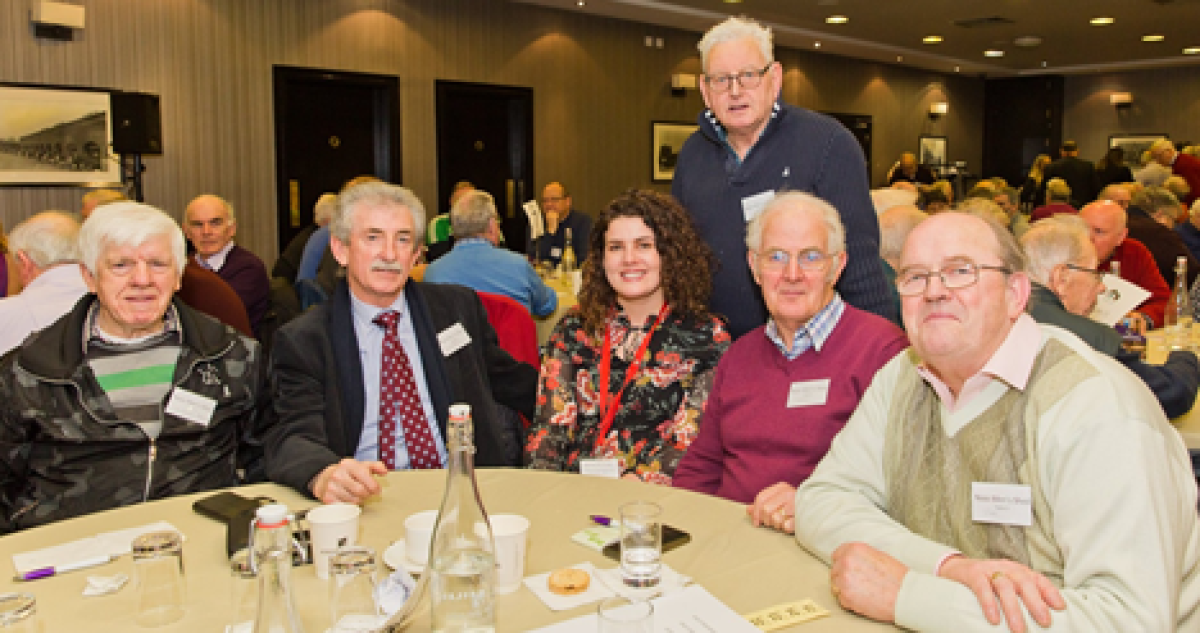
Sheds for Life (SFL) is a tailored 10-week health and wellbeing programme delivered in the familiar and informal environment of Men’s Sheds. It combines cardiovascular health screening, mental health and wellbeing support, healthy eating and cooking, and accessible physical activity, with additional workshops selected to meet the needs of individual Sheds. The programme has expanded to cover areas including eye and ear health, dementia, bereavement, male caregiving, suicide prevention, cancer awareness, digital literacy and water safety. Specialist national and community organisations deliver the activities, with the Irish Men’s Sheds Association coordinating the programme and ensuring it remains informal, participatory and responsive to members’ needs.
Aisling McGrath’s PhD research, the evaluation of SFL, was embedded within the programme from its inception, enabling findings to directly inform programme design, delivery, refinement and national scale-up. This demonstrated how structured, gender-responsive health promotion could be successfully delivered within Men's Sheds while preserving their unique ethos and supporting sustainable implementation. The research generated robust evidence that SFL successfully engaged men traditionally underserved by conventional health services and produced meaningful improvements across physical, mental and social health. Among participants, the proportion meeting physical activity guidelines increased from 31.2% to 51.5%, mental wellbeing increased by approximately 17%, and the proportion of men reporting that they were comfortable having a conversation about their mental health increased by 20%. Significant improvements were also observed in subjective wellbeing, healthy eating, cooking confidence, and social connectedness, with particularly positive gains among men who were more vulnerable at baseline, including those living alone, with lower mental wellbeing or who were physically inactive. Importantly, the legacy extended beyond these measurable health outcomes. Qualitative research demonstrated SFL's potential to create a safe and trusted environment for health engagement. the programme helped normalise meaningful conversations about health and vulnerability, strengthened relationships between Shedders, and reframed perceptions of how men could engage with and take responsibility for their health. This created a wider legacy of ‘talking health’ within Sheds, supporting more open conversations, peer support and help-seeking while working with, rather than against, the existing strengths and social culture of Men's Sheds. The evaluation provided evidence that SFL represented good value for money and could be implemented across diverse Shed settings, these findings provided the evidence base and implementation blueprint for subsequent national scale-up and to the IMSA’s flagship health and wellbeing programme.
“Without her hard work, dedication and overall love for the Sheds, we wouldn’t have our amazing health & Well-being programme, Sheds For Life. Aisling’s research has been instrumental to the success of the programme, as it demonstrates how a community-based mens health initiative can positively enhance and improve Shedders health and wellbeing”
Irish Men’s Shed Association, August, 2022
SFL was initially piloted and evaluated across four counties from 2019. During this initial implementation phase, Aisling worked alongside the IMSA Health and Wellbeing Manager, to translate emerging implementation and effectiveness evidence into a strategy for programme sustainability and scale-up. This included jointly developing the successful €122,000 Sláintecare Integration Fund application, which provided an important bridge from the research and pilot phase towards wider implementation. Subsequent Department of Health/Healthy Ireland and HSE investment enabled SFL to move from a time-limited initiative to an ongoing national programme, supporting programme delivery, coordination and the organisational capacity required to work with delivery partners. The Department of Health has continued to identify funding specifically for SFL scale up, alongside separate HSE investment supporting IMSA's wider health-promotion staffing and infrastructure.
This sustained investment has enabled SFL to be progressively delivered across all 26 counties, engaging more than 150 Men's Sheds, while also expanding the range of health and wellbeing components offered through specialist partner organisations. It has also supported dedicated health-promotion capacity within IMSA. Lorraine Connealy, a former graduate of SETU's BSc (Hons) in Public Health and Health Promotion, first became involved with the IMSA through an undergraduate placement with Aisling and the IMSA team during the research and implementation phase of SFL. She subsequently joined IMSA and has remained with the organisation for several years, now working as its dedicated Health Promotion Officer and supporting the coordination and delivery of SFL nationally. This integration of research, undergraduate education and practice-based learning has contributed directly to workforce capacity in community men's health promotion. In autumn 2026, SFL enters its second implementation cycle, returning to the original pilot counties and demonstrating the transition from an evaluated pilot to an embedded and sustainable national programme. This progression is now reflected in IMSA's strategic priorities, which include the continued expansion of SFL, evidence-based programme management and implementation of the Healthy Ireland Men's Health Action Plan.
Policy and strategic influence
The Sheds for Life Impact Report was launched on 14 June 2021 during Men’s Health Week by then Minister for Health Stephen Donnelly, highlighting the programme’s contribution to Ireland’s national men’s health agenda. Peter Baker’s Independent Review of Healthy Ireland (Men 2017–2021), commissioned by the HSE to inform the subsequent National Men’s Health Action Plan, identified Sheds for Life as a flagship programme and an example of successful implementation, recognising the research underpinning the programme as contributing to men’s health policy and practice in Ireland. The HSE’s 2024 National Men’s Health Action Plan subsequently identified Sheds for Life as an exemplar of evidence-based, gender-responsive health promotion and cited the underpinning research in support of targeted interventions for men traditionally underserved by health services. At European level, the 2024 EuroHealthNet and Institute of Public Health report “Creating an Impactful and Sustainable Wellbeing Economy for Better Public Health”, identifies Sheds for Life (p. 51) as an exemplar of community-based practice that improves health, strengthens social relationships and participation, and contributes to reducing health inequalities.
“It is very rare for men’s health programmes to be evaluated in this way. This study will hopefully convince commissioners of the value of investing not only in shed-based programmes but also in community-based, male-targeted interventions more generally.”
Peter Baker, Director of Global Action on Men’s Health
At the centre of Sheds for Life were Shed members themselves, whose needs, preferences and experiences informed programme design and the selection of optional components. Delivered in the familiar and informal environment of Men’s Sheds, the programme gave men access to cardiovascular health screening, mental health and wellbeing support, healthy eating and cooking, accessible physical activity and additional activities addressing areas such as cancer and diabetes awareness, oral health, dementia, suicide prevention, bereavement and loss, male family caring and healthy relationships. This enabled men to improve their physical, mental and social wellbeing, strengthen social connections and develop healthier behaviours in a trusted community setting.
The Irish Men's Sheds Association (IMSA) provided organisational leadership and coordinated implementation, working closely with the research team to translate research evidence into programme delivery and scale-up. Specialist partners including the Irish Heart Foundation, Mental Health Ireland, HSE Healthy Food Made Easy, Get Ireland Walking/Siel Bleu, the Irish Cancer Society/Marie Keating Foundation, Dental Health Foundation, Diabetes Ireland, Age Action and the National Office for Suicide Prevention provided expertise and delivered individual programme components. At systems level, the HSE and Department of Health/Healthy Ireland provided strategic alignment and support, while Sláintecare funding enabled national expansion, with Pobal involved in funding administration.
The embedded nature of the research enabled close collaboration between academia, statutory health services, voluntary organisations and community partners. A structured stakeholder and advisory process brought together Shed members, IMSA, researchers, men's health specialists, service providers and funders to identify needs, address implementation barriers, refine delivery and plan for scale-up. The SFL advisory group and stakeholder meetings were held quarterly, alongside approximately 50 meetings with individual provider organisations during the research period, regular meetings between the IMSA Health and Wellbeing team and principal researcher, and reporting to funding bodies. This created a two-way link between national health priorities and the experiences of men on the ground, ensuring that priorities around physical activity, healthy eating, mental health and men's health were translated into acceptable, gender-responsive activities within individual Sheds.
Findings informed successive iterations of the programme and an expanded suite of evidence-informed workshops. As a result, Men’s Shed members across Ireland gained access to an evidence-based health promotion programme, while IMSA, policymakers, funders and delivery partners gained a sustainable implementation model for engaging men who are often underserved by traditional health services. Dr McGrath’s research played a central enabling role by generating the evidence required to justify investment, guide implementation and support national scale-up. Sheds for Life has consequently developed into a national model for gender-responsive health promotion, demonstrating how research can shape community practice, government investment and national men's health policy.
At the centre were Shed members themselves, whose needs and preferences informed programme design and the selection of optional components. The Irish Men's Sheds Association provided organisational leadership and coordinated implementation, working closely with the research team to translate implementation evidence into programme delivery and scale-up. Specialist delivery partners including the Irish Heart Foundation, Mental Health Ireland, HSE Healthy Food Made Easy, Get Ireland Walking/Siel Bleu, the Irish Cancer Society/Marie Keating Foundation, Dental Health Foundation, Diabetes Ireland, Age Action and National Office for Suicide Prevention provided expertise and delivered individual programme components. At systems and policy level, the HSE and Department of Health/Healthy Ireland provided strategic alignment and funding, with Sláintecare supporting expansion and Pobal involved in administration and management of Sláintecare funding.
A structured stakeholder and advisory process brought together Shedders, IMSA, researchers, men's health specialists, service providers and funders to jointly identify needs, address implementation barriers, refine programme delivery and plan for scale-up. The SFL advisory group was consulted quarterly and there were also quarterly stakeholder meetings, approximately 50 meetings with individual provider organisations during the research period, at least twice-weekly meetings between the IMSA Health and Wellbeing team and principal researcher, and regular reporting to funding bodies. This participatory infrastructure created a two-way link between national health-policy priorities and the needs of men on the ground where national priorities around physical activity, healthy eating, mental health and men's health helped mobilise organisational and funding support, while feedback from Shedders and delivery partners shaped how those priorities were translated into acceptable, gender-responsive activities within individual Sheds.
This PhD research, was undertaken by Dr Aisling McGrath between 2018 and 2022, in partnership with the Irish Men’s Sheds Association (IMSA) and supported by Research Ireland (formerly the Irish Research Council). The research addressed a significant evidence gap by establishing whether community-based, gender-responsive health promotion could improve men's health outcomes while also identifying how such programmes could be successfully implemented, sustained and scaled within real-world settings.
At the outset of the research, Men's Sheds were increasingly recognised internationally as trusted community settings that engaged men who were often underserved by conventional health services. While research had highlighted the inherent health-promoting qualities of Men's Sheds, there was little empirical evidence on how structured health promotion could be integrated into these autonomous spaces without compromising their informal ethos. Furthermore, there was limited understanding of how effective interventions could move beyond pilot delivery to sustainable implementation at scale. The research therefore moved beyond asking whether SFL worked to examining how, why and under what conditions it could become a sustainable national model for men's health promotion.
Methodologically, the research was innovative in employing a mixed-methods Hybrid Type II Effectiveness-Implementation design, integrating implementation science, effectiveness evaluation, economic evaluation and participatory research within a single programme of work. Rather than evaluating Sheds for Life retrospectively, the research was embedded throughout programme development and implementation, enabling continuous learning, programme refinement and knowledge exchange between researchers, practitioners, partner organisations and Shedders. This co-produced approach ensured programme development was informed in real time while simultaneously generating robust evidence to support future implementation and scale-up.
The research demonstrated that SFL successfully engaged men traditionally underserved by health promotion services, including older men, socially isolated men and those living with multiple health risk factors. Participants experienced significant improvements in physical activity, healthy eating, mental wellbeing, subjective wellbeing and social connectedness, while an accompanying economic evaluation demonstrated that the programme represented good value for money, strengthening the case for continued investment and wider implementation.
A particularly novel contribution was demonstrating that gender-responsive health promotion can extend beyond changing individual behaviours to transforming the social conditions that shape men's health. Qualitative research showed that co-design, trusted relationships and delivery within familiar community settings enabled environments where men felt able to discuss issues traditionally constrained by masculine norms, including bereavement, loneliness, mental health and suicide. Rather than simply increasing engagement with health promotion, SFL fostered a lasting legacy for talking health, normalising vulnerability, peer support and meaningful conversations within Men's Sheds. In doing so, the research provided empirical evidence that community-based interventions can be genuinely gender-transformative, broadening how masculinity is expressed through openness, mutual support and help-seeking. Overall, the research established SFL as an effective, acceptable, economically viable and scalable model of gender-responsive health promotion. By generating robust evidence on effectiveness, implementation and gender-transformative practice, it provided the scientific foundation for the programme's subsequent national expansion and lasting societal impact.
Evidence of Impact
- Sheds For Life (2021): Impact Report
- Sheds For Life Impact Report Launch (2021): Launched by Minister for Health, Stephen Donnelly
- Independent Policy Review (Global Action on Men’s Health): Peter Baker’s Independent Review of Healthy Ireland Men 2017–2021, commissioned by the HSE to inform the development of the subsequent National Men’s Health Action Plan 2024–2028.
- Health Service Executive (2024): National Men’s Health Action Plan: Healthy Ireland – Men (HI-M) 2024–2028.
- Institute of Public Health & EuroHealthNet (2024): Creating an Impactful and Sustainable Wellbeing Economy for Better Public Health.
- DAFM (2021): Webinar to explore “Men’s Sheds” as rural support systems
- Braun, V., & Clarke, V. (2024): A critical review of the reporting of reflexive thematic analysis in Health Promotion International. The review identifies McGrath et al. (2022) on Sheds for Life as an example of good practice in reporting reflexive thematic analysis.
- Dean, T. (2022): Men’s Sheds boost health and are cost-effective. Trends in Urology and Men’s Health
Newspaper and media features
- Irish Times: Men ‘gripped by loneliness’ during coronavirus pandemic
- Irish Examiner: Men’s shed pilot programme significantly improved health and wellbeing
- Roscommon Herald: Covid19 Impact on Men’s Shed Members
- Technological Higher Education Association (THEA): The Men’s Sheds Movement
- Leitrim Observer: Men’s Sheds a structure and a social connection
- Carlow Nationalist: Men’s Sheds Improve Mental Health and Wellbeing
- HSE Health and Wellbeing News: International Men’s Day
- Dublin People: Northside men’s shed in urgent need of own premises
- Irish Research Council: Mental Health and Wellbeing in Ireland
- Government of Ireland: Sheds For life Improving Health and Wellbeing for Men
- The Global Academy: Aisling McGrath
- Pause Project
- Irish Physical Activity Research Collaboration
Radio interviews
- 29 September 2020: WLR FM discussion on the impact of COVID-19 on Men’s Sheds
- 16th June 2021: WLR FM Men’s Health week - discussion on Sheds for Life
- 15th June 2021: Dublin City FM with Olivia Cronin discuss SFL Impact report
Podcasts
- TeachCOLAB podcast: Community Engagement During The Pandemic
- 9Plus Podcast: Women in Research
Testimonial Videos
- Sheds for Life 2026 anniversary video
- Sheds for Life 2019 video
- Sheds for Life Joe’s Story
- Sheds for Life Jim’s Story
- Sheds for Life: Gerry’s Story
- Sheds for Life Eddie’s Story
- Irish Men’s Sheds Association, Research Ireland
- Department of Health -Healthy Ireland, Sláintecare
- Mental Health Ireland
- Irish Heart Foundation
- Irish Cancer Society, Marie Keating Foundation
- Local Sports Partnerships
- Get Ireland Walking, Age Action, Age and Opportunity
- Siel Bleu, HSE Health Promotion and Improvement Teams
- HSE Healthy Food Made Easy
- Dementia Understand Together
- The Alzheimer’s Society of Ireland
- Dental Health Foundation
- National Office for Suicide Prevention
- Diabetes Ireland
- Family Carers Ireland
Irish Research Council Employment-Based Postgraduate Programme (EBPPG/2018/256): Funded the doctoral research underpinning Sheds for Life, in partnership with IMSA.
Irish Men’s Sheds Association (IMSA): Employment partner and co-funder of the doctoral research.
Sláintecare Integration Fund: €122,000 awarded in 2019 to support Sheds for Life implementation and expansion.
- Department of Health/Healthy Ireland: Ongoing annual funding supporting national delivery and scale-up of Sheds for Life since 2020.