Researchers:
Dr. Robin Stubbs, Dr. Emily Shakespeare, Ms. Sinead Barnett, Ms. Emily Kim
Challenge:
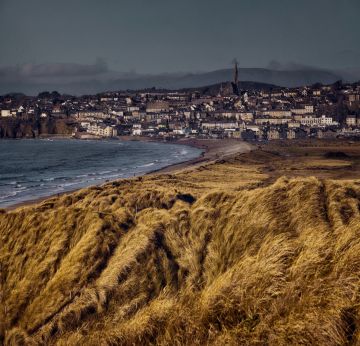
The Tramore Dunes and Backstrand are designated under the EU Habitats Directive as a Natura 2000 site, giving it the highest level of European environmental protection. But designation alone will not be able to protect these systems. A 2024 environmental monitoring survey found severe recreational pressure across the site: trampling, path braiding, and dune collapse visible from satellite imagery, revealing existing fencing and signage to be largely ineffective. These protections depend on communities, policymakers, and visitors to understand the ecological interdependencies of sensitive coastal landscapes. Existing monitoring tools and reports are specialised and inaccessible to non-expert audiences. There is a pressing need for tools that can communicate the complexity and fragility of coastal ecosystems in ways that engage diverse publics, while also supporting evidence-based decision-making at this site of recognised ecological significance.
Impact Summary
The Cúpla Trá project has built and is actively developing an operational coastal digital twin of the Natura 2000-designated Tramore Dunes and Backstrand, integrating landscape biography, more-than-human ecological perspectives, and game-engine technology to make complex coastal systems accessible to non-specialist audiences through a digital twin. Now in its final year of development, the twin has been demonstrated to hundreds of visitors at the Young Scientist and Technology Exhibition and to working groups including Tramore EcoGroup, , Waterford City and County Council (WCCC), and the Environmental Protection Agency (EPA), generating stakeholder feedback that continues to shape the tool. Beyond public engagement, the project advances landscape theory by establishing the digital twin as a new mode of landscape representation, one that enables users to interact with ecological species and understand their interdependencies in ways impossible in the physical landscape, supporting both environmental literacy and new forms of ludic, scenario-based engagement with living systems. Full public debut is planned for autumn 2026, with a permanent installation at SETU’s Granary building in December. Demonstrations of the work-in-progress have already initiated international conversations with Agricultural University of Athens to apply a similar methodology.
'Protecting our environment is a shared responsibility, requiring concerted actions from individuals, communities and policy makers. The EPA-funded Cupla Tra research project demonstrates how novel research such as digital twin technologies can be used to engage a range of audiences on complex environmental challenges and to support decision-making to protect areas subject to environmental pressures.'
Caroline Wynne, PhD, Senior Manager Research Strategy, Office of Evidence & Assessment, Environmental Protection Agency
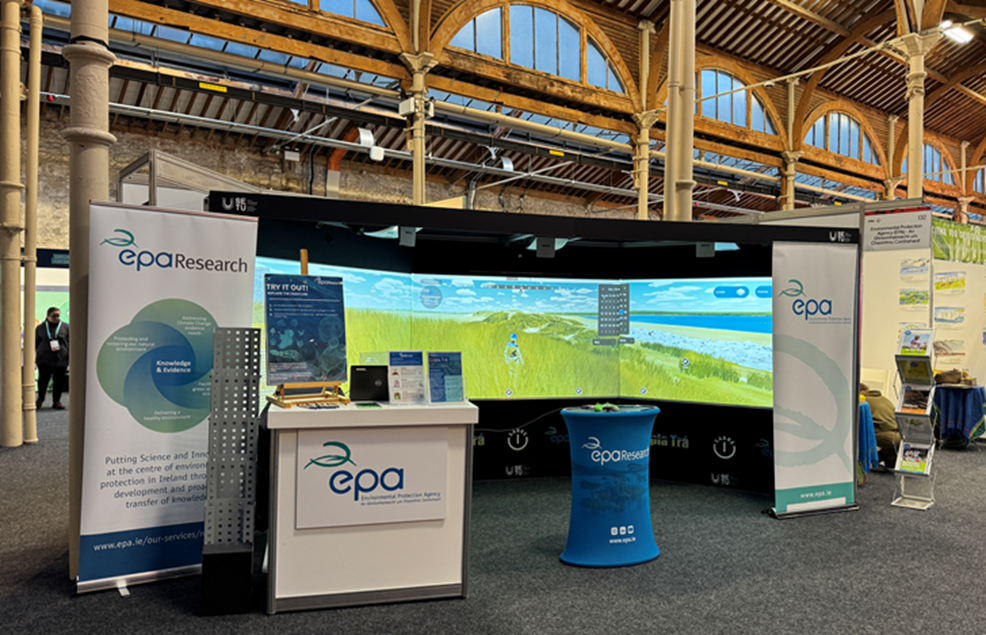
The Cúpla Trá project has generated environmental, societal, and educational impact by transforming how vulnerable coastal landscapes are understood, communicated and managed. Navigable via Xbox controller and projected across three large screens (mission room), the digital twin allows users to interact directly with ecological elements across the dunes, enabling them to understand how natural processes and human activities interact over time in ways that support more informed stewardship and environmental decision-making by local and national organisations.
The digital twin is currently operational, though still in active development, and has been demonstrated in facilitated settings to a range of stakeholders. Working group sessions with Tramore EcoGroup, WCCC,and the EPA have embedded community and professional knowledge directly into the twin’s development. These sessions have functioned as bilateral knowledge exchange: stakeholders feedback has shaped the twin’s content and interface, while participants have engaged directly with how their local landscape functions as an ecological system. The twin will be publicly debuted to the Tramore community and beyond, at Molly's Café on the Tramore promenade, in autumn 2026.


The highest-profile public engagement with the digital twin to date was at the Young Scientist and Technology Exhibition in January 2026, where it was the sole exhibit at the EPA’s stand. Hundreds of visitors across students, teachers, environmental professionals, and policymakers. A direct outcome of this visibility was an approach from the Bull Island Conservancy, who contacted the team following the exhibition to explore developing a digital twin of their own coastal landscape using Cúpla Trá methodology.
Looking ahead, policymakers such as the OPW and NPWS will be able to navigate the digital terrain using live weather data and future scenarios, including sea level rise and wind erosion. These data-backed inputs, drawn from open-source Irish government data, feed into an accurate digital model of the dunes, enabling long-term, place-based scenario planning: the ability to see what would happen if the rock armour were removed, or how quickly the dunes would erode with continued marram grass depletion, including what a scenario such as five metres of sea level rise would mean for the people of Tramore. Visualising these potential futures will allow policymakers to communicate more clearly and effectively what is at stake, and help community members make more confident decisions about their town.
The Cúpla Trá project, undertaken by the SETU SABRE Research Centre, explores how vulnerable coastal landscapes can be better understood, represented and managed through the integration of landscape biography, ecological science and digital technologies. Focusing on the Tramore dunes and backstrand, the research responds to increasing environmental pressures by developing new approaches to understanding how coastal landscapes have evolved, function today and may respond to future change.
The research reconceptualises the landscape digital twin as a theoretical and representational instrument. Rather than replicating built infrastructure, the project combines landscape biography with more-than-human perspectives to represent interactions between ecological processes, cultural histories, community knowledge and human activity within an immersive, game-engine-powered environment. This enables forms of engagement not possible in the physical landscape: users can interact with ecological species, including mammals, plant communities and migrating birds, and observe the cumulative consequences of their movement through the dunes, such as marram grass degradation. This ludic approach transforms the digital twin from a passive visualisation into an active learning environment supporting scenario modelling under conditions including sea level rise, fire and erosion. The project therefore advances landscape theory by demonstrating how game-engine technology can support ecological representation and disciplinary inquiry within landscape studies.
A key challenge was integrating diverse datasets collected from organisations including the Marine Institute, Heritage Council, EPA GeoPortal, Biodiversity Maps, Geological Survey Ireland, NPWS and the Office of Public Works. Differences in scale, accuracy, update frequency and structure meant that datasets required careful review and conversion for use in Unity, the software used to build the digital twin. Ecological data was drawn from NPWS conservation documents and three site-specific studies by local ecologist Alan Walshe, combining field surveys with existing ecological records. These documented habitat types, protected and characteristic species, and seasonal and migratory patterns, and were cross-referenced and partially field-tested by the research team in 2026. Given both the limits of ecological knowledge and the computational constraints of the twin, representative species were selected with Walshe according to ecological significance, abundance and local distinctiveness. Sensitive flora were represented within appropriate habitat zones rather than at precise recorded locations, while animals were associated with suitable habitats and seasonal patterns. Ecological knowledge was translated into simplified behaviours and processes: migratory species appear seasonally, wildfire responds to live open-source weather data, and marram grass degradation communicates the cumulative effects of trampling. Developed iteratively through modelling, field verification and ecological feedback, the twin prioritises ecological relationships and processes over one-to-one replication, making the landscape’s interconnected systems legible and experiential.
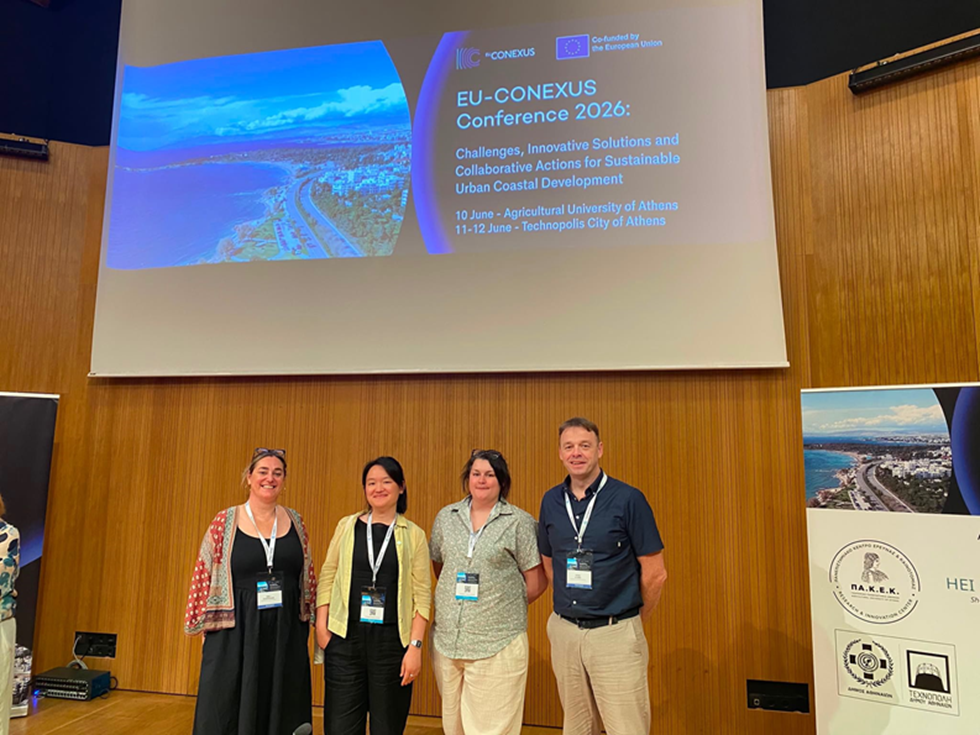
Landscape biography provided a key methodological lens. Developed as a recognised approach in the Netherlands around the turn of the 21st century, with foundations in landscape archaeology and historical geography, it brings multiple disciplinary perspectives together to understand landscapes through the relationships, processes and transformations that have shaped them over time. Cúpla Trá extends this approach to a living Irish coastal landscape, exploring how digital technologies can enrich landscape biography while retaining its historical, cultural and ecological depth. Building on international collaborations with TU Delft, Leiden University and a wider international network, the project contributes to the emerging concept of Landscape Biography 2.0. By integrating archival evidence, ecological processes and community knowledge, it demonstrates how landscape biography can support understanding not only of the past, but of changing relationships between people, place and nature in the present.
The research used a transdisciplinary methodology combining GIS, LiDAR, photogrammetry, ecological field survey, archival research and stakeholder engagement. Bilateral knowledge exchange ensured that scientific, professional and local knowledge informed development of the twin, principally through focus groups involving community organisations, environmental agencies and local authorities, including Tramore Eco Group, Waterford City and County Council and the EPA. During one focus group, Tramore Eco Group members independently navigated the digital landscape and provided feedback that led to the addition of previously unaccounted-for flora and fauna, including a lizard species, as well as observations on the effectiveness of existing fencing. One participant described the tool as giving “a voice to nature.” Annual reviews involving internal and external EPA stakeholders, required under the grant agreement, also generated feedback on potential users and uses, contributing to the development of the “future scenarios” feature for NPWS partners. This collaborative approach bridges technical, scientific and community perspectives and provides a methodology transferable to other vulnerable coastal landscapes.
By integrating historical evidence with contemporary ecological and spatial data, the digital twin enables users to explore landscape change and investigate evidence-based “what if” scenarios involving rising sea levels, coastal erosion, extreme weather and changing recreational use. Rather than predicting a single future, it provides a framework for exploring alternative landscape futures, helping communities, practitioners and decision-makers understand the cumulative impacts of environmental and human pressures.
Environmental Protection Agency (EPA) Research Programme award 2023-NE-1229
Cúpla Trá project webpage: https://sabre-centre.ie/projects/cupla-tra/
EU-CONEXUS online programme Landscape in Motion: Historical Adaptation and Digital Futures featuring Cúpla Trá as a case study. https://www.eu-conexus.eu/en/open-lab-hours/landscape-in-motion-historical-adaptation-and-digital-futures/
EU-CONEXUS Research Conference 2026 programme and conference abstracts. Cúpla Trá as a case study in interdisciplinary research: https://www.eu-conexus.eu/en/eu-conexus-research-conference-2026/
Publications
Twinning Reality and Imagination: Landscape Digital Twins, Shakespeare, E. & Nixon, F. In Routledge Companion to Landscape Studies (3rd Edition), Lawson, G., Shakespeare, E., Keleg, M., Waterton, E. &
From Canvas to Code. Evolutions in Landscape Representation, Shakespeare, E. Nixon, F. (University of Tennessee) & Stubbs, R., 04 Sep 2025. IFLA World Congress, Nantes, France
Cúpla Trá: Combining Landscape Biography and Digital Twin Technology for the protection and management of an Irish Coastal Ecosystem,
Shakespeare, E. & Stubbs, R., 01 Dec 2024, Journal of European Landscapes.
Creating a Digital Twin and Landscape Biography of a Coastal Landscape: Learnings So Far, Shakespeare, E. & Stubbs, R., 31 Oct 2024, EU Conexus EENVIRO Conference: Sustainable Solutions for Energy and Environment, Bucharest, Romania
Engaging with Digital Twin and Landscape Biography: Protecting an Ecosystem, Shakespeare, E. & Stubbs, R., 04 Sep 2024. IFLA World Congress, Code Red for Earth, Istanbul, Turkey
Exploring New Frontiers in Landscape Biography: Beyond Traditional Boundaries: Conference Session, Shakespeare, E., Verschuure-Stuip, G. & de Waal, M., 09 Sep 2024. PECSRL 2024, Borderscapes – Past and Future, Lublin, Poland
Cúpla-Trá: Fostering Coastal Ecosystem Resilience through the Fusion of Digital Twin Technology and Landscape Biography, Nov 2023, EU-CONEXUS Aquatic and Coastal Ecosystems: Challenges and Opportunities towards Sustainable Development, Rostock, Germany
SETU:
Ann Fripps, Bryan Hallisey, Donnchadh Kelly, Alan Walshe; Environmental Protection Agency; Tramore Eco Group.
Environmental Protection Agency – 2023-NE-1229