Researchers
Ryan McCloskey, Daniel Hickey, Stephen Barnes & Phelim Dowling
(Walton Institute: Mobile Ecosystems & Pervasive Sensing Research Division)
Challenge:
SETU was tasked with addressing the challenge of making ESB Networks’ electricity infrastructure more accessible and understandable to diverse public audiences. Electricity networks involve complex technical systems that can be difficult to communicate through conventional educational approaches. The research challenge was to investigate how emerging digital technologies, particularly augmented reality, could be used to transform complex engineering concepts into engaging and interactive learning experiences. The project sought to enhance public engagement, support STEM education and improve visitor experiences by developing innovative methods for communicating the role and operation of critical electricity infrastructure.
Impact Summary:
As part of a €6.5 million investment into the ESB networks training facility in Portlaoise, which expanded training delivery to onboard 156 new electrical apprentices. A total recruitment of apprentices and qualified electricians has surpassed 700 since 2022. As part of this development, SETU’s research delivered a significant enhancement to visitor engagement and public understanding of electricity infrastructure through the development of an augmented reality learning experience for the ESB Networks National Training Centre (NTC). The application enables visitors to explore the history of electricity generation in Ireland and engage with immersive, interactive content that visualises electrical processes and equipment within the training field and wider community. The project increased the accessibility of complex technical information, supported STEM education, enriched the visitor experience, and demonstrated the value of innovative digital technologies in communicating critical infrastructure to learners, visitors, and the broader public.
“This app reflects ESB Networks’ commitment to innovation and education offering a hands-on, immersive understanding of the infrastructure that powers Ireland.”
David Harrington, Training Design and Systems Manager, ESB Networks
Research undertaken by SETU’s Extended Reality (XR) team at Walton Institute transformed how ESB Networks communicates complex electricity infrastructure to visitors, learners and the public. The research led to the development of ESB Networks AR: The Story of Electricity, an innovative mobile application now deployed at the ESB NTC.
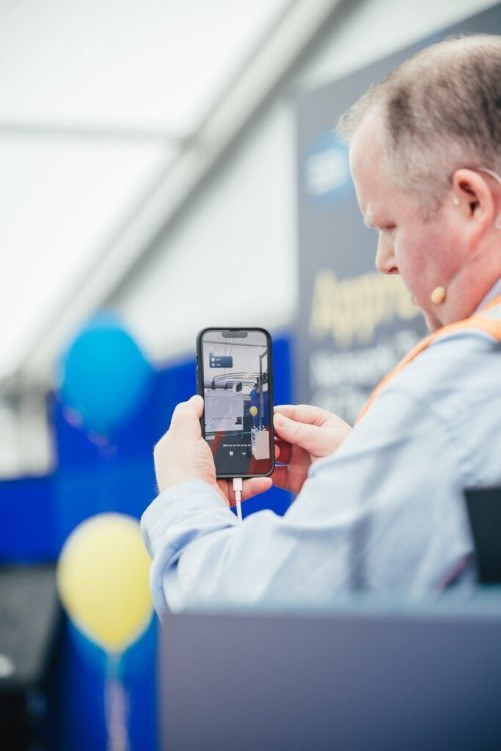
The application which was developed from this collaboration, brings the story of Ireland’s electricity network to life through an interactive augmented reality (AR) experience. Visitors can explore the history of electricity generation and distribution, visualise electrical processes and infrastructure, and discover how electricity networks operate within the wider community. This development has resulted in the replacement of traditional static displays and technical explanations with a new, immersive digital storytelling, technology. Overall, the application has made complex engineering concepts more accessible, engaging and memorable for non-specialist audiences.
The experience itself includes a virtual tour guide created using advanced 3D scanning and facial animation technologies, alongside immersive 360° footage of an ESB technician climbing a transmission tower. These features provide visitors with perspectives that would otherwise be difficult or impossible to experience, offering an engaging insight into both the infrastructure itself and the work of ESB professionals.
Its development was enabled through close collaboration between SETU and ESB Networks, combining SETU’s expertise in immersive technologies, digital learning and user-centred design with ESB Networks’ technical and operational knowledge. The research provided the evidence base, design methodology and technological innovation underpinning the application, demonstrating the potential of XR to transform how complex infrastructure is communicated and understood. The iterative research and development process ensured the final experience was technically accurate, accessible and responsive to the needs of diverse audiences.
Its successful deployment at the NTC has created a new AR educational platform, enhanced visitor experiences and expanded opportunities for public engagement with electricity infrastructure. The project also provides a scalable model for applying immersive technologies to STEM education, infrastructure communication and public engagement. The application also supports wider STEM education by encouraging interest in engineering, energy systems and digital technologies.
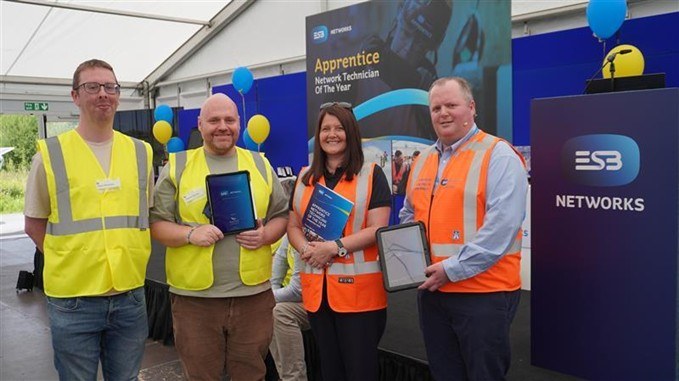
“We’re delighted to launch an app that combines education, storytelling, and technology. It’s an exciting new way to engage people with the story of electricity and the important work ESB Networks does every day. As a former electronic engineer, I hope that this will not just give users a better understanding of the great work done by ESB Networks but also inspire the next generation of apprentices.”
Stephen Barnes, Walton Institute
The project investigated how mobile-based augmented reality (AR) and immersive digital storytelling could transform the way visitors learn about electricity generation, transmission, distribution and infrastructure. Traditional approaches offered limited opportunities to interact with or visualise these complex systems. The novelty lay in applying AR to communicate critical electricity infrastructure through place-based, interactive experiences, an application for which there was limited existing evidence.
The work was undertaken in two phases. The first focused on understanding visitor and ESB Networks needs through requirements gathering, user-centred design and concept development. Researchers identified educational objectives, stakeholder requirements and technical specifications, while exploring how AR could help visitors visualise electrical processes, equipment and infrastructure within the NTC and translate technical engineering knowledge into accessible experiences.
The second phase involved designing, developing and testing the AR solution. The SETU team created a mobile application combining the history of electricity generation in Ireland with interactive visualisations of electrical systems and equipment located throughout the NTC training field. Through iterative prototyping and testing, the team explored how digital overlays, interactive elements and immersive storytelling could communicate technical concepts effectively, with particular attention to usability, accessibility, engagement and technical accuracy. Collaboration with the ESB Networks Accessibility team ensured inclusive design was embedded throughout the experience.
The findings demonstrated that AR can make abstract and otherwise invisible electrical processes tangible and understandable by placing them directly within their real-world context. Immersive and interactive content increased engagement, improved understanding of electricity infrastructure and supported more memorable learning than conventional information delivery. The work also demonstrated the value of combining historical, educational and technical content within a single digital experience to support STEM learning and public engagement.
The project provided the conceptual framework, user-centred design methodology and technological innovation needed to transform complex engineering information into an accessible and engaging educational experience, demonstrating the potential of XR to change how critical infrastructure is communicated and understood.
Contract R&D funded project undertaken by Walton Institute