
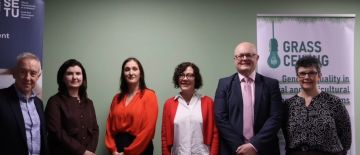
South East Technological University (SETU) welcomed project partners, stakeholders, and members of the university community to workLABS in Waterford on 23 October for the final showcase of Ireland’s Living Lab, part of the Horizon Europe-funded GRASS CEILING project.
The overall project is led by Professor Sally Shortall, SETU UK Joint Professor at the Faculty of Arts & Humanities. The event marked the conclusion of the Irish Living Lab, led by Dr Leana Reinl of the School of Business at SETU, in partnership with Macra na Feirme.
The showcase brought together six rural entrepreneurs who have participated in the Irish Living Lab over the past three years: Catherine Kinsella, Gina Ryan, Aileen Barron, Gail Daniels, Emer Lawrence, and Karen Keane. Each shared powerful and personal reflections on their entrepreneurial journeys, highlighting both the challenges and opportunities of creating and growing a business in rural Ireland.
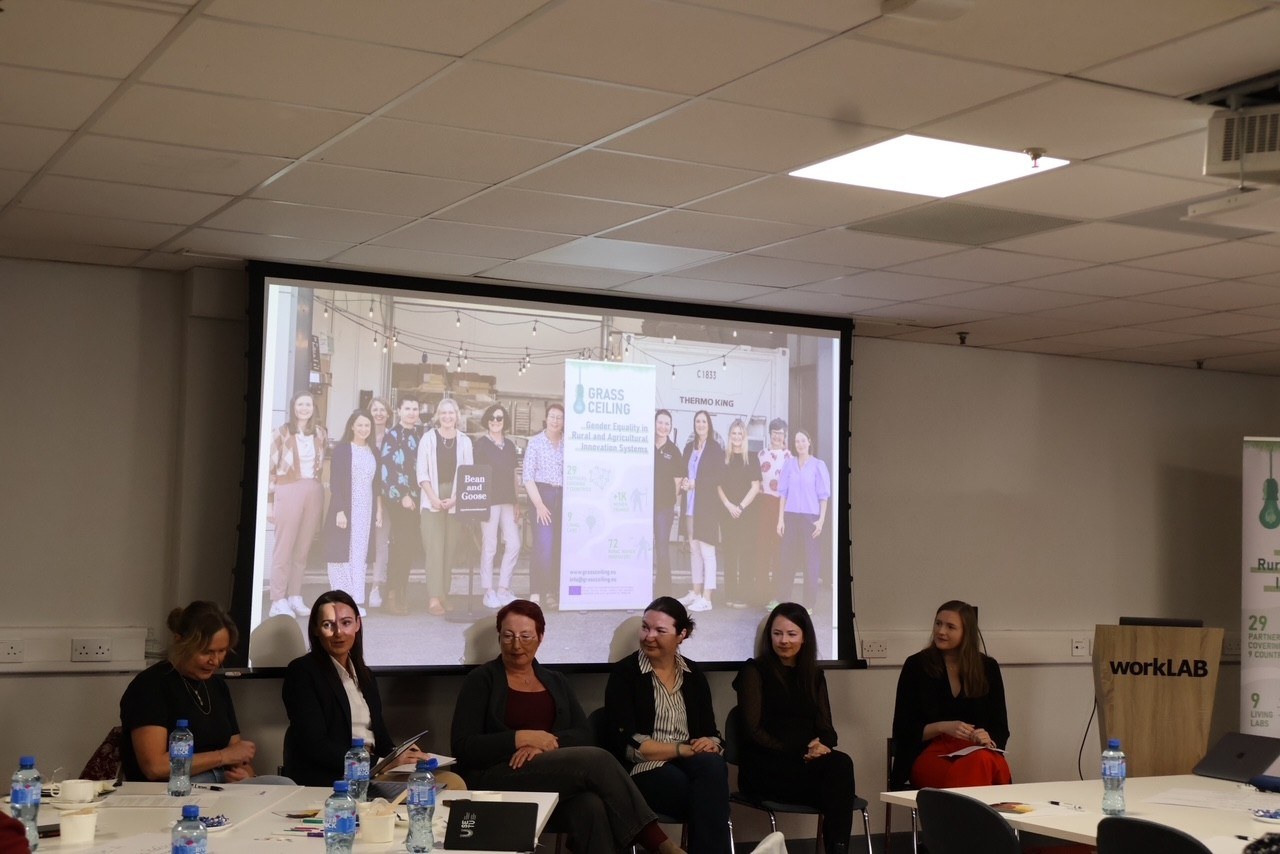
Their stories captured the realities facing many female entrepreneurs in rural regions — balancing ambition with caring responsibilities and sustaining enterprises that often operate within systems misaligned with their needs. Their contributions reinforced the core purpose of GRASS CEILING: addressing the systemic barriers that limit women’s participation in rural innovation and enterprise.
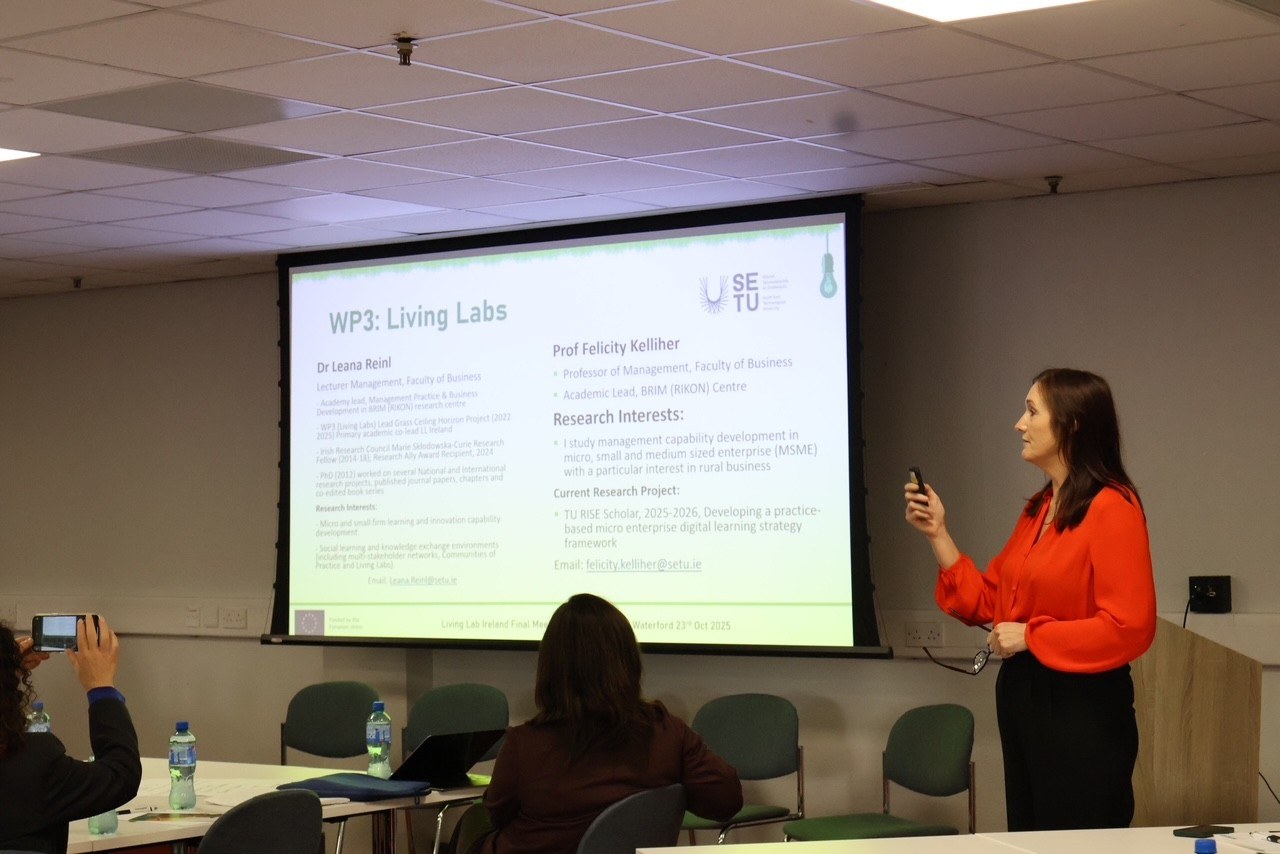
The audience heard from Dr Leana Reinl and Professor Felicity Kelliher about the co-design and delivery of GRASS CEILING’s Living Lab approach, implemented across nine European countries to develop more inclusive rural innovation ecosystems and to spotlight women’s vital contributions to rural communities and economies. Professor Sally Shortall and Dr Muireann Prendergast also spoke about the wider policy landscape, the importance of visibility for women in enterprise, and the valuable learnings emerging from the project.
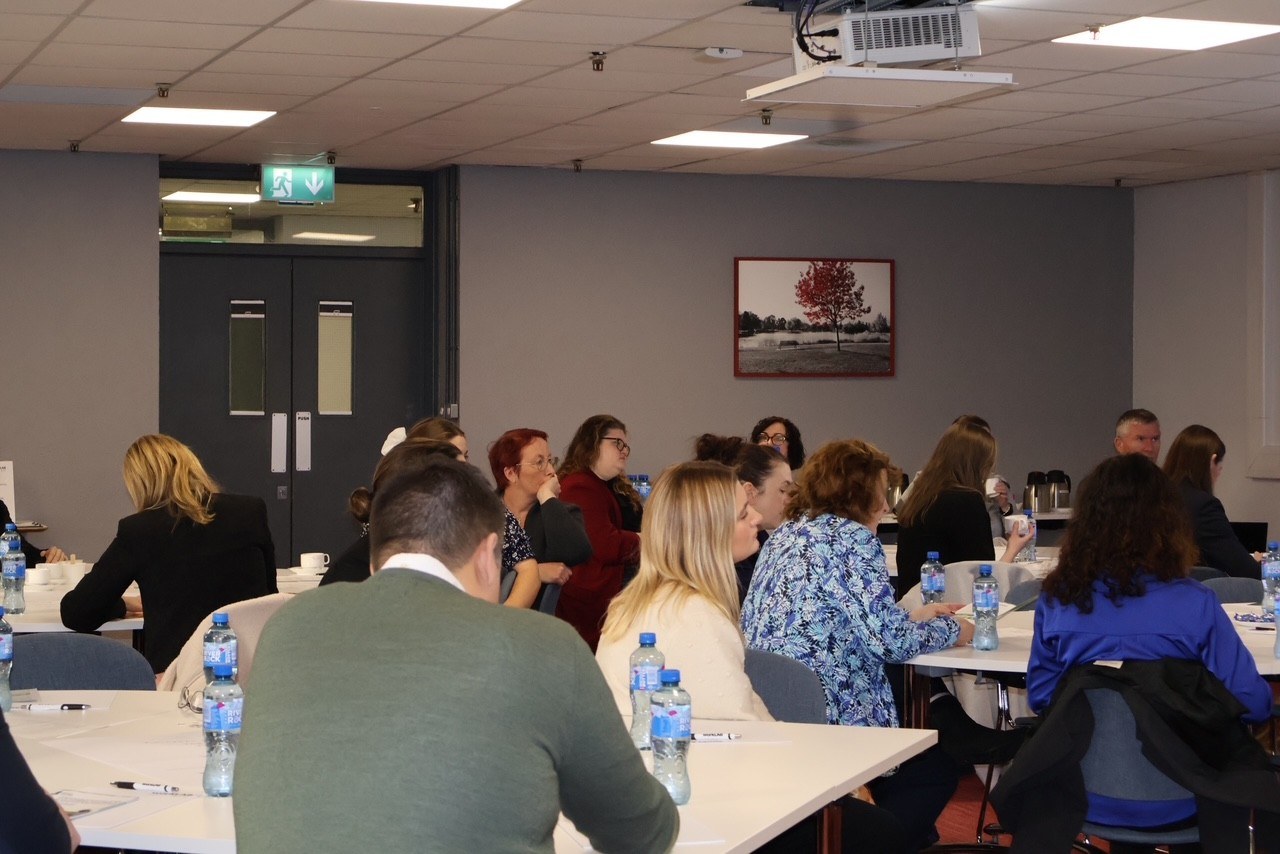
Stakeholders from Skillnet, the Local Enterprise Office, the Department of Agriculture, Food and the Marine, the Department of Rural and Community Development, ACORNS, the South East Regional Skills Forum, and RIKON at SETU, along with numerous research and innovation experts, joined themed round-table discussions to consider the Irish Living Lab’s recommendations.
Paula Fitzsimons, Director of ACORNS (Accelerating the Creation of Rural Nascent Start-ups), delivered an inspiring keynote address. Now in its eleventh cycle, the ACORNS programme—first piloted in 2005—has become recognised nationally and across Europe as a model of good practice, featuring on the Interreg Policy Learning Platform. Paula reflected on the importance of showcasing women entrepreneurs to inspire others, emphasised the value of peer support, and reminded those present that, “if you want change to happen, take action—make it happen.”
These women have not only built businesses, they have built momentum. Their openness, resilience, and leadership have shaped our findings and will help inform better supports for rural women entrepreneurs across Europe."
Dr Leana Reinl
Dr Reinl thanked participants and stakeholders for their ongoing commitment by saying that "“These women have not only built businesses, they have built momentum. Their openness, resilience, and leadership have shaped our findings and will help inform better supports for rural women entrepreneurs across Europe.”
SETU’s Living Lab has provided a collaborative space where entrepreneurial women, academics, policymakers, and agencies have worked together to co-design solutions.
The event concluded with a call to continue building on this community of practice beyond the lifetime of the project, strengthening supports for women driving innovation and enterprise in rural areas.