SETU’s Department of Land Sciences is a project partner on Project Baseline, one the DAFM selected European Innovation Partnerships (EIPs) with a budget of €1.45m over a four-year study period.
Discussion session
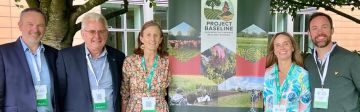
Project BASELINE hosted a Practitioner discussion session recently at the 2026 International Food and Agribusiness Management Association (IFAMA) World Conference in Cork.
Minister for Agriculture, Food and the Marine, Martin Heydon said, “I am very happy to see Project BASELINE, which is funded by my department as part of the [Common Agricultural Policy] CAP Strategic Plan, participating at this important and timely international event.
“Sustainable soil management is so important, not just for food production but for climate mitigation, water protection, biodiversity, and the long-term viability of farming itself.
“By adopting regenerative agriculture practices that contribute to soil health, farmers can ensure the long-term productivity and resilience of our eco-systems which will in turn underpin a resilient and sustainable agribusiness sector into the future.”
Farm level practices
Project Baseline brings together farmers, academics, agriculture economists, ecologists, and researchers who will investigate the benefits Irish farmers have enjoyed using various practices at farm level aimed at improving soil health and protection, biodiversity enhancement, climate adaptation measures, economic resilience to market shocks, and improvement in overall water quality.
SETU Department of Land Sciences is a project partner in the EIP and John Geraghty, Programme Leader of the MSc Organic and Biological Agriculture at SETU is a representative on the Operating Group (OG).
Speaking about the OG member’s roles, Mr Geraghty said, “The members oversee the design and implementation of Project BASELine and the progression of the project to realise the original outputs and outcomes identified. I look forward to working with the Operating Group for the duration of the project.”
Aims
One of the aims is to establish a network of regenerative farms that third level students following land science programmes can visit during their studies, exposing the advisors, sales representatives, researchers and academics of the future to regenerative practices.
Among of the other objectives is to develop strong relationships with third level institutions to encourage student research projects on farms using regenerative agriculture practices.
The group aims to develop material for a micro-credential in partnership with the Department of Land Sciences at SETU. This online 10 ECTS (European Credit Transfer and Accumulation System) course will reflect the level of expertise and knowledge underpinning the research activity of the project.