

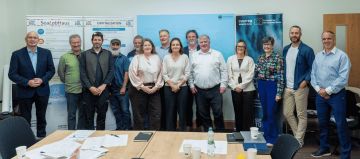
South East Technological University (SETU) has joined Irish partners University College Dublin (UCD) and Meath County Council, together with members of the Irish Regional Action Group, to launch the new SEALabHaus Hello Blue Future training programme.
The launch took place as part of UCD SDG Week, a programme of events exploring the United Nations Sustainable Development Goals and encouraging discussion and action around sustainability across the university community.
Supporting sustainable blue tourism
SEALabHaus is co-funded by the European Union through the Interreg Atlantic Area Programme and brings together public and private sector partners from Portugal, Spain, France and Ireland.
The project is exploring new approaches to sustainable Blue Tourism by applying the values and principles of the New European Bauhaus to coastal tourism, maritime culture and heritage across the Atlantic Area.
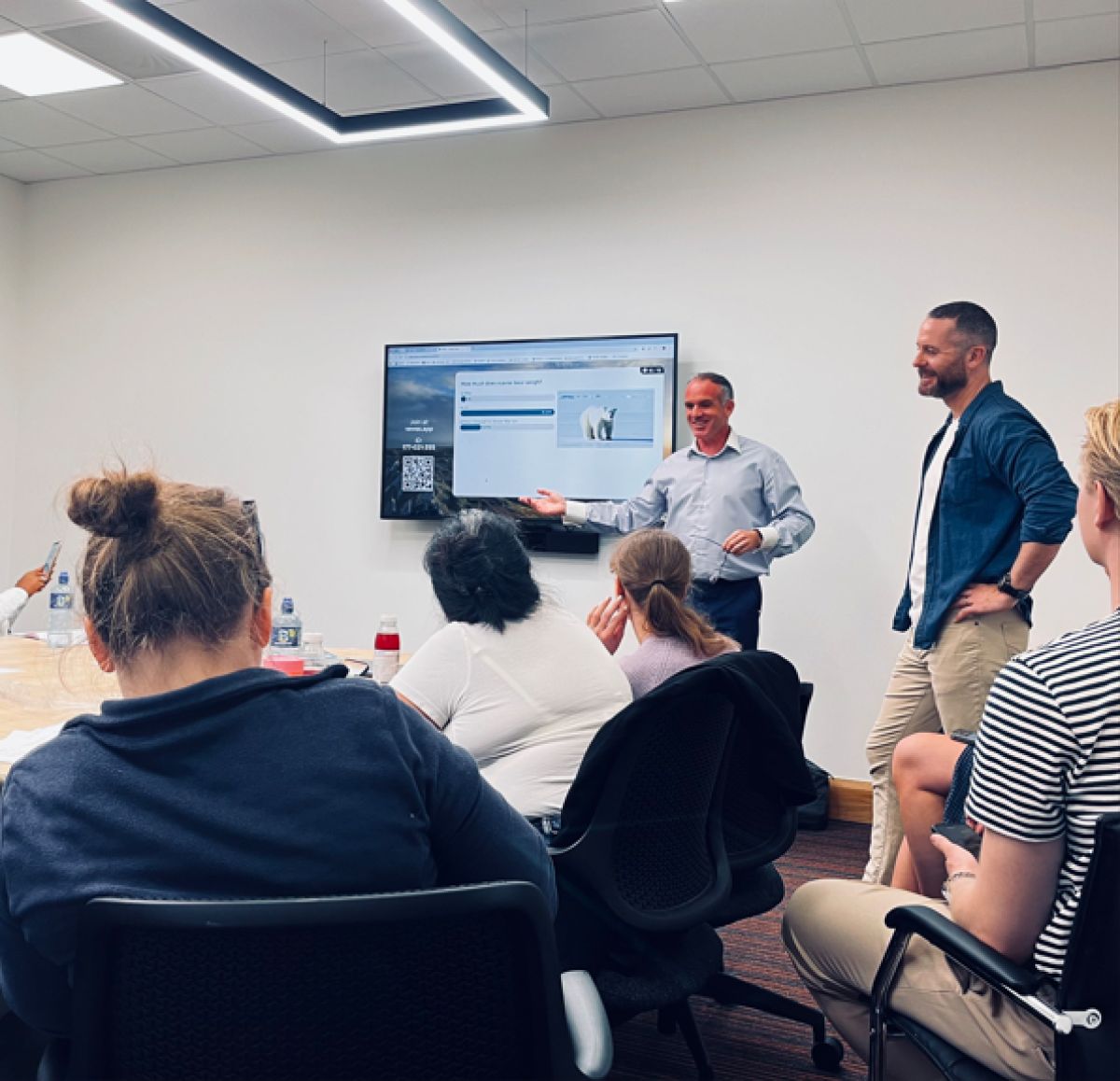
During the launch, SETU learning designers Emmett Cullinane and Neill Wylie (Centre for Academic Practice) presented the live Hello Blue Future course to UCD sustainability colleagues and students, providing participants with an opportunity to engage directly with the learning resource and explore its application in a coastal and maritime context.
Three years of collaboration
The new training programme is the culmination of three years of collaboration involving the BRIM-RIKON Research Centre at SETU and SETU's Centre for Academic Practice, alongside SEALabHaus project partners across the Atlantic Area.
Co-creation has been central to the development process, enabling partners to contribute their own expertise and regional perspectives while ensuring that the learning can be adapted to different coastal communities and contexts.
Prof Felicity Kelliher of SETU's BRIM-RIKON Research Centre said the launch represented an important milestone for the SEALabHaus partnership.
"The Hello Blue Future training programme translates the research, collaboration and learning generated through SEALabHaus into a resource that can be used by people and communities across the Atlantic Area.
Through this programme, we want to encourage people to think differently about how coastal tourism can develop and how the New European Bauhaus principles of sustainability, aesthetics and inclusion can help inform that development."
Professor Felicity Kelliher
"Blue Tourism presents significant opportunities for coastal regions, but its future development must balance economic opportunity with environmental sustainability, cultural heritage and the needs of local communities. Through this programme, we want to encourage people to think differently about how coastal tourism can develop and how the New European Bauhaus principles of sustainability, aesthetics and inclusion can help inform that development."
Learning designed for diverse audiences
Bringing together expertise from different countries, disciplines and regional contexts has allowed us to create a learning experience that combines a shared Atlantic perspective with the flexibility to respond to local needs."
Lorna Bailey
At the heart of Hello Blue Future is the concept of Blue Tourism and how tourism in coastal and maritime areas can be reimagined through the three New European Bauhaus values of sustainability, aesthetics and inclusion.
The programme has been designed for a broad audience, including students, educators, tourism professionals, policymakers, coastal community representatives and anyone with an interest in sustainable tourism, maritime culture and the future of Europe's coastal regions.
Highlighting the collaborative approach to the development of the programme, Lorna Bailey of SETU's BRIM-RIKON Research Centre, said: "An important aspect of Hello Blue Future is that it has been developed through co-creation. Bringing together expertise from different countries, disciplines and regional contexts has allowed us to create a learning experience that combines a shared Atlantic perspective with the flexibility to respond to local needs.
"We have also focused strongly on making the programme engaging and accessible, so that learners from a wide range of backgrounds can explore these ideas and consider how they might be applied within their own organisations, communities and regions."
Building capacity across the Atlantic Area
The launch at UCD provided an opportunity to demonstrate the programme in a live learning environment and engage with students and sustainability colleagues as SEALabHaus continues its work on training and capacity building.
The Hello Blue Future programme forms part of the wider SEALabHaus ambition to strengthen capacity for sustainable Blue Tourism across the Atlantic Area, supporting coastal communities and stakeholders to explore innovative approaches that connect environmental responsibility, local identity, cultural heritage and economic opportunity.
Through collaboration between universities, public bodies, industry and communities across four European countries, SEALabHaus aims to contribute to a more sustainable, inclusive and locally responsive future for Atlantic coastal tourism.
Take part in Hello Blue Future
Inspired by the New European Bauhaus and developed through the SEALabHaus framework, Hello Blue Future invites learners to explore how Blue Tourism can help protect marine and coastal environments, create more inclusive experiences, strengthen local communities and connect sustainability with beauty, culture and place.
Built around the New European Bauhaus values of Beautiful, Sustainable and Together, the programme is open to students, educators, tourism professionals, policymakers, coastal communities and anyone with an interest in the future of our marine and coastal environments.
Participants can also receive a certificate upon completion of the course.
Start the Hello Blue Future training programme:
https://share.articulate.com/4_Jy3Yt5uRtTHjfBx4VBR#/lessons/aMLbRojSoh4giXu6GInb0_rx4or8LBu6
