
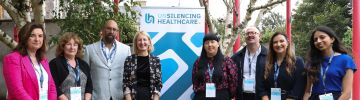
Held on 3 and 4 September, the two-day conference, 'Un/Silencing Healthcare: Voices, Power and Imagination', explored the contribution of the arts and humanities to understanding and responding to some of the complex issues shaping healthcare today.
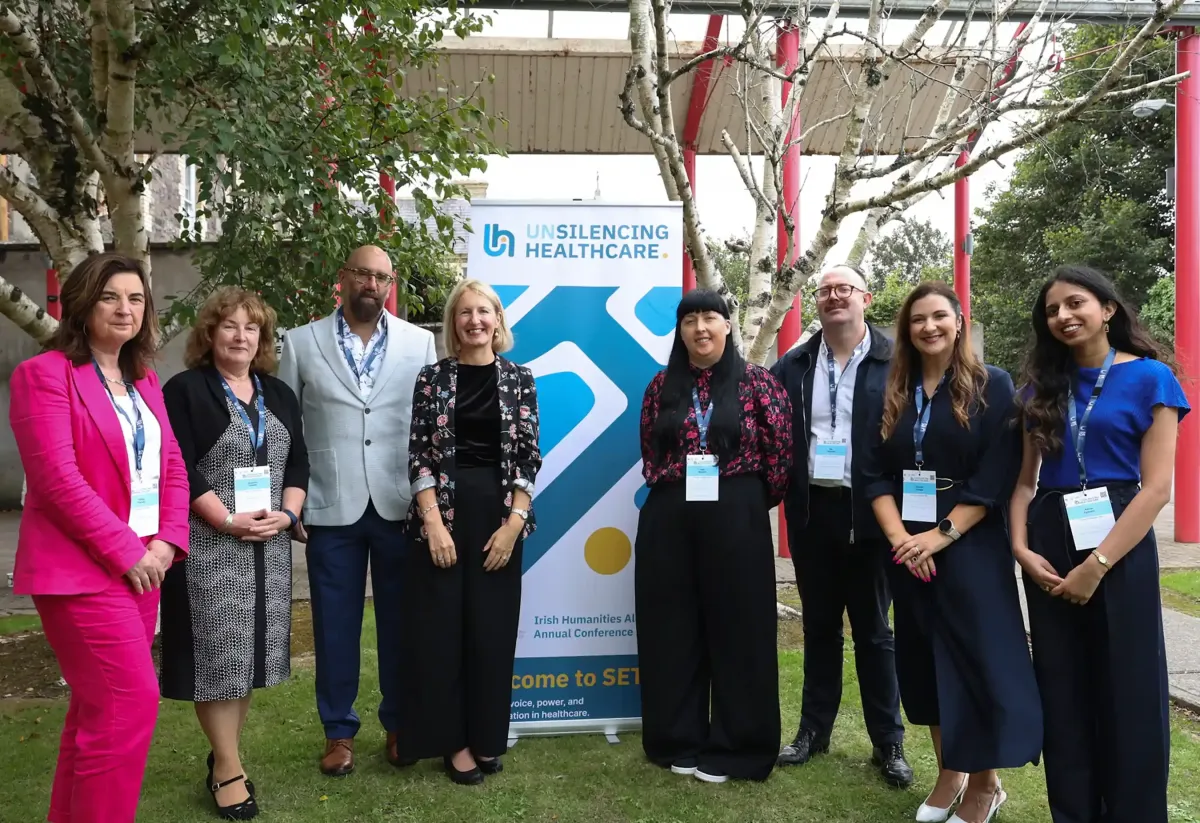
Opening the conference, SETU President, Professor Veronica Campbell, highlighted the importance of bringing different forms of knowledge and experience into conversations about healthcare.
“Healthcare is also profoundly human. It is shaped by people's stories and experiences; by how we communicate; by culture and identity; by ethics and relationships; and by questions of who is listened to, whose knowledge is valued and, sometimes, whose voice is absent.”
Professor Veronica Campbell President, SETU
“It was wonderful to see the humanities community come together at SETU around such an important and timely theme. 'Un/Silencing Healthcare' demonstrated what becomes possible when humanities researchers work alongside healthcare professionals, artists, practitioners and people with lived experience. The conversations in Waterford reflected the creativity, critical thinking and collaborative spirit that the IHA seeks to foster across the island of Ireland, and I am delighted to see those connections continuing to grow.”
Professor Yvon Bonenfant Incoming Chair of the Irish Humanities Alliance
Across the two days, the programme explored voice and representation, ethics, disability and inclusion, mental health, gender, technology and artificial intelligence, with lived-experience perspectives represented alongside academic and professional expertise.
Keynote speakers included Dr Jess Mannion of Atlantic Technological University, whose address explored voice, power and the co-production of knowledge, and Professor Des Fitzgerald of University College Cork, who considered the question 'What can an Irish medical humanities achieve?'.
Creative practice was also central to the programme, with workshops, exhibitions, performances and a creative plenary exploring patient-centred art-making in renal dialysis.