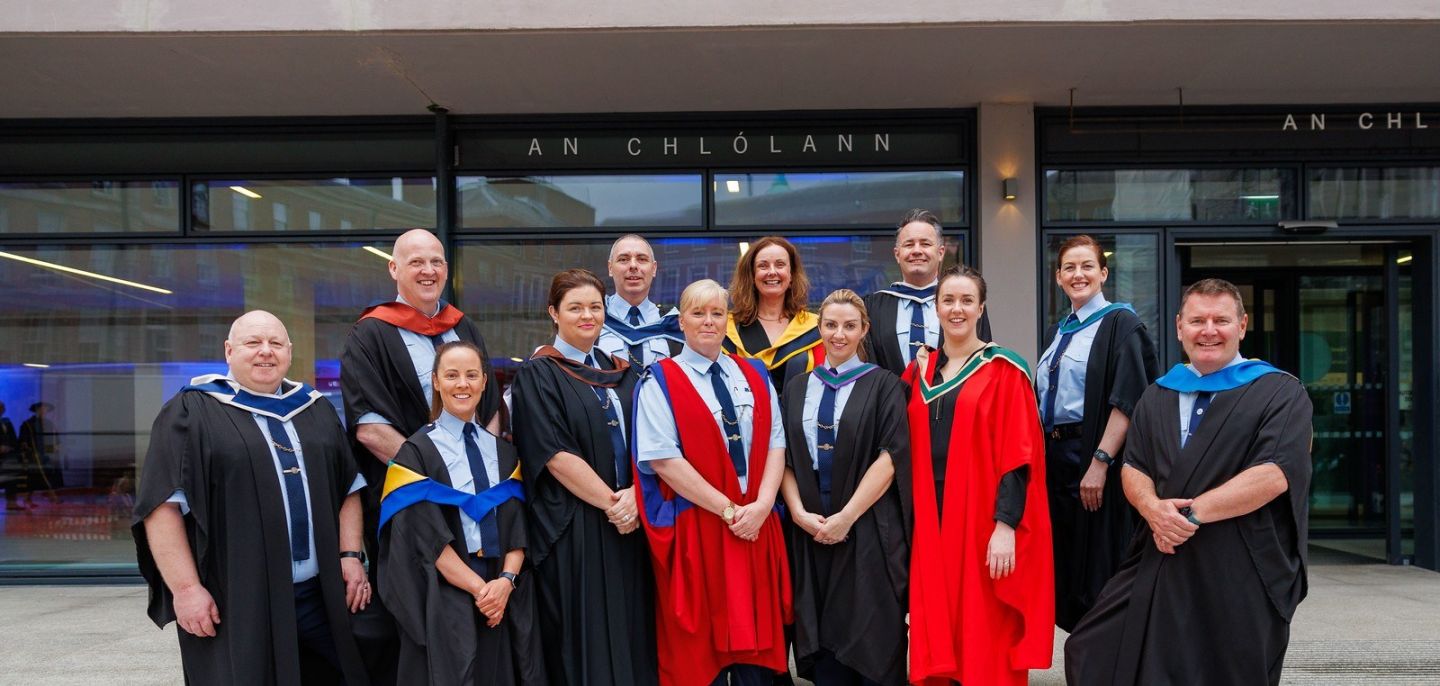

Minister for Justice, Home Affairs and Migration Jim O’Callaghan welcomed the graduation of 159 Recruit Prison Officers (RPO) at a ceremony in the Hogan Suite in Croke Park.
The new officers have completed their Higher Certificate of Arts in Custodial Care (HCCC), developed and delivered jointly by the Irish Prison Service and South East Technological University (SETU).
The new officers have already been placed in prisons throughout the prison estate.
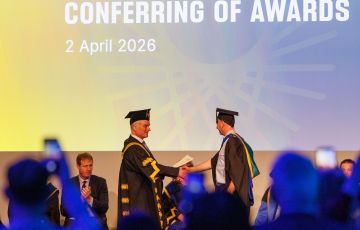
The graduation ceremony marked the formal recognition of the new officers’ academic achievement.
Since its introduction in 2017, more than 1,000 recruit prison officers have completed the programme, with a further 159 conferred this month. These figures reflect both the scale of the programme and the value placed on education, professionalism and continuous development within custodial care
Professor Patrick Prendergast, Pro-Chancellor and Chair of SETU’s Governing Body.

Public service
Minister O’Callaghan said it was a privilege to congratulate these graduates. “Their preparation has been thorough, and they now have the knowledge needed to manage this complex role effectively. I want to thank them for their public service and their families for their support.
“Prison Officers bring strength and compassion to a job that often goes unseen, yet it is crucial for keeping our communities safe. As mentors, they will help offenders in their care to rebuild their futures and to find a better path forward. We are fully committed to supporting them with the resources needed to carry out this challenging duty with dignity.”
Proud moment
The Director General of the Irish Prison Service, Caron McCaffrey said the graduation was a proud moment for the Service and for the communities it serves. “The Higher Certificate in Custodial Care represents far more than academic achievement - it reflects the resilience, empathy and professionalism that define modern prison work.
“Our new officers have balanced study, family life and the demands of a complex environment, and they have done so with integrity and determination. As they take up duty across the estate, they bring with them diverse skills, strong values and a commitment to supporting safety, dignity and rehabilitation in our prisons. I am confident that each of them will make a meaningful contribution to the people in our care, to their colleagues, and to the wider society we work to protect.”
Crucial role
Recognising the crucial role played by prison officers in delivering an important public service, Pro-Chancellor and Chair of SETU’s Governing Body, Professor Patrick Prendergast emphasised the need to provide a high standard of training and education to support them.
Prof. Patrick Prendergast said: “It is vital that we continue to meet the evolving needs of this essential public service. The Higher Certificate in Custodial Care continues to grow in strength and impact each year, reflecting the strong collaboration between the Irish Prison Service and SETU.
“Since its introduction in 2017, more than 1,000 recruit prison officers have completed the programme, with a further 159 conferred this month. These figures reflect both the scale of the programme and the value placed on education, professionalism and continuous development within custodial care.”
Prof. Prendergast extended his sincere congratulations to this year’s cohort. “You should take great pride in what you have achieved and in the important contribution you will go on to make throughout your careers,” he said.
Professional competencies
The Higher Certificate in Custodial Care is a two-year part-time programme designed to develop the professional competencies of Prison Service staff in working with prisoners. The HCCC is intended to facilitate a greater understanding of how officers can confront challenges through the exploration of different subjects including, Resilience, Mental Health, Social Psychology and Human Rights.
After initial training RPOs are assigned to a prison, with assignments based on the security and operational needs of each individual prison.