
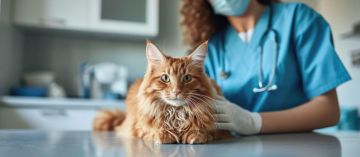

The Bachelor of Veterinary Medicine (MVB) at SETU is a five-year programme designed to prepare graduates for professional veterinary practice through a strong combination of scientific knowledge, clinical training, and real-world experience.
Programme Accreditation
The Bachelor of Veterinary Medicine (MVB) programme at South East Technological University (SETU) is currently progressing through the accreditation processes of the Veterinary Council of Ireland (VCI), the European Association of Establishments for Veterinary Education (EAEVE), and the Royal College of Veterinary Surgeons (RCVS).
SETU has successfully completed the initial stages of the Veterinary Council of Ireland accreditation process and has received an Opinion of "Reasonable Assurance" from the Veterinary Council of Ireland to commence delivery of the programme and admit students from September 2026.
As with all new veterinary programmes, full accreditation can only be considered following graduation of the first cohort and completion of the formal accreditation process. Accreditation has therefore not yet been granted and cannot be formally confirmed until that process is complete.
Applicants should be aware that eligibility for registration as a veterinary practitioner in Ireland is dependent upon graduation from a programme that has achieved accreditation by the Veterinary Council of Ireland.
SETU is working closely with the Veterinary Council of Ireland and international accreditation bodies (EAEVE and RCVS) throughout programme delivery. The curriculum, facilities, staffing, clinical teaching delivery model and quality assurance processes have been developed in alignment with the standards and requirements of the relevant accrediting bodies, and accreditation remains a central priority for the University.
Students who have questions regarding accreditation are encouraged to contact the Department of Veterinary Medicine directly.
Programme Structure
The MVB is delivered across three integrated phases:
- Foundation Phase
Build a strong grounding in the scientific principles that underpin veterinary medicine, including animal biology, anatomy, and related disciplines. - Clinical Phase
Develop your understanding of disease, diagnosis, and treatment through a scaffolded active learning approach, supporting collaborative and applied learning. - Professional Phase
Gain extensive hands-on experience through a fully distributed model of clinical education, preparing you for practice in real veterinary settings.
A Unique Approach to Clinical Training
A defining feature of the SETU MVB programme is its fully distributed clinical education model.
During the final phase, learning takes place entirely in workplace-based clinical rotations across SETU’s Veterinary Distributed Clinical Network. Students gain experience in core areas of veterinary practice while working alongside professionals in real environments.
All partner practices are carefully selected and undergo rigorous assessment and training to ensure a high-quality, consistent learning experience.
Facilities and Learning Environment
Students benefit from access to specialist facilities at Teagasc Kildalton College, including:
- Animal handling and husbandry facilities
- Animal biology and anatomy teaching spaces
A free bus service operates between the SETU Cork Road Campus and Kildalton, supporting easy access to these facilities.
Additional Information
Please note that there is no QQI entry route available for the MVB in Veterinary Medicine for 2026 entry. Development of these pathways is ongoing, with further information to follow.
Year 1
| Semester 1 | Semester 2 |
|---|---|
| Science of Veterinary Structural and Endocrine Systems | Science of Veterinary Alimentary Systems |
| Animal Behaviour, Welfare and Husbandry | Science of Veterinary Cardiorespiratory Systems |
| Veterinary Professional Skills | Animal Husbandry and Nurition |
| Veterinary Ethics and Teamwork |
Year 2
| Semester 3 | Semester 4 |
|---|---|
| Science of Veterinary Renal Systems | Science of Veterinary Nervous Systems |
| Science of Veterinary Reproduction | Evidence Based Veterinary Medicine and Clinical Skills |
| Veterinary Research and Clinical Skills | Veterinary Business |
| Science of Veterinary Disease - Genetics, Immunology and Pharmacology | Science of Veterinary Disease - Microbiology, Parasitology and Pathology |
| *Pre-Clinical Extra-Mural Studies will take place outside of normal academic time and must be completed by the end of year 2 |
Year 3
| Semester 5 | Semester 6 |
|---|---|
| Clinical Veterinary Medicine - Cardiorespiratory | Clinical Veterinary Medicine - Orthopaedics |
| Clinical Veterinary Medicine - Gastroenterology | Veterinary Surgry & Anaesthesia |
| Veterinary Diagnostics & Therapeutics | Veterinary Public Health |
Year 4
| Semester 7 | Semester 8 |
|---|---|
| Clinical Veterinary Medicine - Urogental | Clinical Veterinary Medicine - Neurology |
| Clinical Veterinary Medicine - Endocrinology and Dermatology | Veterinary Critical Care, Emergency Care and Toxicology |
| Herd Health and Population Medicine | Preparing for the Veterinary Profession |
Year 5
| Semester 9 | Semester 10 |
|---|---|
| Essential Veterinary Skills | Small Animal Clinical Studies |
| Veterinary Elective Rotations | Farm Animal Clinical Studies |
| Veterinary Final Year Portfolio | Equine Clinical Studies |
| Veterinary Pathology and Public Health | |
| All year 5 teaching consist of clincial rotations within partner practices in SETU's Distrubted Clinical Network. | |
| *Clinical Extra-Mural Studies will take place outside of normal academic time and must be completed by the end of year 5. |
Minimum entry requirements for MVB in Veterinary Medicine
Applications will be accepted via the CAO only. Students must meet the following minimum entry requirements;
1. Leaving Certificate requirements
Biology or Chemistry: H4 (equivalent to at least a Grade C at A-Level)
1 other subject: H5
4 subjects: O6/H7
English or Irish: O6/H7
Mathematics: O6/H7
2. Work Experience Requirement
Students will be required to complete a total of 60 hours of relevant veterinary or animal handling work experience. Specifically, 30 hours should focus on farm animal/equine experience and 30 hours should focus on small animal experience.
This work experience must be completed within THREE YEARS of applying to the veterinary medicine programme.
A portfolio (time log and references) based on this experience will also be required. Please print the work experience log reference template and complete by hand.
Students should post their work experience log to the CAO before the 1st July - CAO, Tower House, Eglinton Street, Galway, H91 X25V, Ireland.
Please include your CAO application number when sending documents to the CAO.
Veterinary Experience Log Reference Template
Eligible premises include:
• Farm: dairy, beef, poultry, pigs, stud, sheep or other farm animal enterprise. Not tillage
• Riding schools
• Animal sanctuaries/charities
• Zoo
• Veterinary diagnostic laboratories
• Or similar veterinary/animal related premises
Important notes:
Looking after your own pets and working with animals on own premises does not meet this requirement.
If you have completed work experience in a mixed premises, or veterinary diagnostic lab or any premises caters to both small animal and farm animal/equine, then 50% of the hours completed at this premises would satisfy the farm animal/equine requirements and 50% the small animal requirement.
3. Occupational Health:
As part of the registration process for the MVB programme (i.e once accepted onto the SETU Veterinary Medicine Programme), each student will be asked to complete a medical declaration and take part in a medical screening process. These steps are to ensure readiness for animal related learning activities and placement. If the student is unable to complete the process, we will provide guidance on alternative programme options.
MVB applicants are encouraged to declare any health, wellbeing or fitness-to-practice concerns that might affect their ability to meet professional practice requirements. With the applicant's consent, the Health & Safety Office will review this information to identify any reasonable accommodations and supports for placement. If supports cannot be provided, we will hold an open discussion and where possible, we will facilitate alternative programme options.
HEAR/DARE
SETU will allocate at least one place for eligible applicants under the HEAR scheme and one place for eligible applicants under the DARE scheme.
Graduates of Veterinary Medicine have a wide range of career opportunities in animal healthcare, research, and public health. Career paths include:
- Clinical veterinary practice – Work as a veterinary surgeon in small animal, equine, or farm animal practice, diagnosing and treating a variety of medical conditions.
- Specialist veterinary fields – Pursue further training in areas such as surgery, dermatology, cardiology, or exotic animal care.
- Animal welfare and conservation – Work with animal charities, shelters, or wildlife conservation organisations to promote animal health and well-being.
- Public health and food safety – Join government agencies or organisations involved in disease control, food safety, and veterinary public health.
- Pharmaceutical and Biomedical Research – Contribute to the development of veterinary medicines, vaccines, and treatments in research and pharmaceutical industries.
- Education and academia – Teach future veterinary professionals in universities and contribute to veterinary research.
- Regulatory and policy roles – Work in national and international organisations setting animal health and welfare policies.
- Agri-food industry and livestock management – Support animal health in agriculture and livestock industries, ensuring productivity and sustainability.
Veterinary Medicine graduates are in high demand, and the skills acquired during this degree create global career prospects in both private and public sectors
Mature Applicants
There is currently no graduate entry options for this program. Graduates can apply as mature students provided they are 23 years old 1 January on the year of application. No exemptions will be given for any modules on the MVB programme due to the integrated modules which focus on clinical application.
SETU will reserve at least 15% of places on the Veterinary Medicine course for mature applicants.
Mature applications are assessed across several areas, including second-level and third-level education, relevant training such as QQI awards, and work experience. Mature applicants must also hold at least a H4 in Biology or Chemistry in the Leaving Certificate or an equivalent qualification.
All mature applicants must apply through the CAO by 1 May and submit their supporting portfolio through their CAO application by 1 July. All mature applicant offers will issue in CAO Round A at the beginning of July.
Requirements include:
- Same minimum requirements as all applicants- At least H4 in LC Biology or Chemistry or equivalent (A-Level Grade C equivalent) and 60 hours work experience as detailed above
- Application via CAO by 1 May
- Portfolio submission by 1 July. Details on what to include in this portfolio are available in the CAO Mature Student Handbook
This mission reflects the Department’s dual responsibility: to its learners and to the animals, clients, communities, and systems served by its graduates and staff.
Consistent with SETU’s mission and with expectations of the veterinary profession as expressed in regulation, the Department of Veterinary Medicine is committed to:
- Delivering a competency-based veterinary curriculum that enables all graduates to demonstrably meet the VCI and EAEVE Day One Competences/ESEVT accreditation standards ensuring readiness for safe, effective, and ethical professional practice.
- Ensuring high-quality, authentic clinical education, through a robust, quality-assured distributed clinical training model that reflects contemporary first-opinion and referral veterinary practice in Ireland and the EU.
- Embedding animal welfare, professional ethics, sustainability and One Health principles across teaching, learning, assessment, and clinical experience.
- Maintaining rigorous QA, governance, and continuous improvement processes, consistent with VCI, EAEVE, RCVS and SETU requirements.
- Supporting the development of professional identity, resilience, and lifelong learning, enabling graduates to adapt to the evolving demands of the veterinary profession.
- Contributing to regional and national capacity building, addressing workforce needs, rural veterinary sustainability and applied veterinary research relevant to the southeast of Ireland.
Futurevet Camps
Download Programme Materials
CourseCast Podcast
Listen to our CourseCast Veterinary Medicine episode to hear real insights from students and lecturers about this course, what you’ll learn, and where it can lead.

Veterinary Medicine
This episode of CourseCast is all about the Bachelor of Veterinary Medicine (MVB) programme – a new course at SETU, with focused scientific, clinical and professional training in the practice of veterinary medicine. Mary was joined in studio by Dr Mary Kate Burke, Programme Development Lead; Eilidh Thompson – farm animal lecturer; and Dr Richard Ryan, a mixed-practice vet and owner of Archersfield Veterinary Clinic in Kilkenny City.
Listen on podcasts.setu.ieStories




Course Leader

Course question

Have a question about
this course?
Our team is here to help.
If you have any questions about this course, please get in touch and we'll be happy to assist.