

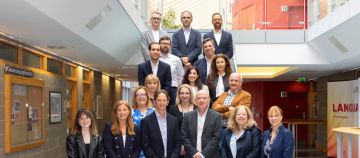
South East Technological University (SETU) recently welcomed a delegation from Portugal to its Waterford campus as part of a comparative study visit examining Ireland's approach to Smart Specialisation Strategy (RIS3) and regional innovation development.
The delegation included representatives involved in research, development and innovation policy at national and regional level in Portugal. The visit formed part of a wider peer-learning exchange designed to explore how Ireland designs, governs and implements Smart Specialisation, and how national policy, regional priorities, research, innovation and stakeholder engagement connect in practice.
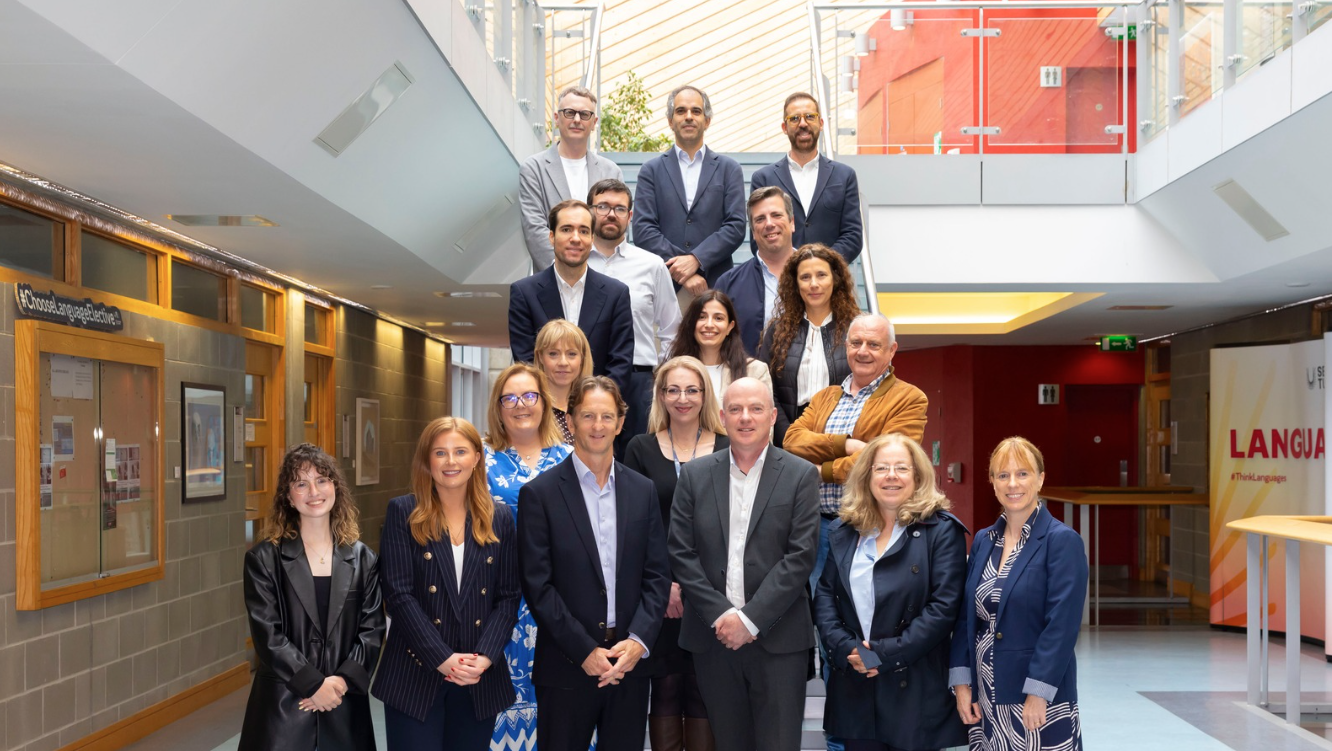
The visit was facilitated by the Southern Regional Assembly and provided an opportunity to showcase the role of technological universities in supporting regional innovation ecosystems.
Dr James O'Sullivan, Head of Innovation and Commercialisation at SETU welcomed the delegation, alongside Dr Alessandra Heggenstaller, SETU TU RISE Project Manager, Dr Luke Power, SETU Research Projects Manager, and Professor Helen Hughes, TU RISE Academic Enterprise Liaison for Eco-innovation at SETU.
The unique contribution of technological universities
The programme began with a presentation from Neil McDermott, Senior Manager, System Development and Performance Management with the Higher Education Authority, who outlined Ireland's Smart Specialisation Strategy and the role of the HEA in supporting its delivery through initiatives such as TU RISE. He highlighted the unique contribution of technological universities to Ireland's innovation landscape, noting their strong links with industry and their ability to respond to regional economic priorities through applied research, enterprise engagement and talent development.
The development of new research partnerships, enterprise collaborations and innovation networks
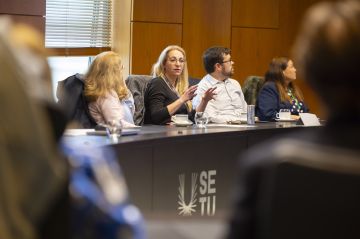
Dr Alessandra Heggenstaller, SETU TU RISE Project Manager then presented an overview of SETU's contribution to Smart Specialisation priorities across areas including sustainability, advanced manufacturing and information and communications technology. She outlined the significant progress achieved through the TU RISE programme, including the development of new research partnerships, enterprise collaborations and innovation networks throughout the south-east region.
Delegates heard how the TU RISE PhD Scholarships, Postdoctoral Fellowships and Sabbatical Scheme are helping to strengthen research capacity while fostering meaningful collaboration between SETU researchers and regional enterprises. The presentation also highlighted the role of SETU's Rural Innovation Hubs and Academic Enterprise Liaison programme in creating new opportunities for engagement between the university, businesses and communities.
Shared learning and knowledge exchange
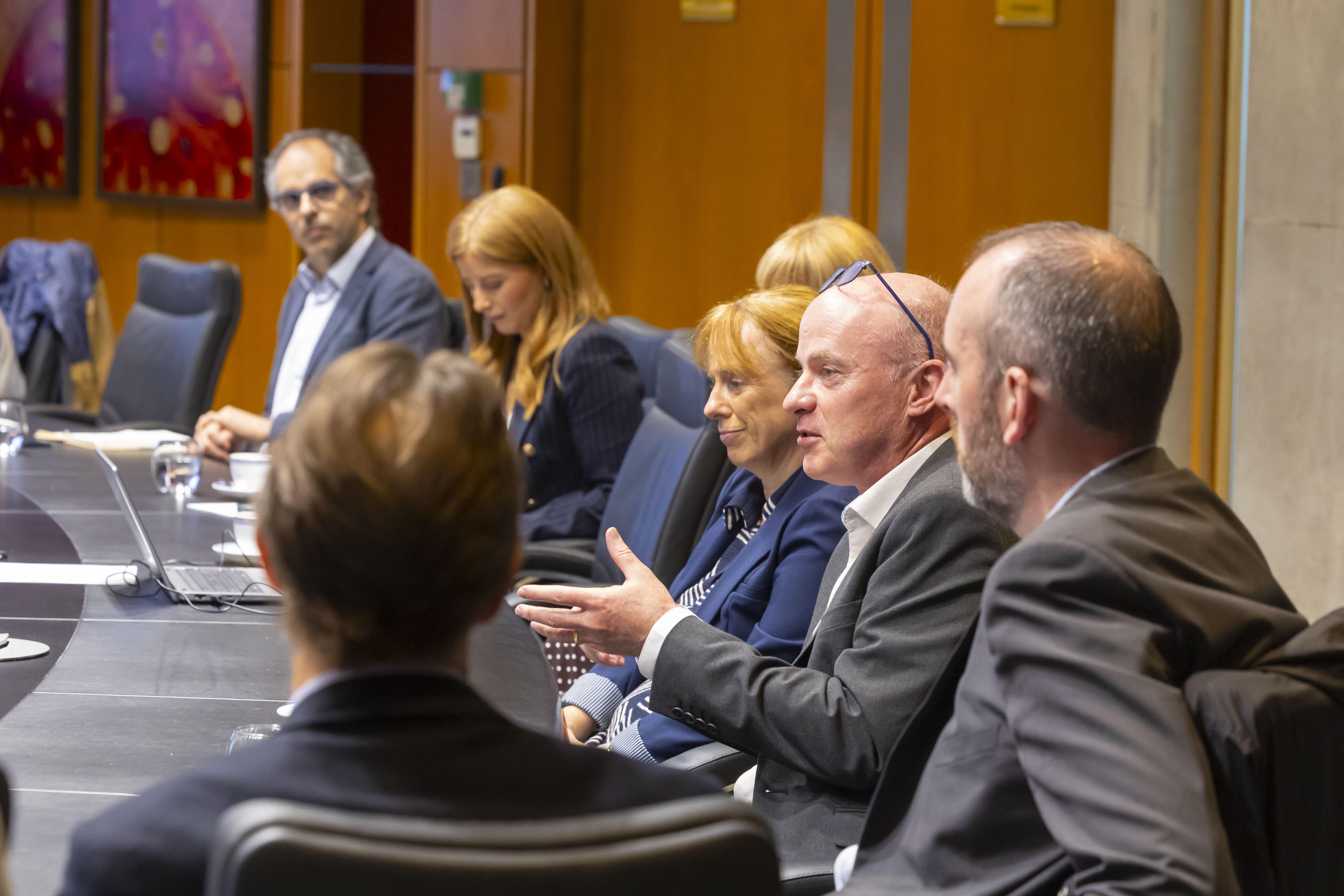
A lively question-and-answer session followed, generating valuable discussion around regional innovation policy, stakeholder engagement and the practical implementation of Smart Specialisation. The session provided opportunities for shared learning and knowledge exchange between Irish and Portuguese colleagues before the group continued discussions during an informal networking lunch.
It was a pleasure to welcome our Portuguese colleagues to SETU and to share how we are strengthening regional research and innovation capacity through TU RISE."
Dr Alessandra Heggenstaller, TU RISE Project Manager, SETU
Dr Alessandra Heggenstaller said, "It was a pleasure to welcome our Portuguese colleagues to SETU and to share how we are strengthening regional research and innovation capacity through TU RISE. Smart Specialisation is most effective when it builds on the strengths of a region and brings together higher education, enterprise, policymakers and communities. Through TU RISE, we are creating new opportunities for collaboration, supporting enterprise engagement, and ensuring that research delivers meaningful impact for the south-east region."
Smart Specialisation is built on collaboration and partnership, and it is encouraging to see the strong connections that exist between regional stakeholders, higher education institutions and enterprise in Ireland. Visits like this help strengthen those relationships while contributing to the ongoing development of innovation policy across Europe."
Enda Hogan, Assistant Director and ERDF Regional Programme Manager, Southern Regional Assembly
Enda Hogan, Assistant Director of the Southern Regional Assembly, added: "International exchanges such as this provide a valuable opportunity to share experiences and learn from different approaches to regional development and innovation. Smart Specialisation is built on collaboration and partnership, and it is encouraging to see the strong connections that exist between regional stakeholders, higher education institutions and enterprise in Ireland. Visits like this help strengthen those relationships while contributing to the ongoing development of innovation policy across Europe."
Collaboration is key
The visit demonstrated the important role that higher education institutions play in supporting regional innovation ecosystems and highlighted how collaboration between universities, enterprise, policymakers and communities can contribute to sustainable regional development and economic growth.
SETU TU RISE is co-financed by the Government of Ireland and the European Union through the ERDF Southern, Eastern & Midland Regional Programme 2021-27.
