


SETU provided essential cybersecurity training to industry professionals at its campus in Carlow.
The training was provided by Dr Diarmuid Ó Briain, SETU’s Head of Department of Electronic Engineering and Communications, to the board members and senior management of the South East Energy Agency (SEEA). Among the board members was SETU’s Dr Frances Hardiman, Head of Faculty of Engineering and the Built Environment, and Paul Quirke, Capital Projects Manager.
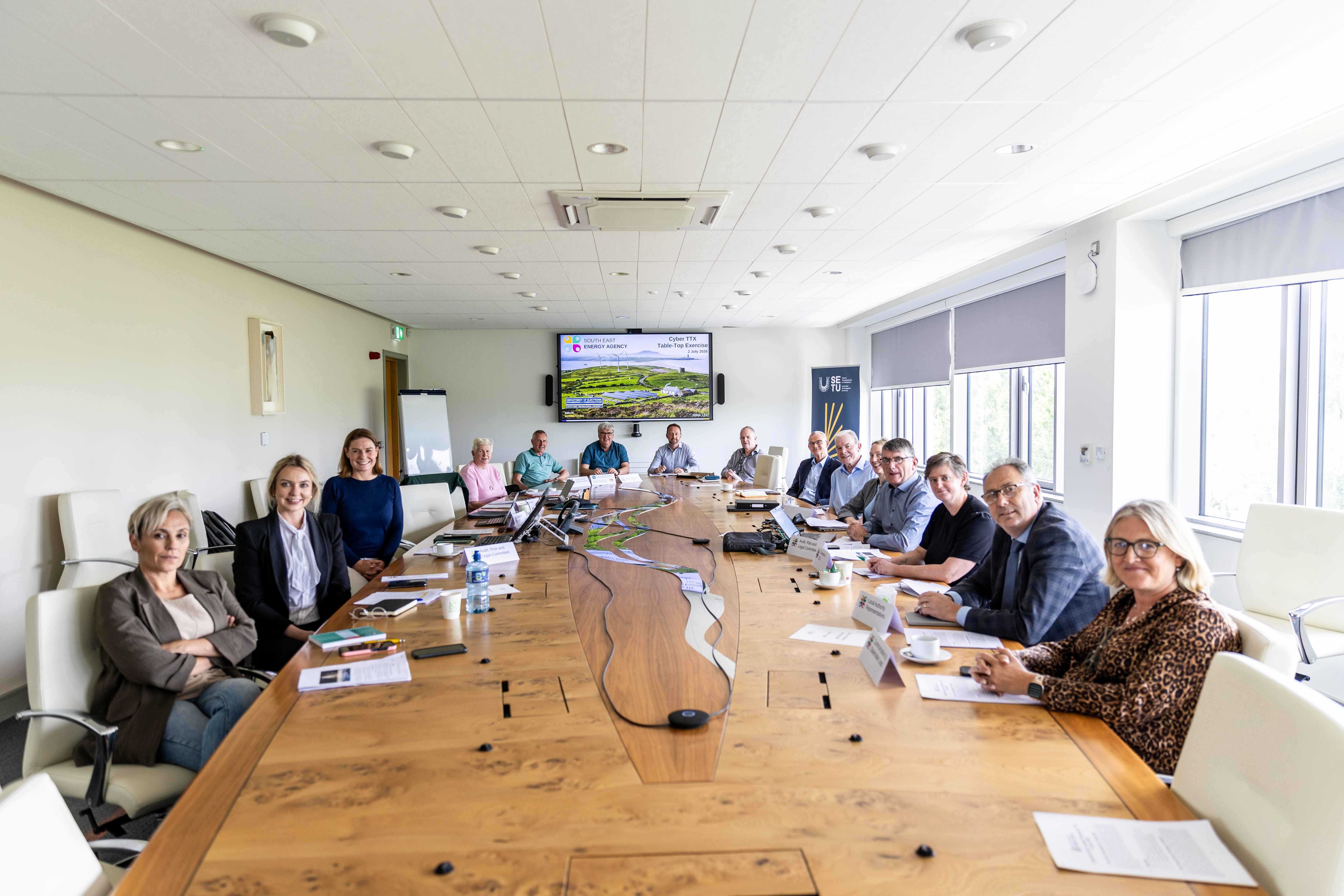
SETU’s commitment to sustainable energy transition
The cybersecurity training offered by SETU, reinforces the University’s commitment to partnering with regional public bodies to ensure that the southeast remains a leader in secure, resilient, and sustainable energy transition.
The SEEA is the energy agency for Carlow, Kilkenny, Wexford and Waterford, working in partnership to deliver energy saving projects for the local authorities, communities and individual homes across the south east.
Cybersecurity training
On the day, Dr Diarmuid Ó Briain offered simulation training around cybersecurity competence, as a support to the SEEA Board as they manage multi-million euro retrofitting programmes for the region.
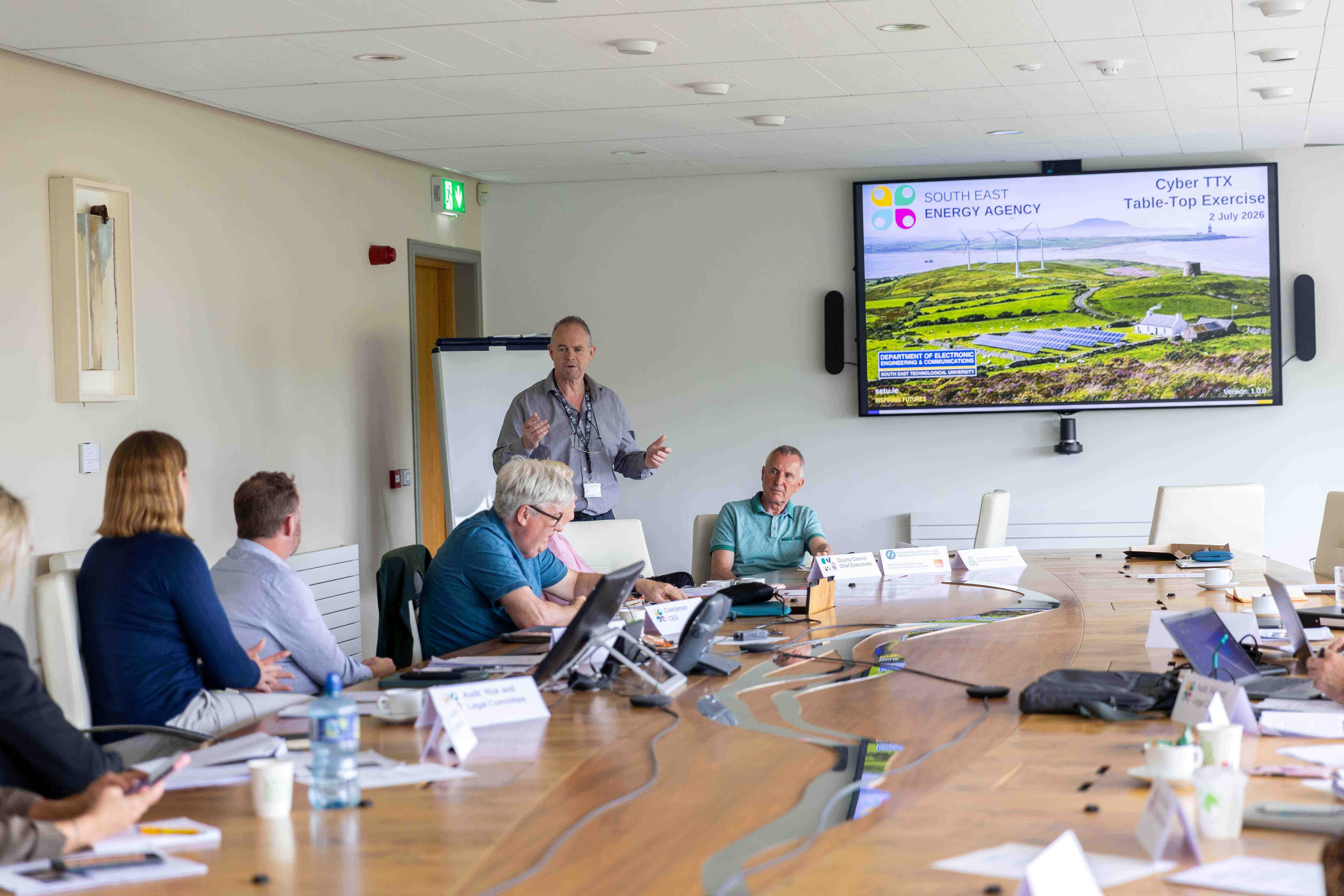
The simulation allowed the board members to step away from routine operations and confront a simulated €20 million financial freeze and a compromise of regional critical infrastructure.
The exercise simulated a "black swan" ransomware attack designed to test the region’s strategic resilience and governance under the 2026 regulatory landscape.
Today’s goal was to move beyond the 'IT panic' and focus on the Board’s duties and legal accountability in the cybersecurity domain.
Dr Diarmuid Ó Briain SETU’s Head of Department of Electronic Engineering and Communications
The 2026 regulatory landscape
Under the National Cyber Security Bill 2026, corporate boards will face direct personal liability for an organisation’s cyber resilience. During the intensive two-hour session, the Board successfully ratified a 4-Point Strategic Response Directive.

This blueprint covered essential legal compliance with the Data Protection Commission (DPC) and the National Cyber Security Centre (NCSC), financial triage for stalled community grants, and a long-term Zero-Trust architectural overhaul for regional data pathways.