

Representatives from SETU marked the culmination of their COST-funded CUPID action research network on ‘Cancer - Understanding Prevention in Intellectual Disabilities’ work. This took place at the COST (European Cooperation in Science and Technology)’ conference in Brussels, Belgium this week. The conference was entitled, ‘Partnering to support co-produced change.’
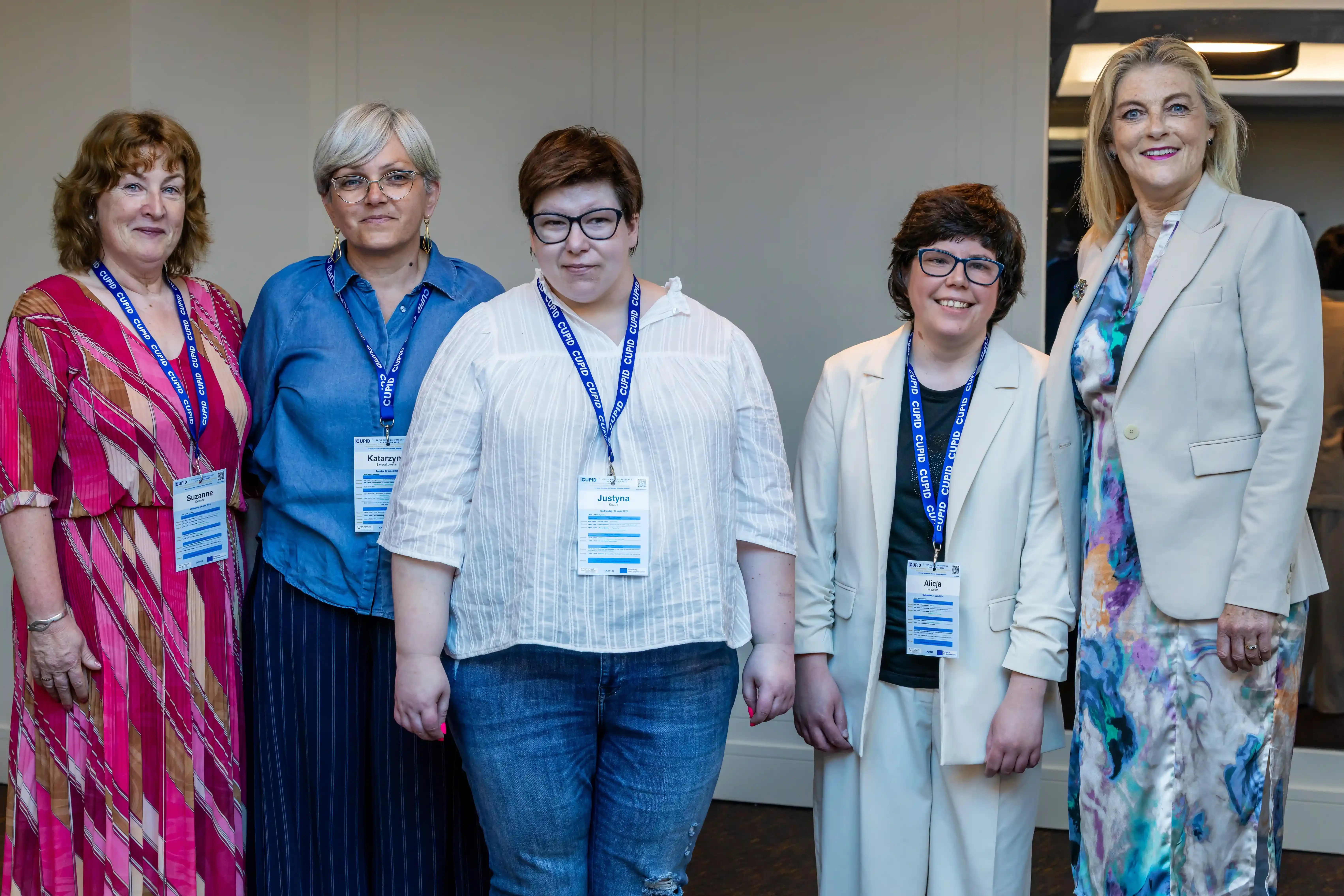
CUPID is an international research and innovation network dedicated to improving cancer prevention for people with intellectual disabilities. Led and coordinated by SETU, the network has brought together over 300 researchers, healthcare professionals, policymakers, self-advocates, and organisations from 34 European countries to address one of the most significant yet often overlooked health inequalities facing people with intellectual disabilities.
A defining feature of CUPID has been its commitment to co-production and meaningful participation by people with intellectual disabilities. Tas a COST action, it has actively involved people with lived experience in shaping discussions, contributing to research activities and helping to identify priorities for change. This commitment is reflected throughout the conference programme, which includes lived-experience presentations, testimonials and accessible summaries.
“CUPID demonstrates how research can grow from a single question into a movement for change. What began as doctoral research at SETU has evolved into a European network of researchers, healthcare professionals, policymakers and self-advocates working together to address an important health inequality.
This week marks the beginning of the next chapter. The relationships, knowledge and momentum created through CUPID will continue to drive more inclusive cancer prevention and healthcare for people with intellectual disabilities across Europe."
Dr Suzanne Denieffe Chair of CUPID and Head of Faculty of Arts and Humanities at SETU.
Opening the conference, Cynthia Ní Mhurchú MEP, emphasised the importance of ensuring that the health needs of people with intellectual disabilities remain firmly on the European agenda.
“At its heart, CUPID recognises a simple but powerful principle: accessible healthcare, accessible communication and meaningful inclusion are rights, not optional extras. They are the bottom line of preventative healthcare.
It is vital that everyone has equitable access to cancer prevention, screening and early diagnosis. The work of the CUPID network has highlighted both the challenges that remain and the opportunities for meaningful change. I commend SETU and its European partners for their leadership in bringing together researchers, healthcare professionals, policymakers and people with lived experience to advance this important agenda."
Cynthia Ní Mhurchú MEP
Building on doctoral work undertaken at SETU, researchers successfully secured European COST Action funding to establish CUPID, creating an international platform for collaboration, knowledge exchange and innovation. Research had identified significant barriers faced by people with intellectual disabilities in accessing cancer prevention information, screening programmes, and healthcare services.
The conference concluded with an accessible summary from Valerie Power, an Expert by Experience and student on SETU's Certificate in Personal Development programme. Valerie's involvement reflects a core principle of the CUPID project: that people with intellectual disabilities should be active partners in shaping research, policy and practice, not merely participants.
Valerie’s contribution embodies the project's commitment to placing lived experience at the heart of discussions on health, inclusion and equality, bringing a valuable perspective to the conference's findings and future recommendations.
The CUPID project leaves a lasting legacy of European collaboration, research, and practical resources aimed at improving equitable access to cancer prevention and healthcare for people with intellectual disabilities.