To foster new approaches in Youth Work through nature connection, SETU Land Sciences Living Lab has collaborated with Waterford and South Tipperary Community Youth Service to develop a five-day intensive training course called Creative Space in Nature.

The initiative created space for European youth workers to learn new means of incorporating nature into their practice with young people while connecting and sharing their own experience. The training consisted of a series of interactive, collaborative workshops and informal presentations, exploring activity pathways to improved nature connection. Supported by Erasmus+ funding, the training method immersed participants in nature, using the five positive pathways to nature framework. This evidence-based framework, developed from the research of University of Derby, is proven to promote greater nature connectedness, improve well-being and increase pro-environmental behaviour.
The five pathways formed the foundation of the programme:
- Engaging the human senses in nature
- Exploring emotional responses to natural environments
- Appreciating natural beauty
- Inspiring creative expression
- Fostering compassion for the natural world
These themes were explored at SETU’s West Campus, Carriganore and other locations around the south east, including Woodstown beach, the National Arboretum at Kennedy Park, Lismore Castle estate and the Comeragh mountains. The fifteen youth workers from Austria, Finland, Holland, Italy, Ireland (via Pakistan), Poland, Romania and Spain, guided by trainers from Ireland and Spain, learnt how nature-based activities can be facilitated in diverse natural environments.
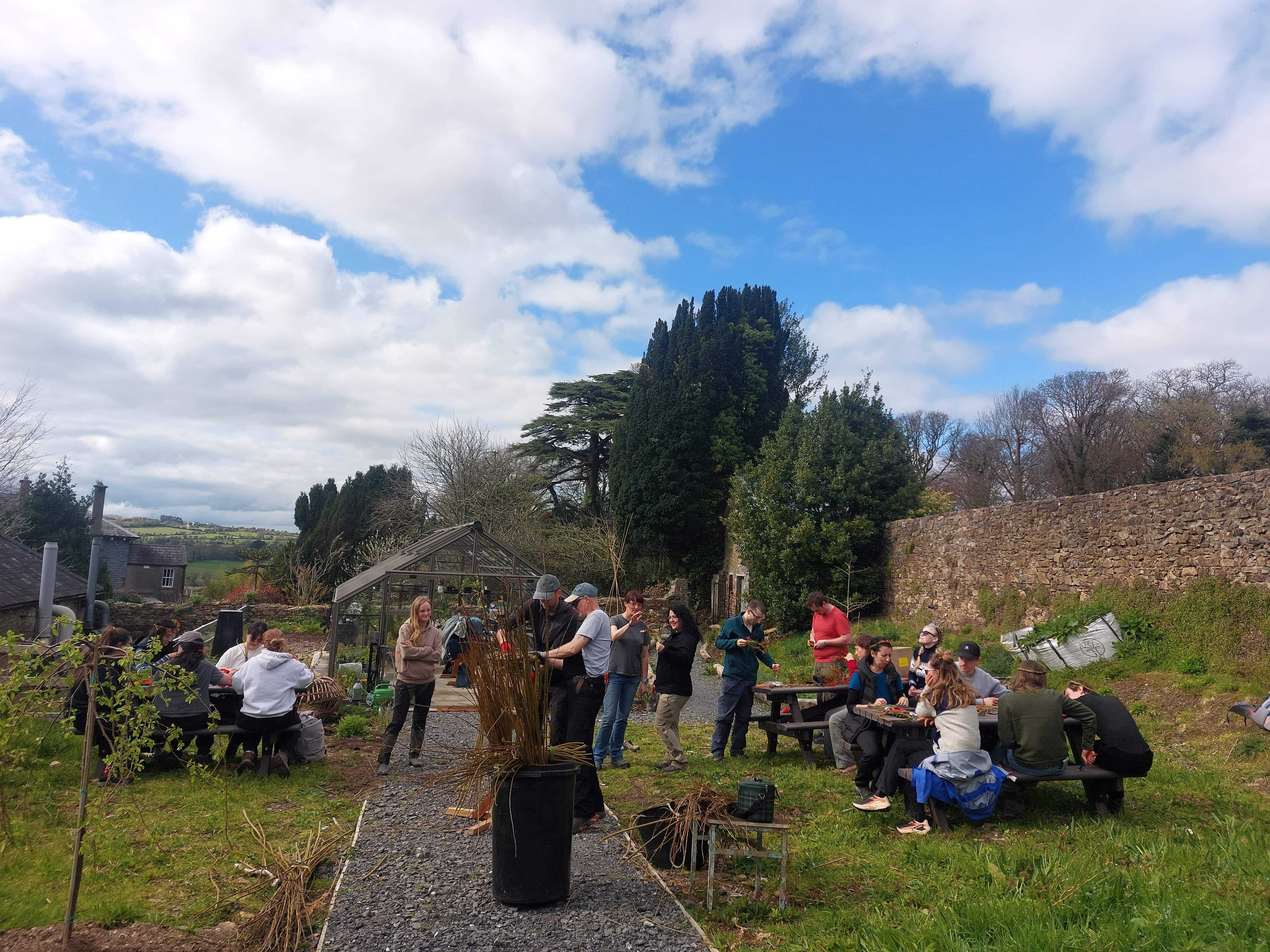
At the Land Science Living Lab at SETU’s West Campus, Carriganore, participants were guided through two immersive workshops. The first workshop facilitated by a local fisherman, Brendan Simpson, of Heritage Fisheries showcased the use of willow as a sustainable alternative to plastic, reducing maritime plastic pollution. The youth workers were encouraged to experiment and create their own weaves, the willow rods proving to be the perfect material for this practice. A second workshop involved using found natural materials from the sensory garden to create expressive art collages. Through this workshop, the youth workers also practiced seed-saving and plant propagating techniques.
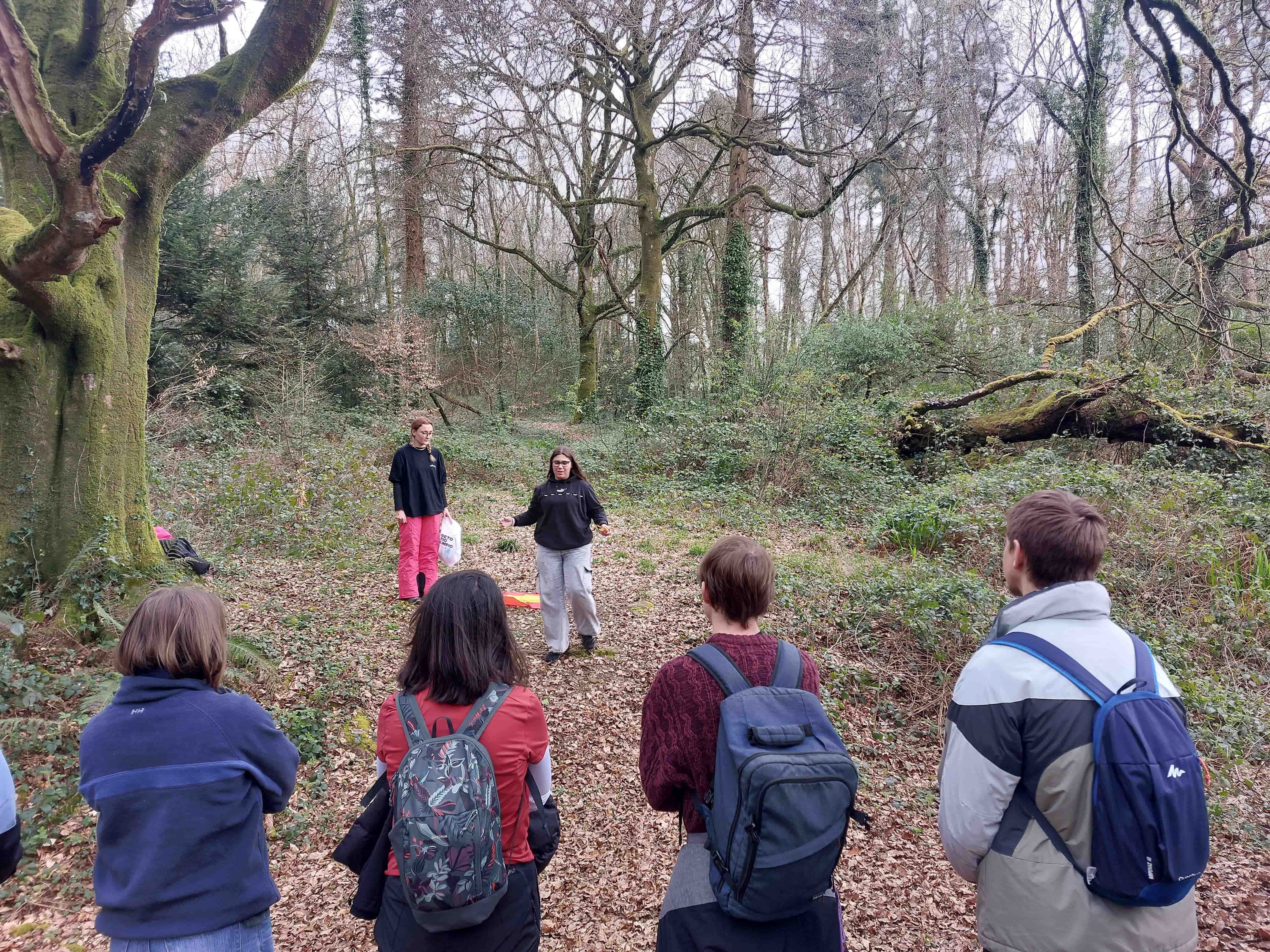
Many participants incorporated natural elements in SETU’s West Campus, Carriganore as part of their own presentations in the exchange of good practices walking seminar. Youth workers increasingly understand the benefits of using nature as a partner for youth work, simply because it adds enormously positive outcomes to the main goal of improving youth well-being through developing creativity and imagination, personal confidence, emotional intelligence, planning and problem-solving, resilience and determination, communication skills and relationships with other.