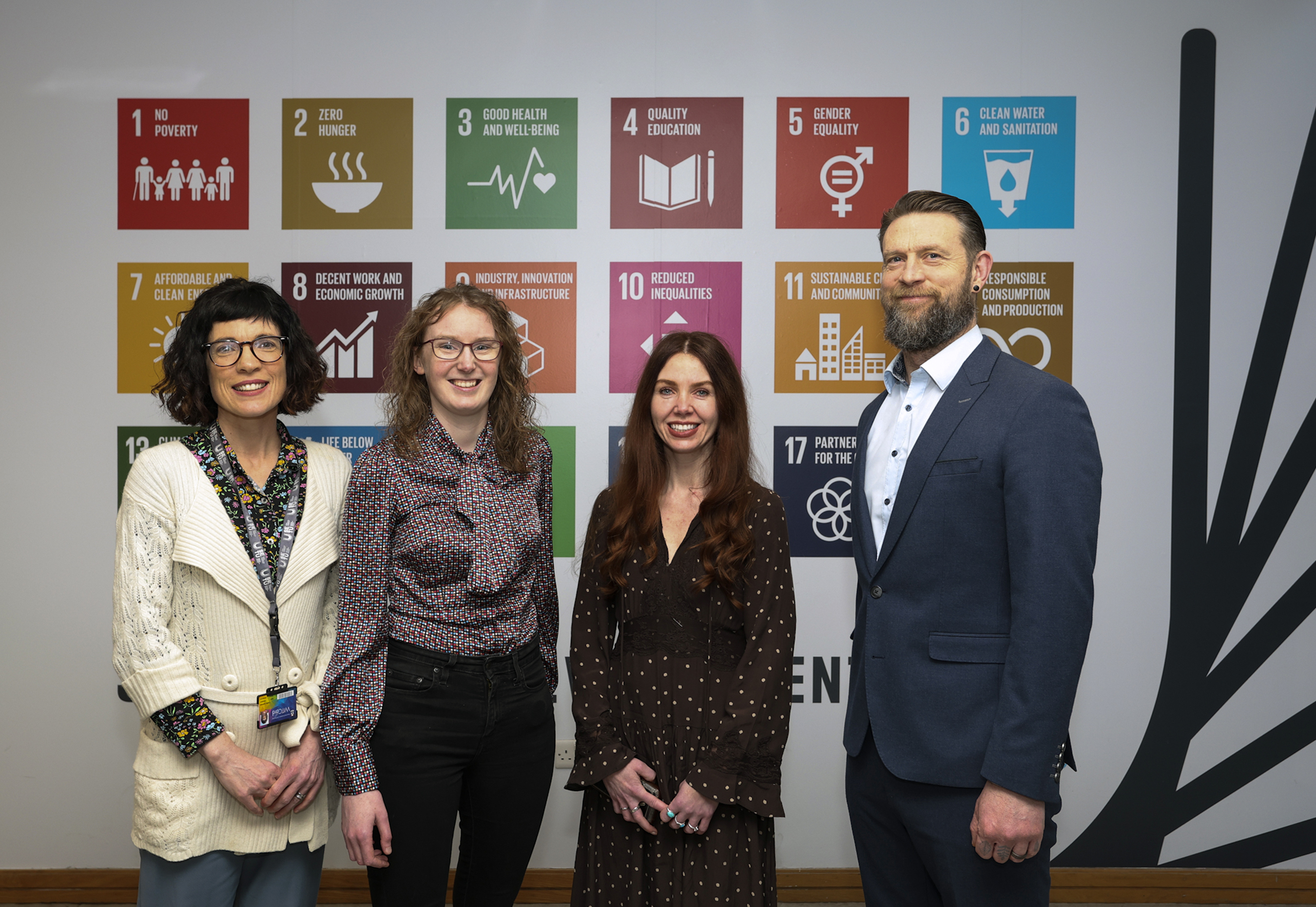
SETU’s Department of Pharmacy and Department of Science, within the Faculty of Science and Computing, have reaffirmed their commitment to sustainable science education by signing the Green Chemistry Commitment (GCC), a global initiative led by Beyond Benign.
By joining this international network, SETU becomes part of a growing global community of universities working to transform chemistry education to better protect human health and the environment. The commitment represents an important step towards strengthening the integration of sustainability within teaching and research across both departments and the wider University.
The Green Chemistry Commitment is guided by 12 internationally recognised principles that promote waste prevention, safer chemical design, improved energy efficiency and the development of processes that reduce environmental and safety risks. At SETU, academic staff will work towards embedding these approaches within pharmacy, pharmaceutical science and science programmes, supporting the progressive development of graduate competencies required to apply sustainable and safer practices in modern scientific, healthcare, and industrial workplaces.
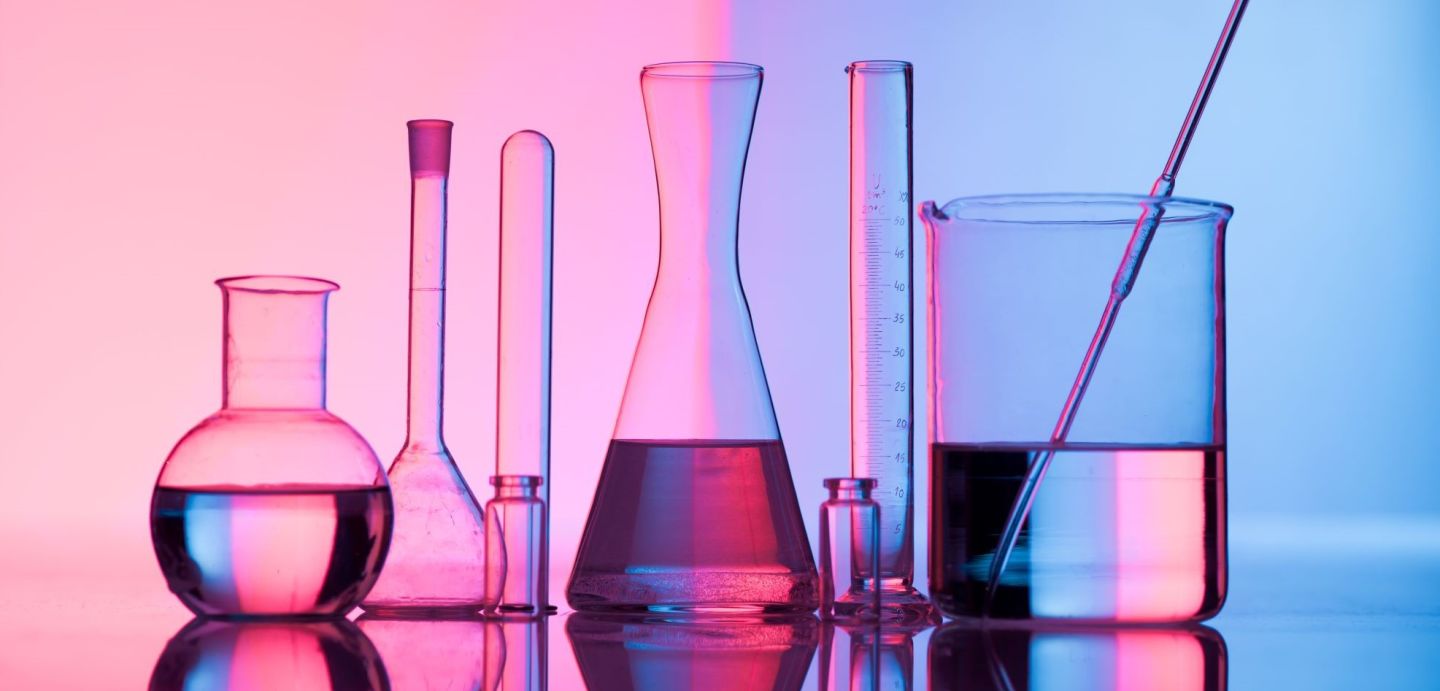
Students will benefit from the continued implementation and development of greener laboratory experiments designed to reduce chemical hazards and minimise waste. Teaching will also increasingly incorporate toxicological thinking, helping students understand how chemicals and medicines may impact human health and the environment while supporting informed development of safer alternative processes, procedures and products
Academic staff within each department will work collaboratively towards integrating green chemistry principles across lectures, laboratory classes and research projects over time, aligning sustainability and safety considerations with professional scientific practice within their respective disciplines.
“Sustainability is a core strategic goal in our new Department of Pharmacy and SETU’s Strategic Plan. In industrial pharmacy, Green Chemistry plays a crucial role in ensuring that medicines are developed and manufactured responsibly. By signing this commitment at the outset of our Master of Pharmacy, we confirm our plan to embed sustainability throughout the programme, from core pharmaceutical sciences to pharmacy practice. We look forward to continued collaboration with the Department of Science and our engagement with the GCC network”.
Dr Claire Lennon Head of the Department of Pharmacy
"We have a long‑standing commitment to sustainability in the Department of Science that is deeply embedded in our teaching and research. Signing the Green Chemistry Commitment marks a natural and important progression of this work, and strengthens our focus on safer, more efficient and environmentally responsible scientific practice.
The Green Chemistry Commitment ensures that our students continue to graduate with the skills and mindset needed to lead sustainable change in industry, research and healthcare. We are particularly pleased to build on our collaborations with colleagues in the Department of Pharmacy, ensuring that together we prepare scientists and pharmacists who are equipped to design, evaluate and implement greener processes that support sustainable futures for society."
Dr Sinéad O'Halloran Head of Department of Science
“Our goal is to graduate scientists who can actively contribute to safer chemical and pharmaceutical practices from the beginning of their careers. Through the integration of green chemistry and toxicological thinking across lectures and laboratory teaching, students will learn to minimise risk, reduce waste and make informed decisions that protect both human and environmental health.”
Dr Tracey Coady Lecturer in Pharmaceutical Science.
Through participation in the Green Chemistry Commitment, SETU aims to prepare future scientists and pharmacists who can contribute to sustainable innovation, responsible manufacturing practices and environmentally conscious healthcare and scientific systems.
As members of the GCC, SETU joins institutions worldwide advocating for safer chemical practices in higher education and beyond, contributing to shared learning and measurable progress towards safer and more sustainable chemical practices.