The Mainframe Technologies Programme provides learners with practical skills in enterprise computing, IBM Z, z/OS, mainframe programming and hybrid cloud integration. Delivered across three semesters, the programme introduces the core technologies behind mission-critical systems used in sectors such as banking, insurance, government, healthcare and financial services. Learners will develop an understanding of how mainframes operate, how mainframe applications are developed and maintained, and how these systems connect with modern cloud, DevOps, automation and API-based architectures.
The programme is designed for computing graduates and IT professionals who want to build specialist skills in a high-demand area of enterprise IT. Students begin with foundational mainframe concepts before progressing to practical programming and cloud-enabled mainframe modernisation.
Unique Features
This programme has been developed with IBM, Kyndryl, Sun Life and General Motors to reflect current industry needs in enterprise computing.
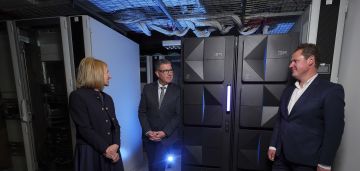
Students will have access to SETU’s brand-new IBM z17 Mainframe, providing hands-on experience with modern mainframe infrastructure, tools and workflows.
The programme combines IBM Z, z/OS, mainframe programming, DevOps, automation, APIs and hybrid cloud integration, giving learners practical skills for working with mission-critical enterprise systems.
Delivery
The programme will be delivered online, using SETU’s Education Award-winning approach to online delivery. Learners will take part in live online classes, supported by flexible learning activities that can be completed around work and other commitments.
Practical learning is central to the programme. Students will complete self-paced online labs with access to mainframe environments and guided learning materials. These labs are designed to help learners build confidence through hands-on practice, supported by academic staff and industry experts from IBM, Kyndryl, Sun Life and General Motors.
This flexible model combines the structure of scheduled classes with the convenience of online access, allowing learners to develop specialist mainframe skills in a supported, practical and industry-informed environment.
The programme is delivered over three 12-week semesters, allowing learners to build their skills gradually while balancing study with work and other commitments.
In Semester 1, students complete Mainframe Technologies, a 5 ECTS module. The expected workload is approximately 4 hours per week, including live classes, self-paced labs and independent learning.
In Semester 2, students complete Mainframe Programming 1 and Mainframe Cloud Computing, totalling 15 ECTS. The expected workload is approximately 12 hours per week, including live classes, practical labs and independent study.
In Semester 3, students complete Mainframe Programming 2, a 10 ECTS module. The expected workload is approximately 8 hours per week, including live classes, self-paced labs and independent learning.
Live classes will be delivered online and recorded where possible. Students will also complete guided self-paced labs and independent learning activities each week.
Mainframe Technologies (5ECTS)
This module introduces learners to the role of mainframes in modern enterprise computing. It explores IBM Z architecture, z/OS, mainframe operating environments, storage, security, job control and the use of mainframes in sectors such as banking, insurance, government and financial services. Learners will develop a foundation for understanding how mainframes support secure, reliable and high-volume business systems.
Mainframe Programming 1 (10 ECTS)
This module gives learners practical experience of programming in a mainframe environment. It introduces core development tools, workflows and programming practices used on IBM Z systems. Learners will work with JCL, data handling, programme structure, debugging and enterprise programming concepts, building the skills needed to develop and maintain mainframe applications.
Mainframe Cloud Computing (5ECTS)
This module examines how mainframe systems connect with modern cloud and hybrid enterprise architectures. Learners will explore APIs, automation, DevOps practices, containers, integration patterns and the role of mainframes within cloud-enabled infrastructure. The module focuses on how organisations modernise and extend mainframe systems while maintaining security, reliability and business continuity.
Mainframe Programming 2 (10ECTS)
This module builds on Mainframe Programming 1 by developing more advanced programming and application maintenance skills. Learners will work with larger and more complex mainframe applications, focusing on testing, debugging, performance, data access, integration and modernisation. The module prepares learners to contribute to enterprise-quality software development in mission-critical mainframe environments.
Entrants will be expected to have a Level 8 degree, with minimum second class honours, in computer science or a closely related discipline. Some applicants who do not immediately meet these requirements may wish to consider using SETU’s Recognition of Prior Learning mechanism in order to make application that can be considered for entry to this course.
Graduates of the Mainframe Technologies Programme may use the certificate as a pathway towards further postgraduate study in computing.
As a 30 ECTS specialist certificate on the MSc in Computer Science, students who wish to continue their studies can undertake additional taught modules, followed by the MSc research or capstone element to complete the Masters.
This provides learners with a flexible route to deepen their expertise in areas such as enterprise software systems, cloud computing, DevOps, cyber security, artificial intelligence, software engineering and research-informed computing practice.
For students who want to continue beyond the certificate, the MSc route offers the opportunity to combine specialist mainframe knowledge with a broader postgraduate qualification in Computer Science.
Graduates of the Mainframe Technologies Programme will be well placed to pursue roles in enterprise computing, particularly in sectors that rely on secure, high-volume systems such as banking, insurance, financial services, government, healthcare and large-scale industry.
The course can support progression into areas such as:
Mainframe application development
Enterprise software development
IBM Z and z/OS support
DevOps and automation for enterprise systems
Hybrid cloud and mainframe integration
Application modernisation
Systems analysis and technical support
Infrastructure and operations roles
Because the programme has been developed with IBM, Kyndryl, Sun Life and General Motors, and includes access to SETU’s brand-new IBM z17 Mainframe, learners will gain practical experience that is directly relevant to industry needs.
The programme may also support further study or professional development in areas such as cloud computing, cyber security, enterprise systems, software engineering and AI-enabled infrastructure.