
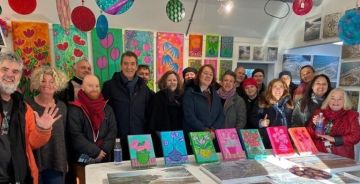
SETU hosted partners from across the Atlantic area for the fifth SEALabHaus Transnational Forum, highlighting regional expertise and the south east’s coastal heritage. On 19 and 20 November, partners from four Atlantic regions visited Waterford and journeyed along the 'Copper Coast' to Dungarvan.
The SEALabHaus project is co-funded by the European Union Interreg Atlantic Area Programme and brings together public- and private-sector partners from Portugal, Spain, France, and Ireland. The initiative introduces an ambitious, collaborative approach to Atlantic tourism by establishing a transnational laboratory focused on the architecture, heritage, culture, and tourism of the sea, guided by the principles of the New European Bauhaus (NEB).
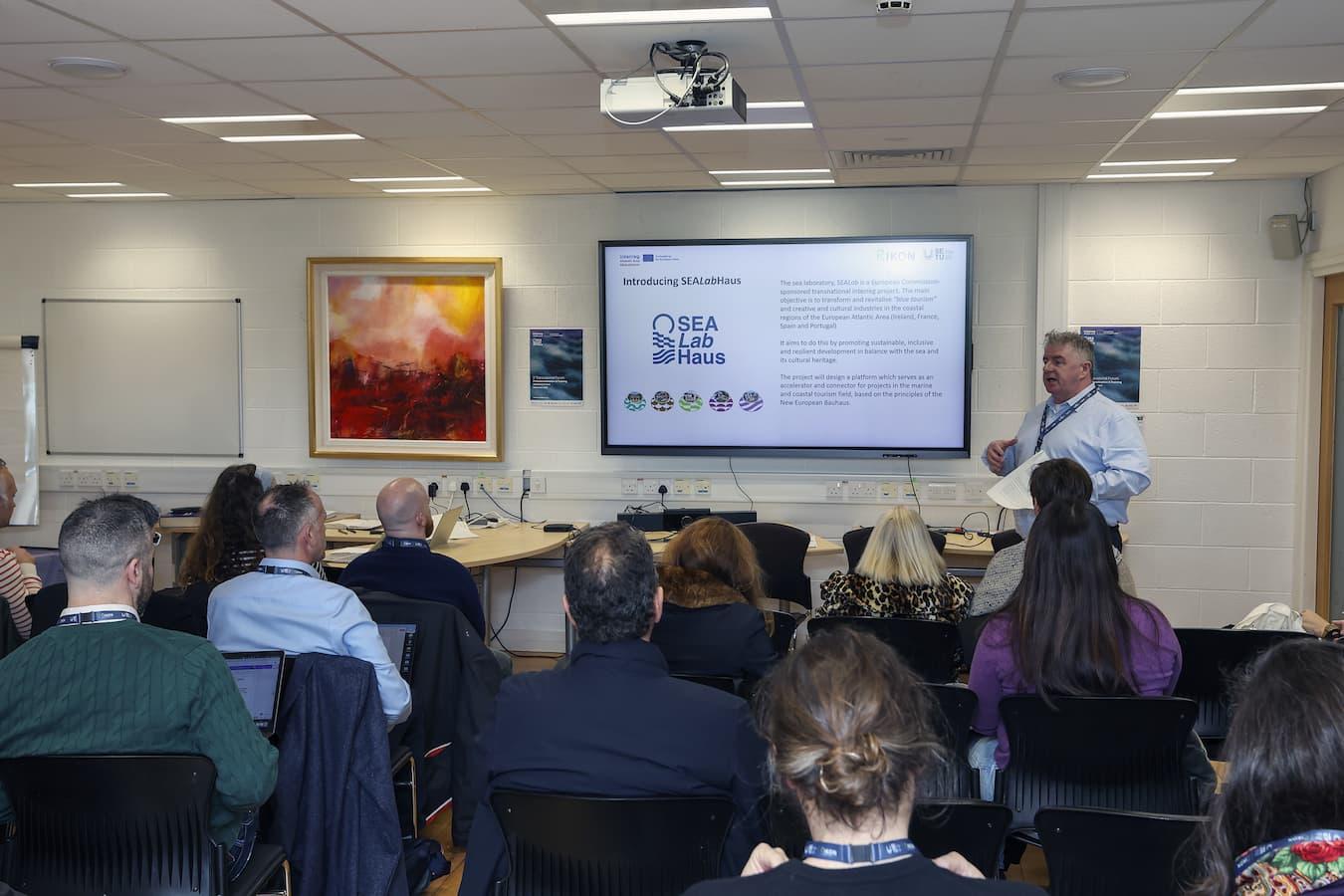
SEALabHaus enables regions across the Atlantic Area to learn from one another while building a shared vision for sustainable, creative, and community-centred tourism."
Dr Patrick Lynch
Dr Patrick Lynch, Director of BRIM-RIKON Research Centre at SETU, said the forum demonstrated the value of international collaboration. He said “SEALabHaus enables regions across the Atlantic Area to learn from one another while building a shared vision for sustainable, creative, and community-centred tourism. Hosting the forum in Waterford allowed us to showcase our own coastal assets while strengthening partnerships that will benefit the wider region.”
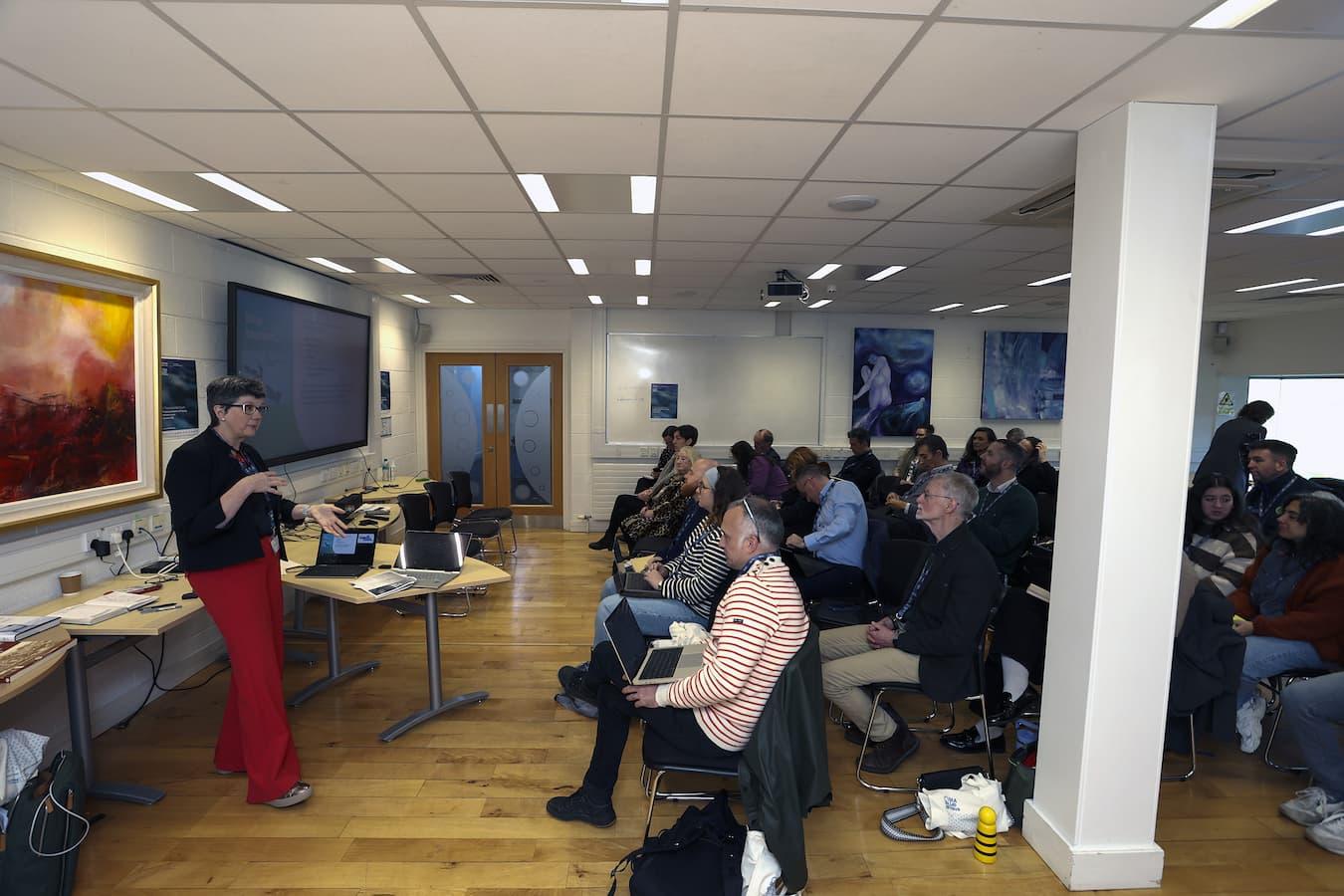
Organised in partnership with SETU’s Faculty of Business, the two-day forum offered opportunities for international collaboration and regional engagement. The first day, hosted at the SETU Xcelerate Centre, focused on professionalisation in blue tourism. Speakers included Professor Felicity Kelliher (SETU), Dr Eamonn McEneaney (Waterford Treasures Museum), Johnny Brunnock (Waterford City & County Council), Dr Senan Cooke (DFBA), Ray Cullen (Vitamin Sea Festival), and Nollaig Healy (ACT Waterford). In addition, an afternoon participatory activity focused on ‘Learning Design in Practice’ was facilitated by Emmet Cullinane and Neill Wylie, Centre for Academic Practice, SETU and offered an opportunity for partner collaboration.
Waterford’s coastal heritage is central to the visitor experience, and projects like SEALabHaus help us deepen our understanding of how to protect, develop, and promote that heritage responsibly.”
Professor Felicity Kelliher
Reflecting on SETU’s role, Professor Felicity Kelliher noted that, “Waterford’s coastal heritage is central to the visitor experience, and projects like SEALabHaus help us deepen our understanding of how to protect, develop, and promote that heritage responsibly. The forum created valuable space for dialogue between researchers, practitioners, and community partners.”
On the second day, project partners participated in a sand-art workshop on Kilmurrin Beach with environmental artist Sean Corcoran. This was followed by visits to the Copper Coast and Crockery Mountain in Dungarvan. A concluding tour of Waterford Treasures Museum rounded off the forum. The event highlighted the region’s natural beauty and the collaborative initiatives underway to enhance and professionalise coastal and cultural tourism for the benefit of residents and visitors.