
Researchers:
Dr Ray Griffin
Department of Management and Organisation, SETU, Centre for Finance & Business Research Group
Challenge:
Ireland spends over a fifth of all social protection funding through means-tested payments (CSO, 2024), more than twice the EU average. However, the lived experience of navigating the social protection system had received relatively little independent scrutiny. In late 2023, the Oireachtas committee identified that the Means Test in the Irish Social Welfare system was in need of revision. Carers, lone parents and disabled claimants routinely described to TD’s, the process as application process as humiliating, opaque and unpredictable, but these testimonials lacked measurable evidence connecting administrative complexity to exclusion from entitlements. The Oireachtas commissioned research from the Oireachtas Library and Research Service (L&RS) and the Parliamentary Budget Office (PBO). In tandem, the Department of Social Protection also commenced a study of means testing.
Impact Summary:
Research carried out by Dr Ray Griffin on the administrative processes of Ireland's welfare system directly informed the Oireachtas Joint Committee on Social Protection's national Report on Means Testing (October 2024). Dr Griffin was invited to provide evidence to the Committee, including an original readability analysis outlining that Department of Social Protection guidance requires university-level literacy to understand, was cited by advocacy witnesses in later hearings and helped shape the Committee's recommendations on simplifying claimant communication. This built on previous public scholarship and engagement work carried out during the 2024 referendum campaign on care and the family, which included a campus debate, broadcast interviews, and further analysis of Social Welfare Appeals Office reporting.
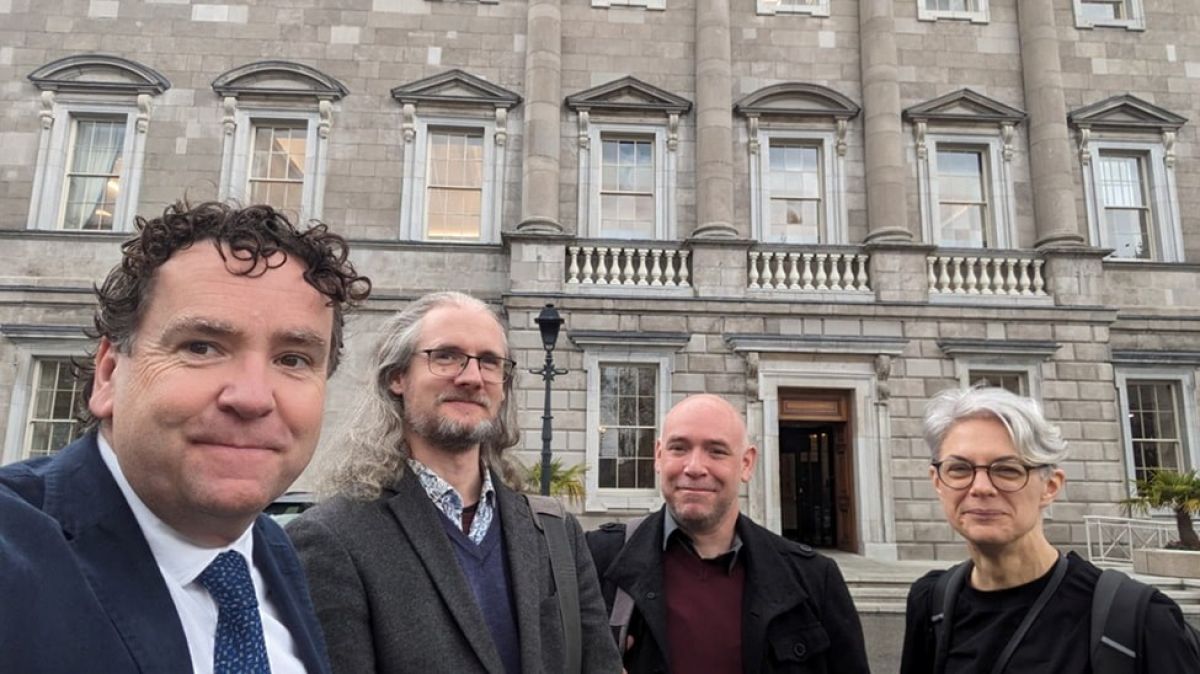
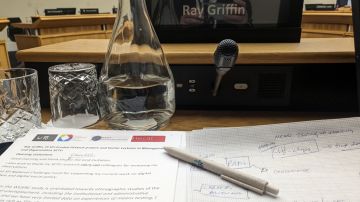
On 24 April 2024, Dr Ray Griffin gave invited evidence to the Houses of the Oireachtas Joint Committee on Social Protection, Community and Rural Development, and the Islands, as part of its national inquiry into means testing in the Irish social welfare system. Dr Griffin appeared alongside academics from Trinity College Dublin and University College Cork, in a session dedicated to the systemic and organisational logic of means testing, an area the Committee identified as under-researched relative to the wealth of testimony it had already gathered on income thresholds and disregards. Drawing on the Waterford Un/Employment Research Collaborative's (WUERC) ethnographic work on the experience and administration of unemployment, and on the SFI-funded PEStech project led by Dr Griffin, he offered the Committee a novel feature in the evidence: a direct, testable measure of administrative accessibility. Dr Griffin reported that the Department of Social Protection's own published guidelines on means testing scored a Flesch-Kincaid readability level of 48.2, meaning a person would need university or college-level education to understand the rules governing their own entitlements. This was set this alongside evidence that around 21% of Ireland's total social protection spend is disbursed through means-tested schemes, each with distinct, often contradictory, thresholds and disregards. It was recommended that the Department capture better data on non-claiming and treat first communications with claimants as an opportunity to be hopeful and kind rather than punitive. The evidence on over-use of means testing, administrative burden, and poverty traps/thresholds were carried through to the significant early recommendations; as well as the detailed scheme-by-scheme observations.
In the Committee's subsequent hearing on 29 May 2024, Carly Bailey of One Family Ireland cited Dr Griffins readability finding to fellow witnesses and Committee members as evidence that the system as designed, excludes people with lower literacy, language barriers or learning disabilities, a point that fed into the Committee's eventual recommendation that the Department 'improve communications, including the use of social media and public understanding of means testing'. Dr Griffins opening statement and evidence are formally recorded in the Committee's Report on Means Testing in the Social Welfare System in Ireland (October 2024, 33/JCSPCRI/032), among the sources underpinning its 24 recommendations to the Minister for Social Protection, recommendations now under active consideration as part of the Department's own parallel review of means testing.
Beyond the committee room, Dr Griffin promoted wider public understanding of the issues during the referendum campaign on the 39th and 40th Amendments (care and the family), held on 8 March 2024. On 21 February 2024 he captained the supporting team, with Councillor Mary Roche of Waterford City and County Council, in a public lunchtime debate at SETU's Cork Road Campus in Waterford on the motion 'That the proposed changes on family and care in the constitution be carried', chaired by Gerry Arthurs and opposed by Colette Colfer and Catherine Monaghan. In the week before the vote, Dr Ray Griffin gave broadcast interviews with Alan Corcoran on South East Radio and Damian Tiernan on WLR, in which the practical consequences of means testing for carers and families, including Carer's Allowance, were repeatedly raised as a live constitutional and welfare issue. Dr Griffin subsequently analysed the Social Welfare Appeals Office annual reports, building an evidence base on how consistently, and how fairly, means-tested decisions survive administrative review, work that continues to inform his engagement with policymakers, advocacy organisations and the public on the functioning of Ireland's welfare bureaucracy.
The research underpinning this impact sits within the Waterford Un/Employment Research Collaborative (WUERC), a SETU research group orientated towards ethnographic study of the experience of unemployment and the institutional and administrative infrastructure that governs it, and within Dr Ray Griffin's role as Principal Investigator on PEStech, a Science Foundation Ireland-funded project examining how digital and administrative systems shape labour market decision-making, and as co-investigator on HECAT, an EU Horizon 2020 project studying disruptive technologies in labour market decision-making across a fourteen-country comparative dataset.
The evidence to the Oireachtas Committee was novel in shifting the analytical focus of means-testing critique away from income thresholds and disregard rates, the terrain occupied by most advocacy submissions, towards the administrative and communicative machinery through which means testing is actually experienced by claimants. His submission noted that the Department of Social Protection remains something of a 'black box' for Irish social policy researchers: public reporting favours input-output data over lived experience, leaving a gap in understanding of how discretion, complexity and language operate at street level. Rather than repeating calls for higher disregards, a standard readability metric, the Flesch-Kincaid test, was applied to the Department's own published means-testing guidance, treating textual accessibility as an empirical proxy for administrative exclusion. This produced a concrete, citable figure, a required university-level reading age, that reframed 'complexity' from a qualitative complaint into a measurable design feature of the system, one capable of being tracked, targeted and improved.
This approach draws on a broader research programme into the organisational dimensions of welfare governance, including how bureaucratic categories such as the 'adult dependant' or the means-tested threshold are historically constructed rather than natural, and how digital and administrative systems can quietly reproduce older patriarchal and disciplinary assumptions even as they modernise. The research also drew on WUERC's ethnographic proximity to claimants and frontline administration, which gave Dr Griffin's evidence a groundedness that policy-desk analysis of legislation and rates alone could not offer, and which the Committee noted was largely absent from its prior evidence base.
Key findings Dr Griffin communicated to the Committee included: the disproportionate cognitive and administrative burden means testing places on claimants who are already managing illness, caring responsibilities or bereavement; the absence of good data on non-claiming and under-claiming as a hidden cost of complexity; and the recommendation that simplifying claimant pathways and integrating data-sharing across Revenue, the Department of Social Protection, health and local authorities would do more to advance equity than incremental changes to thresholds alone. These findings, and the readability measure in particular, gave the Committee an evidential hook that subsequent witnesses returned to, embedding Dr Griffin's research directly in the deliberative record that produced the Committee's national recommendations.
Evidence of Policy Impact
- Opening Statement, Dr Ray Griffin, Joint Committee on Social Protection, Community and Rural Development, and the Islands, 24 April 2024, Houses of the Oireachtas
- Official Meeting Transcript, Joint Committee on Social Protection, Community and Rural Development, and the Islands, 24 April 2024
- Citation of Griffin's readability finding by Carly Bailey (One Family Ireland), Official Meeting Transcript, Joint Committee on Social Protection, Community and Rural Development, and the Islands, 29 May 2024
- Report on Means Testing in the Social Welfare System in Ireland, Joint Committee on Social Protection, Community and Rural Development, and the Islands, October 2024 (33/JCSPCRI/032) — Griffin listed as witness (p.11) and opening statement reproduced in full (Appendix 1, p.42)
- 'Public lunchtime debate to be held on upcoming Family and Care Referendums', SETU News, 21 February 2024 (SETU Cork Road Campus, Waterford; I captained the supporting team with Cllr Mary Roche): https://www.setu.ie/news/public-lunchtime-debate-to-be-held-on-upcoming-family-and-care-referendums
- South East Radio interview with Alan Corcoran, week of 4 March 2024 (Family and Care referendums)
- WLR interview with Damian Tiernan, week of 4 March 2024 (Family and Care referendums)
SETU research team and colleagues (WUERC); HECAT consortium partners; Houses of the Oireachtas Joint Committee on Social Protection, Community and Rural Development, and the Islands.
This research contributes to the United Nations Sustainable Development Goals (SDGs) 3, 8, 9, and 17.