
Researchers at South East Technological University (SETU) have developed an innovative cybersecurity technology that could help protect critical digital communications against emerging cyber threats.
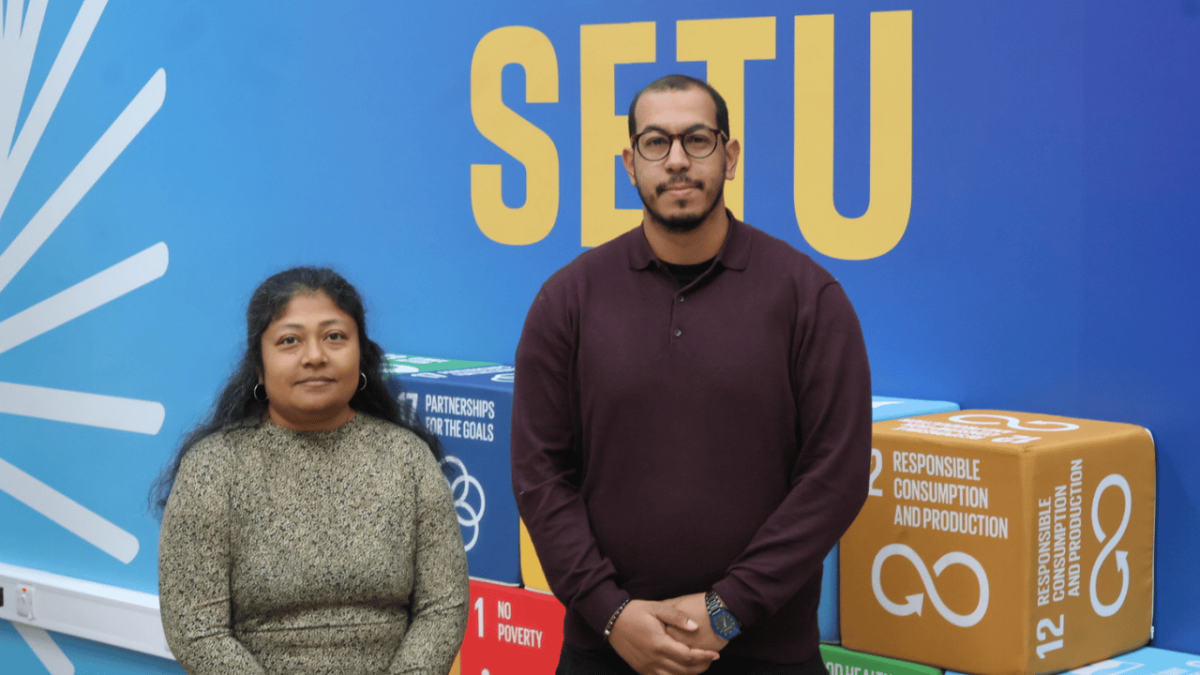
Developed by Dr Indrakshi Dey, Lecturer in Computer Science at SETU, and Dr Ilias Cherkaoui, a postdoctoral researcher at Walton Institute, the invention combines advanced encryption with quantum physics to help detect interference with secure communications. Entitled Tamper-Evident Post-Quantum Key Exchange, the technology has been the subject of a UK patent application, supported by SETU’s Technology Transfer Office (TTO).
Addressing a gap in secure communications
As quantum computing advances, governments and industries worldwide are preparing for a future in which powerful quantum computers could compromise widely used encryption systems. While new post-quantum security standards are being introduced internationally, they do not independently verify whether a communication link has been interfered with during the establishment of a secure connection.
The SETU invention aims to address this challenge using quantum entanglement, a phenomenon involving particles of light that share measurable correlations. By analysing these correlations, the technology is designed to identify potential interference before an encryption key is used, providing an additional layer of verification.
“Organisations worldwide are investing in post-quantum encryption to protect their communications against future threats,” said Dr Dey. “However, strong encryption alone does not necessarily tell you whether someone has interfered with the connection itself.”
Potential applications across industry
The researchers hope this additional check will give organisations greater confidence in the security of their communications. Potential applications include telecommunications, cloud computing, financial services, government and defence communications, and critical infrastructure such as energy, water and transport networks.
For Dr Cherkaoui, a key advantage is the ability to combine two independent forms of protection without replacing existing security standards. “Post-quantum cryptography provides mathematical security, while quantum entanglement offers an additional physical means of detecting interference,” he explained, adding that the approach could offer a less complex alternative to full quantum key distribution systems.
Supporting research towards commercialisation
The invention builds on SETU’s expertise in cybersecurity and quantum technologies, including Dr Dey’s leadership of major European research projects such as QUESTING, COALESCE and Q-FENCE. SETU’s Technology Transfer Office played a central role in progressing the invention towards commercialisation, working with the researchers and patent attorneys to prepare and file the patent application in SETU’s name.
Dr Dey acknowledged the significant contribution of Carol Faughnan of the TTO, whose guidance and support throughout the process she described as instrumental in reaching this milestone.
Welcoming the development, Dr James O’Sullivan, Head of Innovation and Commercialisation at SETU, said the invention demonstrated “the potential of SETU research to address significant challenges facing industry and society”. He highlighted the University’s commitment, through its Technology Transfer Office, to protecting intellectual property and creating opportunities for research innovations to reach the marketplace.
With the initial patent application filed, the TTO is now exploring licensing opportunities and promoting the technology to potential industry partners.
Upcoming DeepTech event
Interested businesses and potential licensees are invited to SETU’s upcoming fifth Deep Tech Partner Opportunity Platform event on Tuesday, 17 November, from 10.30am to 3.30pm at the Main Auditorium on SETU's Cork Road campus, to explore emerging technologies, licensing opportunities and commercial collaborations. The TTO will coordinate one-to-one meetings with Dr Dey, Dr Cherkaoui and other researchers to discuss opportunities for collaboration. This event is a collaboration between SETU, University of Limerick, University College Galway, University College Dublin.
If you wish to attend, please register here.
SETU's Technology Transfer Office is funded by Enterprise Ireland under the Knowledge Transfer (KT) Boost Programme, the four-year €33.4 million programme directed to Irish universities, co-funded by the Government of Ireland and the European Union under two European Regional Development Fund (ERDF) Regional Programmes – the Southern, Eastern and Midland Regional Programme 2021-2027 and the Northern and Western Regional Programme 2021- 2027.