

South East Technological University (SETU) brought together regional micro enterprises and enterprise support agencies on 18 March 2026 at the SETU Rural Innovation Hub, Dungarvan Enterprise Centre for a one-day in person micro enterprise digital maturity assessment (DMA) workshop
Drawing the ENTIRE European Digital Innovation Hub (EDIH) and BRIM-RIKON research centre expertise, participants explored how EU DMA digital supports can better serve micro enterprises across the South East, and throughout Europe.
This pilot project was led by Professor Felicity Kelliher, TU RISE Research Sabbatical Scholar and BRIM-RIKON academic lead, in collaboration with Dr Mary Fenton, TU RISE Research Sabbatical Scholar embedded in Dungarvan Enterprise Centre, and Hazel Peavoy and Stephen Barnes of the ENTIRE EDIH at the Walton Institute. Participants included regional stakeholders such as Waterford Local Enterprise Office, Propelor BIC, rural innovation specialists and SETU Rural Innovation Hub coordinators, alongside regional micro enterprise owner-managers.
Our aim is to ensure digital innovation supports are inclusive and effective for businesses of all sizes. This collaboration helps us better tailor our approach to micro enterprises."
Hazel Peavoy, EDIH at SETU
Four embedded sessions involving 12 micro enterprises focused on evaluating the EDIH Digital Maturity Assessment tool and its suitability for micro enterprises (businesses employing fewer than 10 people) which represent over 96% of all enterprises in Ireland and across Europe.
Professor Kelliher’s sabbatical research centres on developing a practice-based digital learning strategy framework tailored to micro enterprises. This work involves collaboration with SETU’s Rural Innovation Hubs in Carlow, Wexford, Waterford, and Kilkenny, as well as engagement with the ENTIRE team, Walton Institute and the wider European Digital Innovation Hub network.
While the ENTIRE EDIH supports SMEs in their digital transformation, engagement has been strongest among larger, technology-oriented firms. This initiative seeks to address the lower participation rates among micro and non-technical small enterprises, ultimately informing EU policy.
During the pilot, participants worked directly with EDIH specialists to assess their digital maturity and identify practical opportunities for development. Micro enterprise owners offered advice on how to hone the digital maturity assessment tool to better understand micro enterprise digital learning needs.
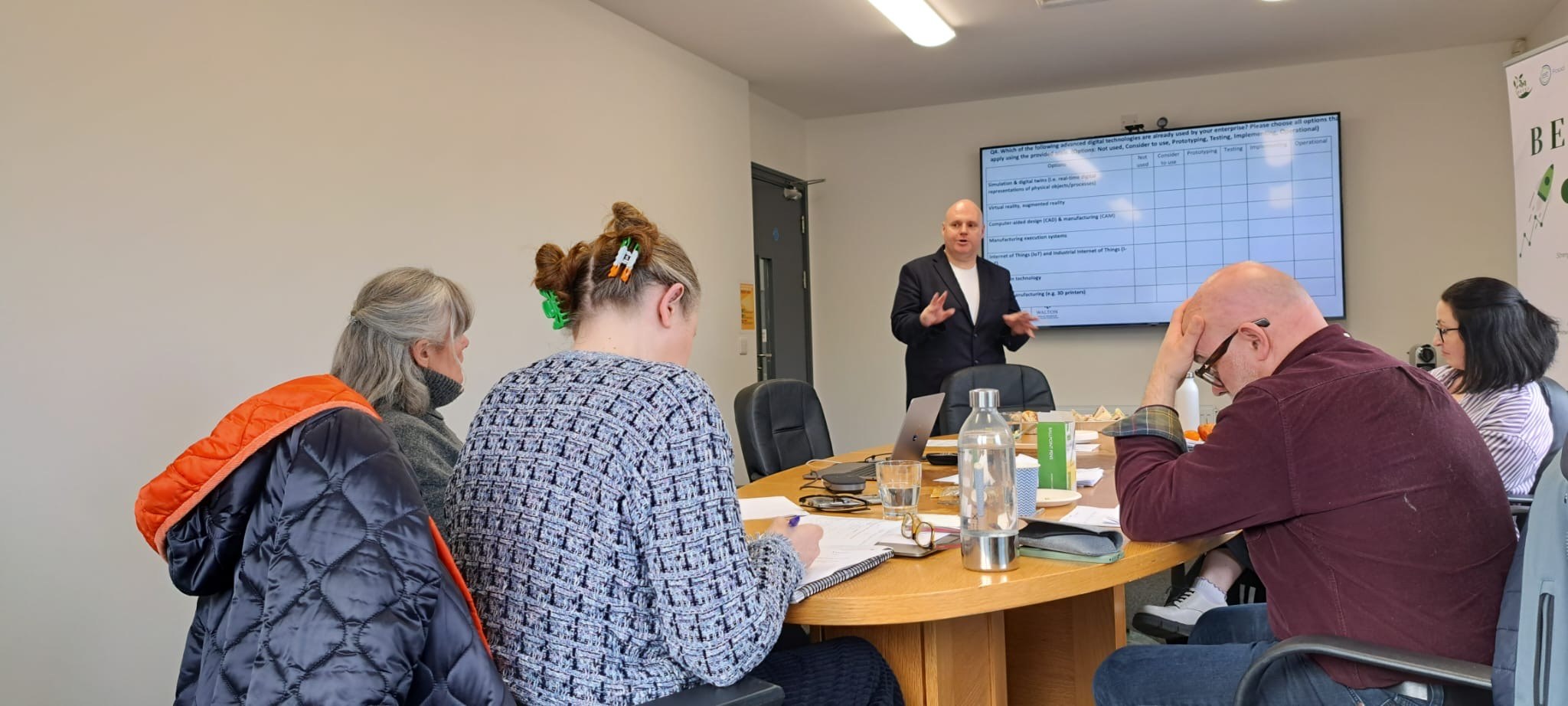
Notably, both product and service businesses were present at the workshop and were clustered by sector, to ensure that the data collected is representative of both sectors. Tangible digital differences were identified between the sectors.
Professor Kelliher said, “Micro enterprises are the backbone of both our economy and social fabric in Ireland and Europe, yet they remain underrepresented in digital transformation initiatives. This research aims to ensure supports are accessible, relevant, and impactful for this important cohort.”
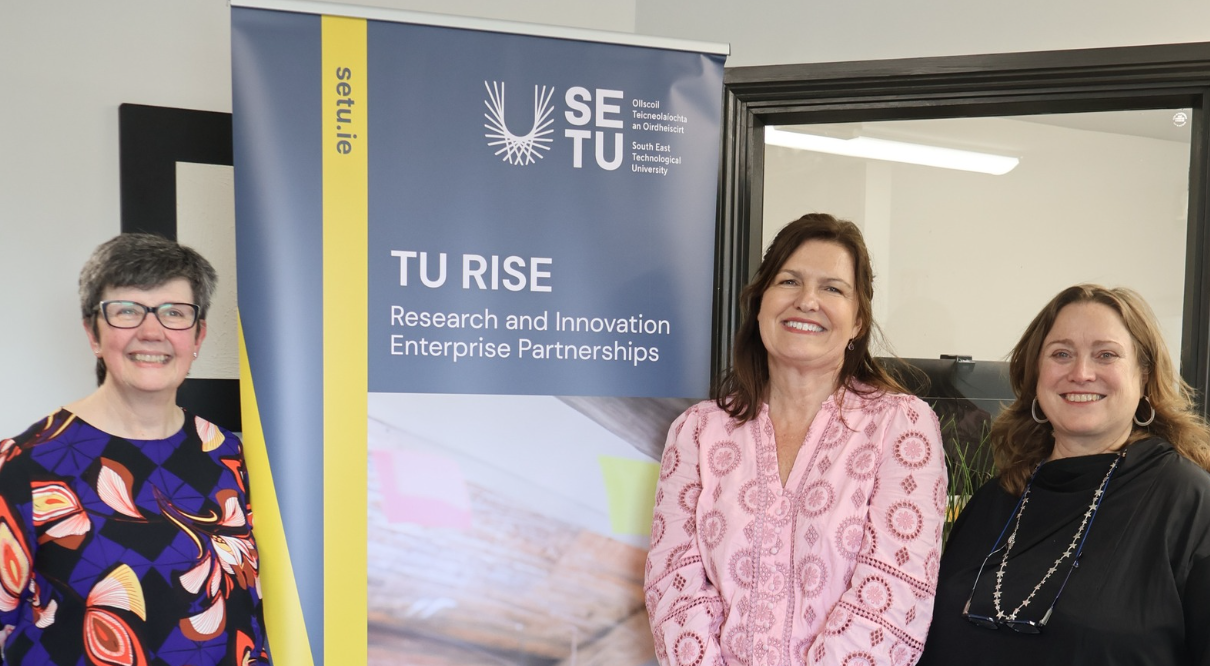
Insights from the pilot will inform recommendations to refine the EDIH digital maturity assessment tool, enhance supports for micro enterprises, and contribute to policy development at national and European levels.
Hazel Peavoy added, “Our aim is to ensure digital innovation supports are inclusive and effective for businesses of all sizes. This collaboration helps us better tailor our approach to micro enterprises.”
This initiative reflects SETU’s commitment, through TU RISE, to strengthening regional innovation capacity and supporting enterprise development.
The TU RISE Rural Innovation Hub at Dungarvan Enterprise Centre is part-funded by the TU RISE programme. SETU TU RISE is co-financed by the Government of Ireland and the European Union through the ERDF Southern, Eastern & Midland Regional Programme 2021-27.