


Nine South East Technological University (SETU) researchers feature in the 2026 World’s Top 2% Scientists list, the University’s highest total to date.
International recognition across disciplines
SETU announced five researchers in the 2025 edition and four in 2024. This highlights the growing international impact of research taking place across SETU.
The researchers recognised this year work across a wide range of disciplines, including eye health, advanced manufacturing, sustainable agriculture, public health and renewable energy. Their research includes studies on how nutrition can support eye health, alternatives to antibiotics in farming, and technologies that generate electricity from ocean waves.
“Nine of our colleagues have earned international recognition for work they have built up over many years. That is a proud moment for SETU,” said Professor Veronica Campbell, President of SETU. “I congratulate each of the researchers named and acknowledge the teams and collaborators who have helped make their work possible.”
About the 2026 list
The researchers appear in the single-year list published by TOPSCINET, which draws on Scopus citation data released through the Elsevier Data Repository. The 2026 edition uses citations received during 2025. The list highlights researchers whose published work is widely cited by others in their field. It also includes citations to work published earlier in their careers.
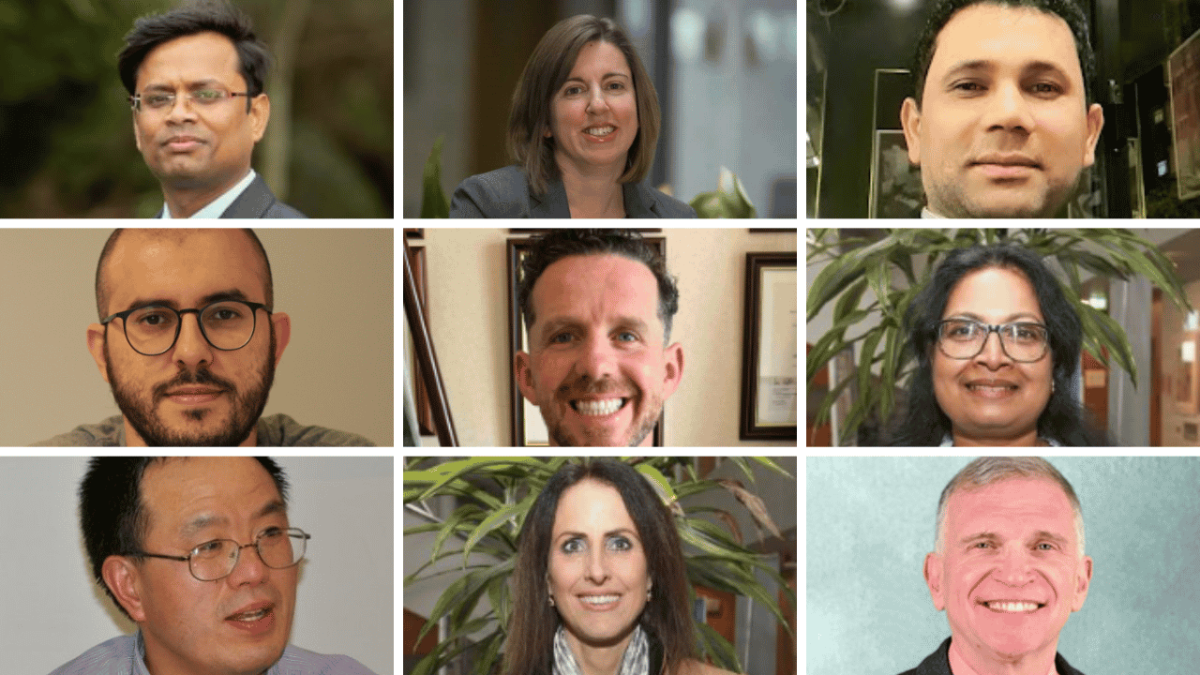
The SETU researchers named in the 2026 list are Dr Raja Das, Professor Gillian Gardiner, Dr Nima E. Gorji, Dr Marcos Mariano, Professor John Nolan, Dr Sweta Rani, Dr Wanan Sheng, Professor Marie Claire Van Hout and Professor John Wells. More information on each researcher can be found below.
Remembering Professor John Wells
Among those named is the late Professor John Wells, who died in May 2026 while serving as SETU’s Head of Faculty of Health Sciences. A mental health nurse by training, he previously led the Department of Nursing and later the School of Health Science. Professor Campbell said it was “especially meaningful to see John’s name on this year’s list”, recalling his contribution to nursing education and research and the warmth with which colleagues remember him.
The 2026 single-year list is available through TOPSCINET, where readers can search by researcher or institution.
Before joining SETU, Dr Raja Das led a nanomaterials research group in Vietnam and held postdoctoral positions at the University of South Florida and Japan’s National Institute for Materials Science. Now a materials scientist and scientific coordinator at SETU’s South Eastern Applied Materials (SEAM) Research Centre, he designs materials whose properties can be controlled at the nanoscale. His research ranges from materials that convert differences in temperature into electricity to magnetic nanoparticles that could deliver medicines or generate heat for potential treatments. He was also named in the 2024 World’s Top 2% Scientists list, and his inclusion again in 2026 recognises the continuing reach of his work in materials science.
Professor Gillian Gardiner is a senior lecturer in microbiology at SETU. She also leads a multidisciplinary agri-food research group at the University's Eco-Innovation Research Centre. Professor Gardiner’s appointment to the Scientific Committee of the Food Safety Authority of Ireland reflects the expertise she has built over more than 25 years in research and teaching.
Her research examines how probiotics and prebiotics could support animal health and reduce reliance on antibiotics. She has also investigated foodborne pathogens and the safe recycling of manure, applying microbiology to decisions that affect livestock health, farming practices and food safety.
Dr Nima Gorji brings expertise in applied physics and engineering to the design, fabrication and testing of solar cells, semiconductor devices and 3D-printed metal components. His academic training spans additive manufacturing, electronics, physics, process technologies and project management. He has characterised thin-film and perovskite solar-cell materials, used X-ray and synchrotron imaging to examine internal defects in materials and packaged chips, and used electron microscopy and mechanical testing to understand how materials behave. His computational work includes modelling how electrical charge moves through semiconductor devices and how materials respond to heat and mechanical stress.
Dr Marcos Mariano earned his doctorate at Université Grenoble Alpes in France and carried out postdoctoral research on polymeric materials at Brazil’s National Centre for Research in Energy and Materials. At SETU, he has applied that expertise to a challenge in eye care. Much of a conventional eye drop can be lost from the surface of the eye before the medicine has time to act. As part of SETU’s Ocular Therapeutics Research Group, he has helped develop and test formulations designed to stay on the eye for longer and release medicine in a controlled way. The group’s wider programme has generated patents, industry partnerships and spin-out companies, helping to move discoveries towards practical use.
A Fulbright Scholar and holder of SETU’s Chair in Human Nutrition Research, Professor John Nolan founded Nutrition Research Centre Ireland and built a clinical research programme around the relationship between nutrition and vision. A European Research Council grant supported two major trials examining how nutritional supplementation affects visual function. His work has focused on carotenoids that accumulate in the macula, the part of the retina responsible for sharp central vision. By measuring changes in both macular pigment and visual function, Professor Nolan and his colleagues have helped build the evidence for understanding when and how nutrition may support eye health. His research now also focuses on how nutrition impacts your brain health, helping to reduce the risk of cognitive decline and even Alzheimer’s disease.
Dr Sweta Rani’s research has earned her the Barcroft Medal, an early-career award from the Royal Academy of Medicine in Ireland. A science lecturer at SETU, she works with the Ocular Therapeutics Research Group and the Pharmaceutical and Molecular Biotechnology Research Centre. She maintains an active research programme alongside her teaching, with publications spanning cancer biology, drug resistance and eye health. Her research focuses on biomarkers, measurable biological signals that can help explain how disease develops and why responses to treatment vary. In cancer research, she has investigated how extracellular vesicles, tiny particles that carry material between cells, may contribute to resistance to targeted treatments.
Dr Wanan Sheng’s career spans marine hydrodynamics, aerodynamics and offshore renewable energy. He led ship-motion testing at the China Ship Scientific Research Centre before completing a doctorate at the University of Glasgow, where he went on to develop a model used to study airflow around helicopter blades and wind turbines. As lead hydrodynamicist at University College Cork’s Hydraulics and Maritime Research Centre, he contributed to European and industry projects on wave energy. His research uses computer models to show how changes to the shape and operating settings of wave energy converters can improve the amount of energy they capture, giving engineers a basis for comparing designs before building prototypes.
At SETU in Carlow, Dr Wanan Sheng teaches in the Department of Aerospace and Mechanical Engineering and continues his research on how wave energy converters can capture more energy from the sea.
Appointed SETU’s Vice President for Research, Innovation and Impact in 2024, Professor Marie Claire Van Hout brings more than two decades of research experience to the role. Her doctorates in the sociology of addictions and in law underpin research that connects public health, human rights and prison policy. In The Lancet Public Health, she led an international team of authors proposing standards for the care of women and their children during pregnancy and after birth in prison settings. That work shows how she uses evidence and human rights principles to set out what healthcare services should provide to people in detention.
SETU honours the late Professor John Wells, whose career combined academic leadership with research into mental health nursing and the delivery of care. He led the Department of Nursing and later the School of Health Sciences at Waterford Institute of Technology. As a principal investigator or co-investigator, he secured funding from the European Union, the Health Service Executive and the Department of Health and Children. His research examined workplace stress among health and social care staff, recruitment into psychiatric nursing, and employment opportunities for people living with mental health difficulties. His inclusion in the 2026 World’s Top 2% Scientists list is a tribute to the reach of that work and the legacy he leaves at SETU.