

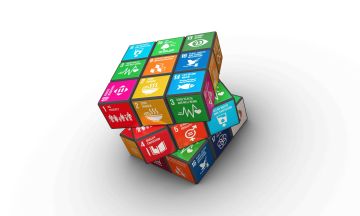
SDGs, Learning Objectives and Curriculum Integration
The United Nations Sustainable Development Goals (SDGs) provide a globally recognised framework for addressing interconnected social, environmental and economic challenges. The goals aim to support a more sustainable, equitable and peaceful future for people and planet.
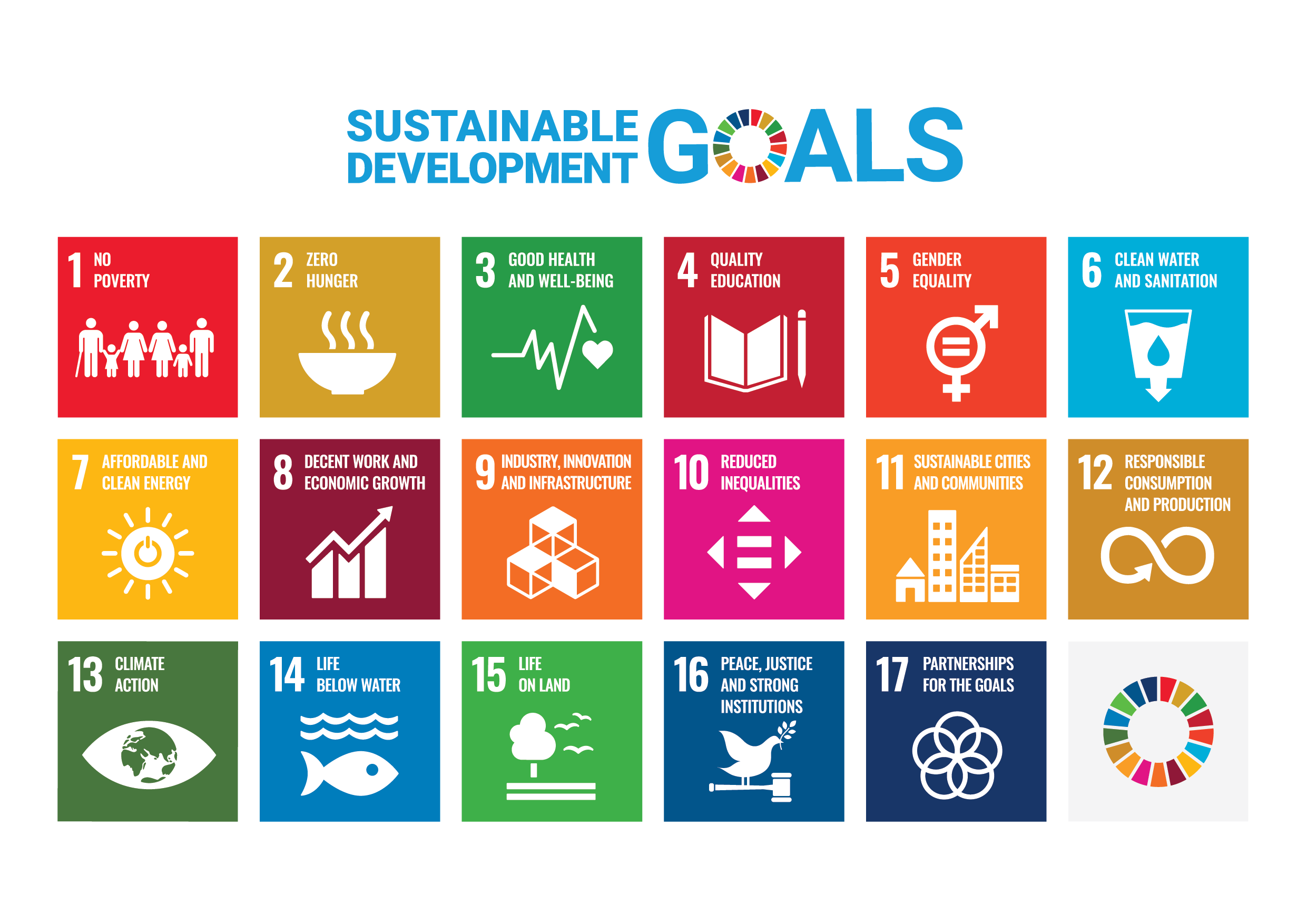
Education is recognised by UNESCO as a critical enabler of sustainable development:
“To create a more sustainable world and to engage with sustainability-related issues as described in the SDGs, individuals must become sustainability change-makers.”
Sustainability challenges are complex and interconnected, requiring responses that draw on multiple perspectives, disciplines and forms of knowledge. The SDGs provide a framework for exploring these relationships and understanding how environmental, social and economic systems interact.
The SDGs are interconnected. Progress towards one goal can support progress towards others, while actions in one area may also involve trade-offs elsewhere. Considering these interconnections helps students develop systems thinking and engage with the complexity of sustainability challenges.
The SDGs are also closely connected to sustainability competencies. While competencies focus on capabilities such as systems thinking, critical reflection, collaboration and ethical reasoning, SDG aligned learning can provide applied contexts in which these competencies are developed and practised.
Engaging students with sustainability challenges through the SDGs can support:
- engagement with contemporary global and local challenges
- interdisciplinary and systems based thinking
- applied and problem based learning
- development of sustainability competencies
- employability and future focused graduate capabilities
- connections between teaching, research and civic engagement
SDGs, Learning Objectives and Curriculum Integration
UNESCO has developed learning objectives for each of the 17 Sustainable Development Goals (SDGs), organised across cognitive, socio-emotional and behavioural domains of learning. These objectives provide a useful framework for considering how sustainability can be embedded within programmes and modules.
The learning objectives are intended to support educators in:
- identifying where SDGs align with disciplinary learning
- developing sustainability-related learning activities
- designing transformative and applied learning experiences
- supporting students to become active contributors to sustainable development
The learning objectives are not intended to be prescriptive or universally applied. Instead, they provide a flexible framework for identifying opportunities for sustainability learning within programmes and modules. In many cases, sustainability competencies and SDG learning objectives already align with existing disciplinary priorities, graduate attributes and professional expectations.
UNESCO Learning Objectives for the SDGs:
UNESCO Education for Sustainable Development Goals: Learning Objectives
Specific learning objectives for sustainable development are distinct from module learning outcomes. Rather than requiring every module to directly address sustainability, the aim is to consider where relevant SDGs naturally align with disciplinary content, professional practice and student learning.
Not all SDGs will be applicable to every module or subject area. However, across a programme there should ideally be opportunities for students to engage with a broad range of sustainability themes and understand the interconnections between goals.
Many sustainability issues cut across multiple SDGs and disciplines. For example, Reduced Inequalities (SDG 10) may connect to topics explored in business, engineering, health, education, social sciences and environmental disciplines.
The SDGs should therefore be understood as an interconnected framework rather than as isolated themes. Considering relationships between goals can help students recognise how environmental, social and economic systems interact and why sustainability challenges require integrated approaches to problem-solving.
UNESCO and Advance HE also emphasise that transformative sustainability learning should engage cognitive, socio-emotional and behavioural dimensions of learning often described as a Head, Heart and Hands approach. This means supporting students not only to develop knowledge and understanding, but also to reflect on values, collaborate with others and apply learning through action and practice.
When reviewing curricula, it can therefore be helpful to consider how learning activities, assessment and student experiences engage each of these dimensions.
Approaches to embedding SDGs in learning and teaching may include:
- linking modules to relevant SDGs and targets
- using SDGs as frameworks for analysing case studies or global challenges
- incorporating interdisciplinary or systems-based learning activities
- connecting sustainability research and local projects to teaching
- engaging students with community based or applied sustainability initiatives
- using reflective and problem based assessment approaches
- encouraging students to consider ethical, social and environmental dimensions of professional practice
Embedding SDGs does not necessarily require extensive curriculum redesign. In many cases, small changes to examples, case studies, discussions or assessment tasks can help students recognise sustainability connections within existing learning.
The SDGs provide a valuable framework for helping students understand complexity, interdependence and the wider societal relevance of their learning.
References and Further Reading
- UNESCO (2017), Education for Sustainable Development Goals: Learning Objectives
- UNESCO (2020), Education for Sustainable Development: A Roadmap
- QAA and Advance HE (2021), Education for Sustainable Development Guidance
- United Nations, Sustainable Development Goals