

Smarter nutrition for healthier soils and secure food systems
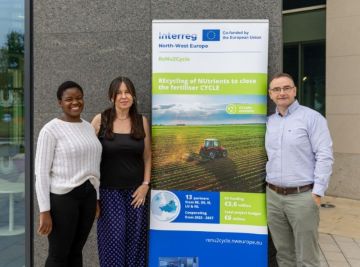
ReNu2Cycle is a four-year Interreg North-West Europe project advancing sustainable, locally recovered alternatives to conventional mineral fertilisers. South East Technological University (SETU) is a core partner, leading Irish research on soil and water health.
The challenge
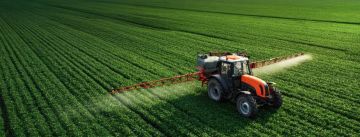
Europe imports over six million tonnes of nitrogen (N), phosphorus (P) and potassium (K) fertilisers every year. These synthetic inputs are costly to produce and transport, rely on fossil fuels and mined materials, and expose farmers to price shocks and geopolitical risk. At the same time, valuable nutrients are lost as organic waste across the region, while nutrient-deficient areas, including Ireland, cannot easily benefit from circular approaches under a predominantly linear economic model.
Project aim
Reduce dependence on imported, fossil-fuel based fertilisers by developing viable recycling-derived fertilisers (RDF) from industrial, municipal and agricultural organic waste streams in North-West Europe.
Research activities
- Developing and validating RDF derived from locally recovered N, P and K,
- On-farm trials across Ireland, the Netherlands, Flanders (Belgium), and Germany (Saarland and Lower Saxony) to test performance under real farm conditions,
- Living labs (led by University of Limerick) to co-create solutions with farmers, advisors, industry and policymakers,
Evidence for adoption on agronomic value, environmental safety and practical use.
Building on proven groundwork
ReNu2Cycle builds on the ReNu2Farm project, which mapped regional supply and demand for recovered nutrients. The current project moves from analysis to application, demonstrating RDF in commercial settings and generating the guidance stakeholders need to scale circular nutrient use.
SETU’s role
At SETU, the Molecular Ecology and Nematode Research Group within enviroCORE (Kilkenny Road Campus) assesses environmental outcomes of RDF use.
- Soil health: using nematodes as sensitive bioindicators across all field trials.
- Water quality: analysing aquatic insects in nearby rivers and streams to detect potential effects of RDF applications.
Team: Dr Thomais Kakouli-Duarte (lead), Ms Lilian Atira, Dr Kieran Germaine, and enviroCORE interns.
Early results
Results to date are encouraging. Trials led by Teagasc and Inagro (Flanders) indicate that RDF performs comparably to conventional mineral fertilisers in maintaining soil health, with no observed adverse signals in SETU’s ecological assessments to date. This points to strong potential for safe, circular nutrient solutions that support farm profitability and environmental targets.
Who will benefit from this research?
- Farmers: more resilient, cost-effective fertiliser options.
- RDF producers and industry: clearer routes to market and quality standards.
- Policymakers and regulators: robust evidence to inform circular economy policy.
Communities and ecosystems: reduced emissions, better soil function and protected water bodies.
Get involved
We are engaging farmers, advisors, processors and technology providers through living labs and demonstration activities.
- Farmers and producers: explore trial findings and on-farm application.
- Stakeholders: collaborate on standards, logistics and market uptake.
Partners
Irish partners include SETU, University of Limerick, Teagasc Oak Park and Munster Technological University, working within a wider North-West Europe consortium.
ReNu2Cycle is co-funded by Interreg North-West Europe.