
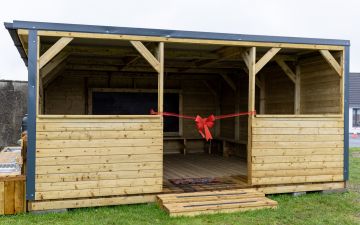
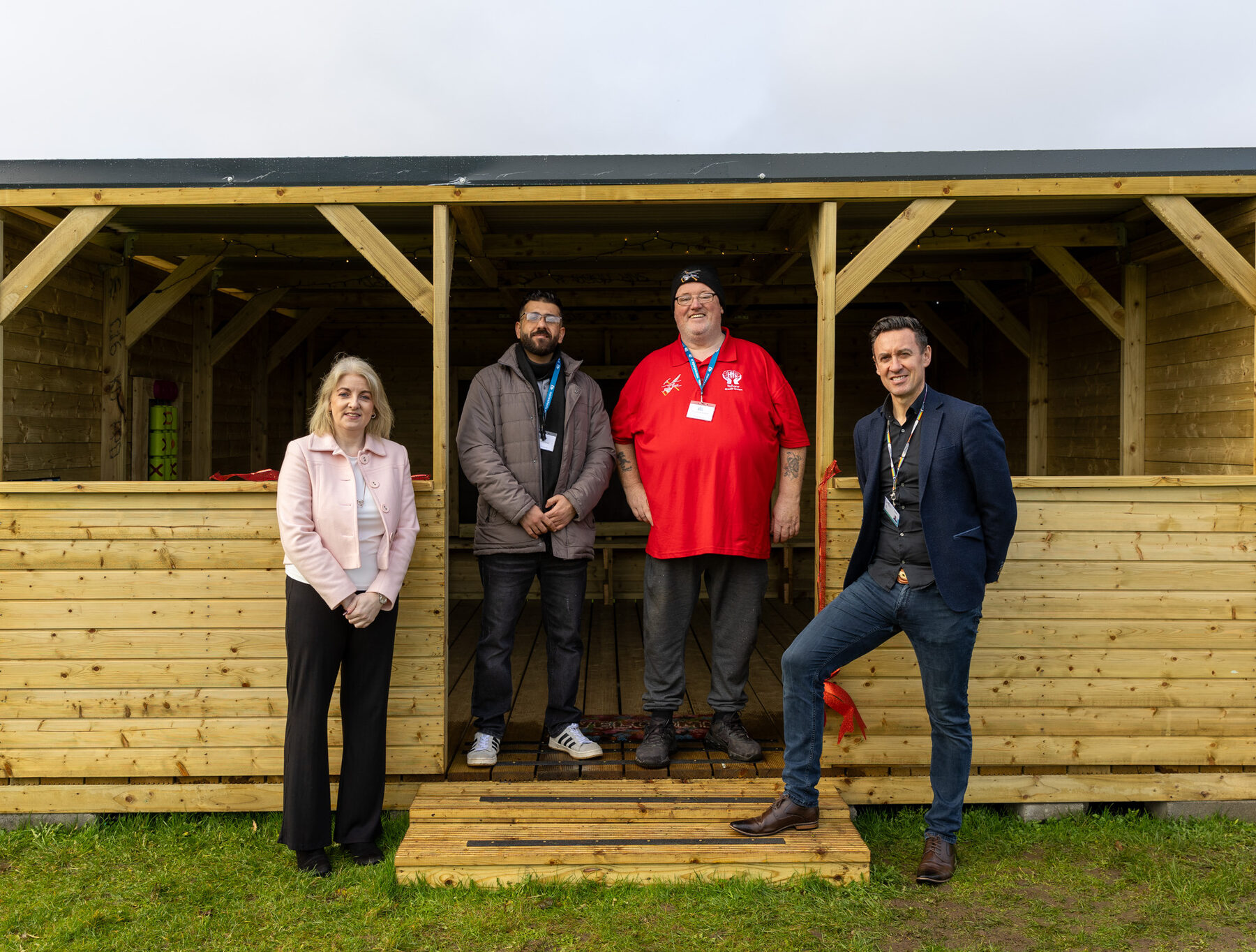
SETU staff and students from the University’s Department of Humanities collaborated with Tullow Men’s Shed to create a new outdoor classroom for Carlow National School.
Community coming together
The collaboration came as part of a research project focused on cultivating inclusive playgrounds, led by SETU Humanities Lecturer, John Balfe. The project involved research from SETU’s Bachelor of Education (Honours) in Early Childhood and Education Practice students who coordinated closely with Carlow National School, Green Road and Tullow Men’s Shed.

An inclusive space for all students
The project was supported by a €5,000 Higher Education Authority SATLE grant to help the group create an inclusive space for the Carlow National School children. When speaking about the project, John Balfe shared, “We wanted to create an outdoor space that feels safe, welcoming, and accessible to children who can be excluded by traditional yard activities.”
Student input
SETU’s early childhood education students utilised the Lundy Model of Participation and the Mosaic Approach when gathering information and feedback from the national school students. Both approaches made use of each student’s voice and input when gathering information on the outdoor space’s design. The data was collected through drawings, photos and talking with each student.

John said, “Our ethics-approved study engaged Junior and Senior Infants to ask a simple question: What do you want your space to look like?”
Continuing he said, “SETU students acted as active researchers, facilitating child-friendly workshops and translating children’s ideas into practical designs in partnership with teachers and parents.”
The project’s impact
The result of the research is a new outdoor classroom and chill-out zone that includes mud kitchens, outdoor games, rainwater harvesting, and planting beds for growing food and flowers.
The calm and creative space was shaped by the children’s ideas and brought to life through intergenerational community effort.
When talking about the impact of the project, John explained, “For Tullow Men’s Shed members, the voluntary work provided purpose, recognition, and connection and for the school, it deepened ties with the wider community.”
Project findings
John shared, “Our findings matter for education and community alike. Children reported pride and confidence when their ideas were taken seriously. SETU students gained real-world, rights-based research experience and a practical understanding of inclusive design. At the same time, the study surfaced a hard truth: even when projects explicitly centre the child’s voice, the education system often prioritises adult decision-making typically under the banners of health and safety, practicality, and budget. Genuine incorporation of children’s views is a balancing act among stakeholders.”
Students from SETU’s early childhood and education course focus on working with children aged 0 - 6. However, they work across a variety settings and stages; learning to capture the views of all children and supporting advocacy, continuity, and inclusion.
Next steps
Speaking about the next steps for the project, John said, “Next we will conduct a follow-up evaluation to understand how children use the space and whether it meets the purposes they identified. When we listen and act, children, communities, and learning all thrive.”