
A South East Technological University (SETU) research team has secured significant international funding for its work in gene therapy for Canavan disease — a rare and fatal neurodegenerative disorder that affects young children.
The €159,589 award, granted by ELA International (the European Leukodystrophy Association), will support a two-year research project led by Dr Lee Coffey at SETU, in collaboration with global leaders in gene therapy at the University of Massachusetts (UMASS) Medical School. It is the first time ELA International has funded a research project based in Ireland since its establishment in 2015.
Dr Coffey, a lecturer and principal investigator at SETU, was inspired to pursue this research when his identical twin brother — also a SETU graduate — learned in 2018 that both of his young sons had been diagnosed with Canavan disease. The diagnosis marked a turning point in Dr Coffey’s scientific career, adding the development of gene therapies that could one day change the trajectory of this devastating condition to his research focus.
Canavan disease is a rare type of leukodystrophy caused by mutations in the ASPA gene, leading to a deficiency in the ASPA enzyme in the brain. This results in severe developmental issues and often leads to death in early childhood. The SETU-UMASS collaboration is developing an enhanced gene therapy that aims to introduce a high-performance version of the ASPA gene, which could offer greater therapeutic benefit for this disease.
The research builds on earlier work supported by postgraduate funding, which led to the completion of a PhD and the filing of a joint patent application by UMASS and SETU. Dr Coffey’s former PhD student, Sarah Foley, played a central role in that project and will now return to the SETU lab as a research fellow on the newly funded study.
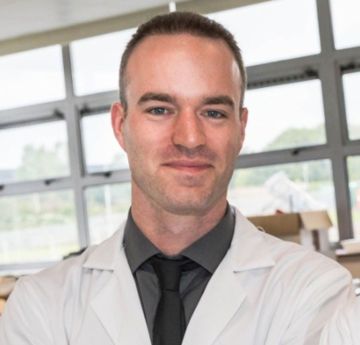
“We are incredibly grateful to ELA International for recognising the potential impact of our work,” said Dr Coffey.
“This award not only supports our ongoing collaboration with Professors Guangping Gao and Dominic Gessler at UMASS Medical School but also places Ireland on the global map for rare disease gene therapy development.”
Dr Sarah Foley, the research fellow included in the ELA International application, added: “It’s an honour to continue this research at SETU. The science is incredibly exciting, but what drives all of us is the possibility of changing outcomes for families living with this devastating disease.”
Prof Marie Claire Van Hout, Vice President for Research, Innovation and Impact at SETU, said:
“This award exemplifies SETU’s commitment to impactful, people-centred research. Dr Coffey’s work is a powerful example of how personal experience can inspire global collaboration and scientific excellence. We are proud to support research that not only advances the frontiers of gene therapy but has the potential to transform lives.”
ELA International is a globally recognised charitable organisation dedicated to accelerating research and treatment for leukodystrophies. Its support of this project highlights the strength of Ireland’s growing reputation in biomedical research and the critical role of SETU in fostering research with global impact and deeply personal motivation.