

March is tree-planting month at the Department of Land Sciences Living Lab at SETU’s West Campus, Carriganore. This year, 400 native trees were planted over two days, bringing the total tree planting at Carriganore to 4000 trees since 2021.
The Living Lab provides the co-ordination needed for this environmental collaboration between SETU, the wider community, and local private enterprise. The Living Lab framework of co-creative partnerships is vital to this initiative’s success.
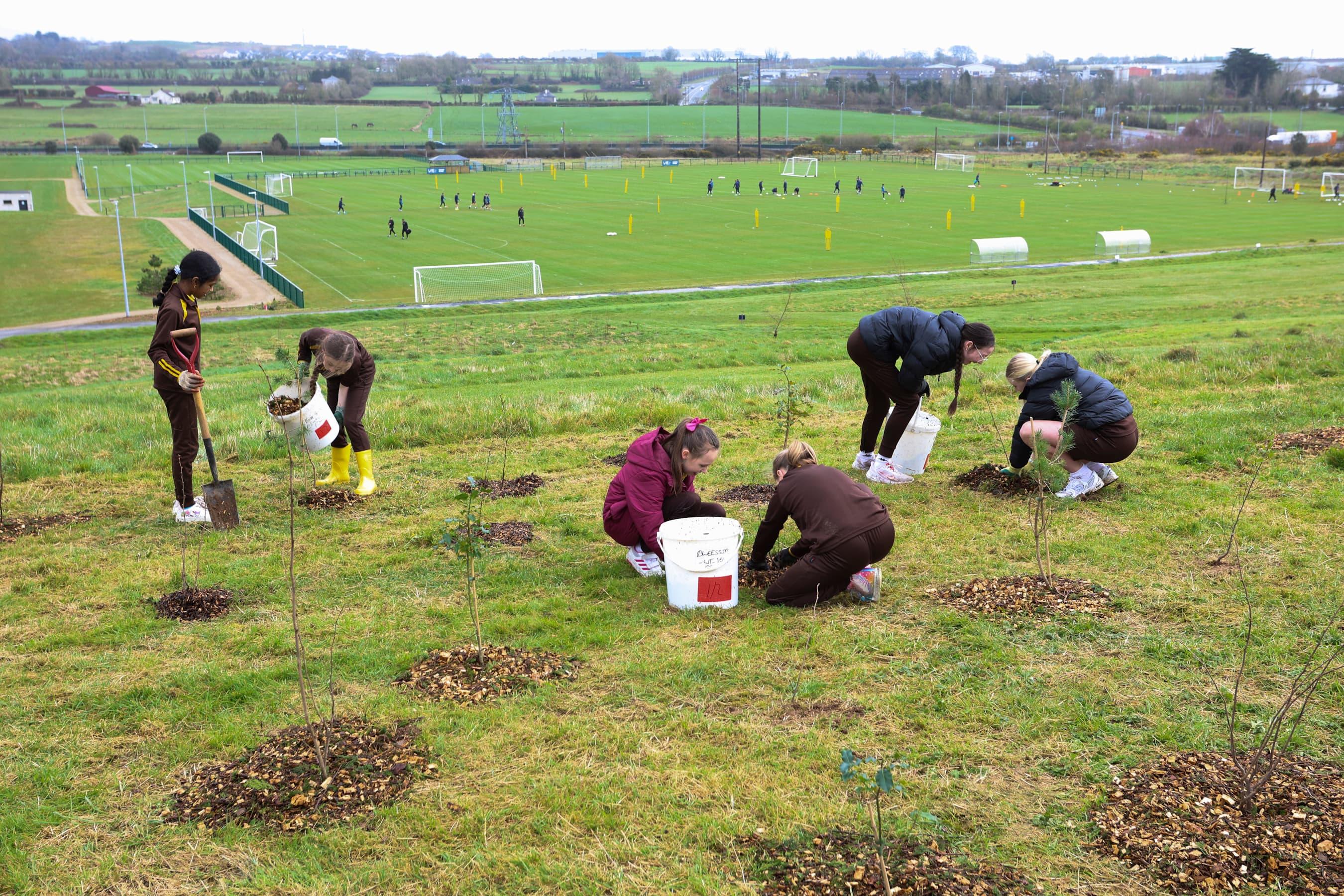
Waterford community environmental group, Waterford Trees for Life, is a project within the Waterford Lions Club, with the aim of increasing tree cover in Waterford city. Waterford Trees for Life works with schools on establishing trees on school grounds. As some city schools do not have the space for trees on-site, the opportunity to bring students to Carriganore is particularly welcome. Local industries, ABP Food Group and West Pharmaceutical, sponsored the trees and the transport of students to Carriganore. The SETU Department of Land Sciences Living Lab provided the tree species selection, practical know-how and equipment, and well-deserved refreshments afterwards in collaboration with SETU Arena.
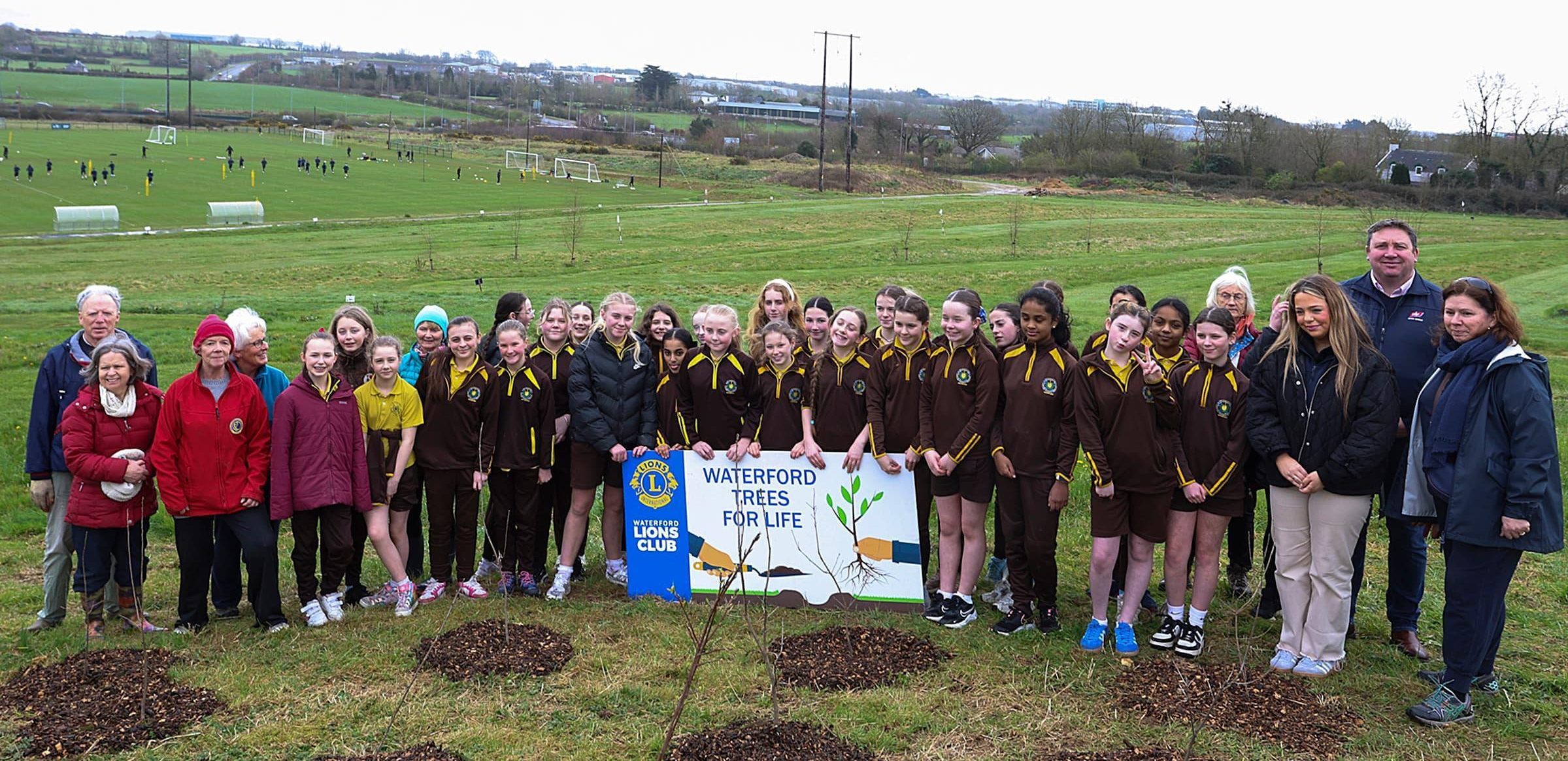
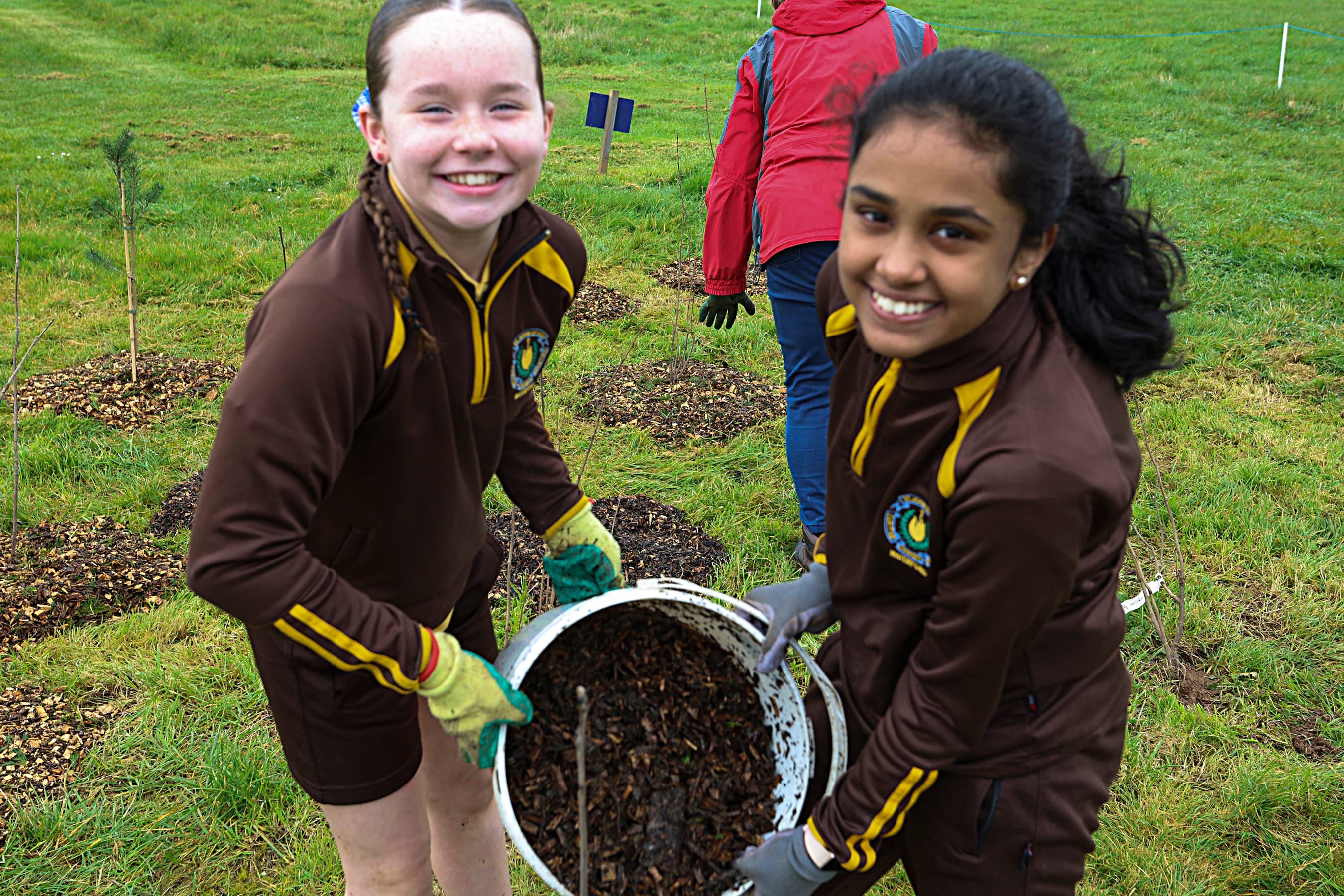
The university welcomed 55 sixth class students from Mount Sion Primary School, along with Waterford Trees for Life volunteers, who joined the Department of Land Sciences staff to plant 250 trees. This was followed by 25 sixth class students from St. John of Gods Primary School who planted another 150 trees to complete the establishment of the small native woodland.
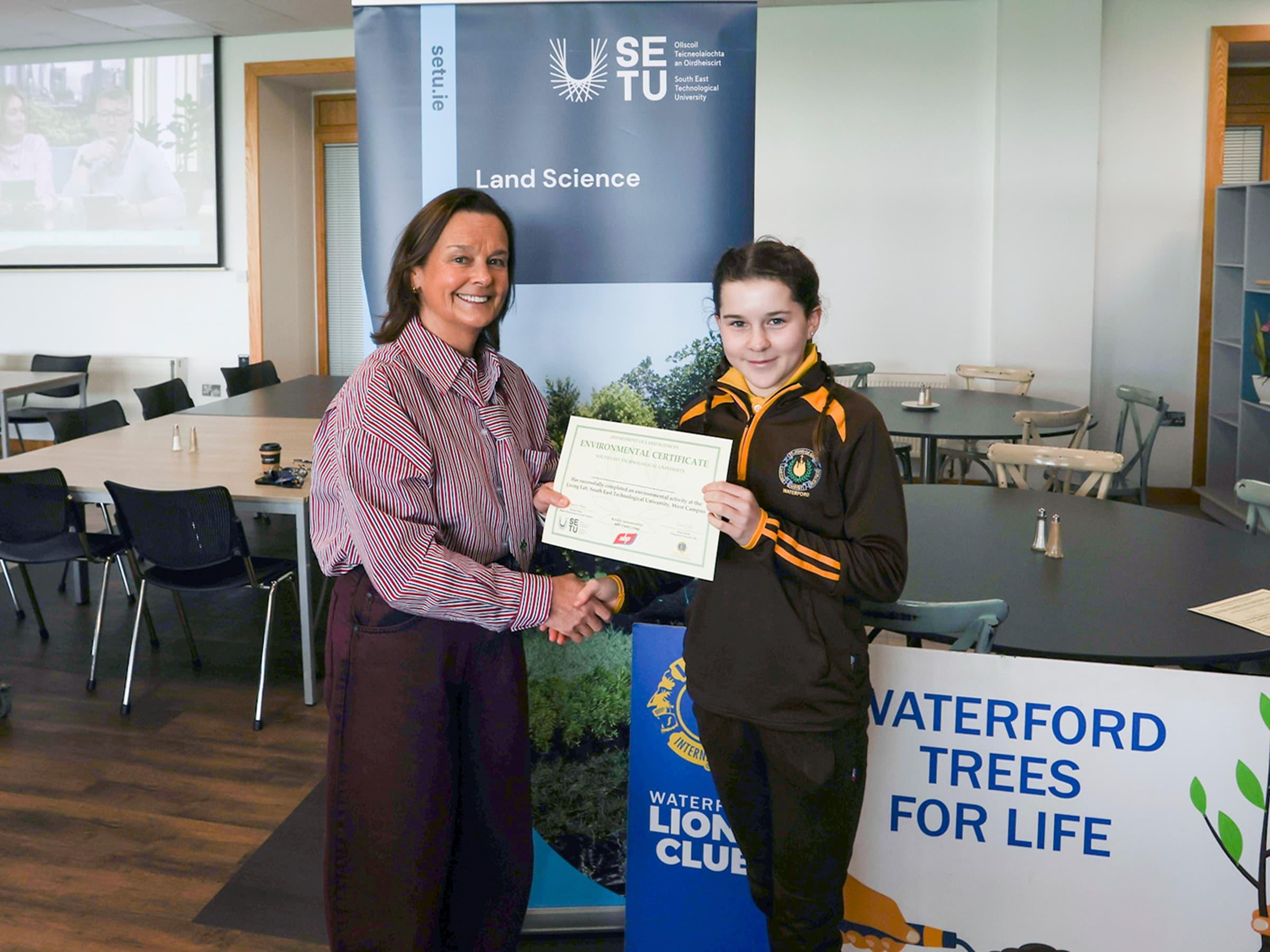
The species mix planted was appropriate to the dry brown podzolic soil found on site, and included oak, birch, hazel and holly. Eleanor Kent, Head of Department of Land Sciences, rounded off both mornings with the presentation of Land Sciences Environmental Certificates to all participating students over lunch at the SETU Arena Restaurant.
There are obvious environmental benefits to the thoughtful matching of native trees to site, such as, increasing biodiversity, creating diverse habitat, improving soil stabilisation, and reducing water run-off.
Increasing tree cover has practical landscaping and shelter benefits on the open West Campus site. This initiative supports the education and research work of the Department of Land Sciences Living Lab, through a current student project investigating Urban Community Forests. Maybe most importantly, there is the positive social impact on the local community, young and not-so-young, as they collaborate on a small positive action that will grow over time.