

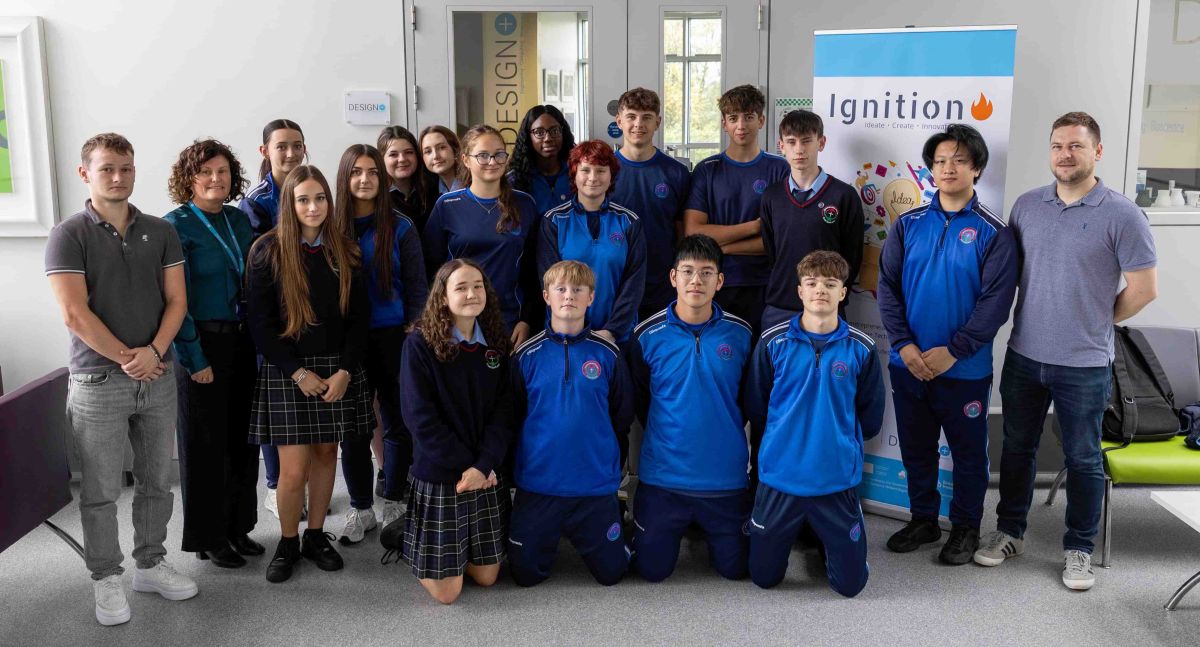
SETU’s Design+ welcomed 40 transition year students from Tyndall College Carlow and Presentation College Carlow for the Ignition ‘26 Innovation Programme, encouraging creativity, collaboration and hands-on problem-solving.
The six-day programme was led by Richard Whyte, Business Development Manager at Design+, and Anne Cope, Design Strategist at Design+, with support from third-year Product Design intern Elliot Darcy, who assisted students throughout the interactive workshops and practical design challenges.
The programme focused on encouraging young people to think differently, explore innovative ideas and develop creative problem-solving skills.
Breaking barriers for young people
Ignition ’26 aims to introduce young people to innovation and Design Thinking, helping them develop the confidence and skills to explore new ideas and opportunities. Speaking about the initiative, Richard Whyte said, “This programme ensures that the young people of today have the tools, resources, and opportunities needed to develop their future goals, whether social or entrepreneurial.”
Inspiring creativity and innovation
The national Entrepreneurship Summer Camp Initiative is supported and funded by the Higher Education Authority (HEA). Ignition 26 was designed, developed, and delivered (from Sept-Oct) by Anne Cope, Design Strategist at Design+.
Ignition ’26 was all about encouraging young people to think differently! It was fantastic to work with 40 enthusiastic TY students and see their creativity come to life through hands-on challenges. We introduced students to Design Thinking and innovation, encouraging them to ask questions, understand problems, explore different ideas and test their thinking. What made the programme so enjoyable was watching the students collaborate, challenge themselves and discover that there isn't always one right answer. Most importantly, we wanted them to understand that innovation starts with curiosity, creativity and the confidence to ask — 'What if?'
Anne Cope Design Strategist at Design+
Encouraging creativity through hands-on learning
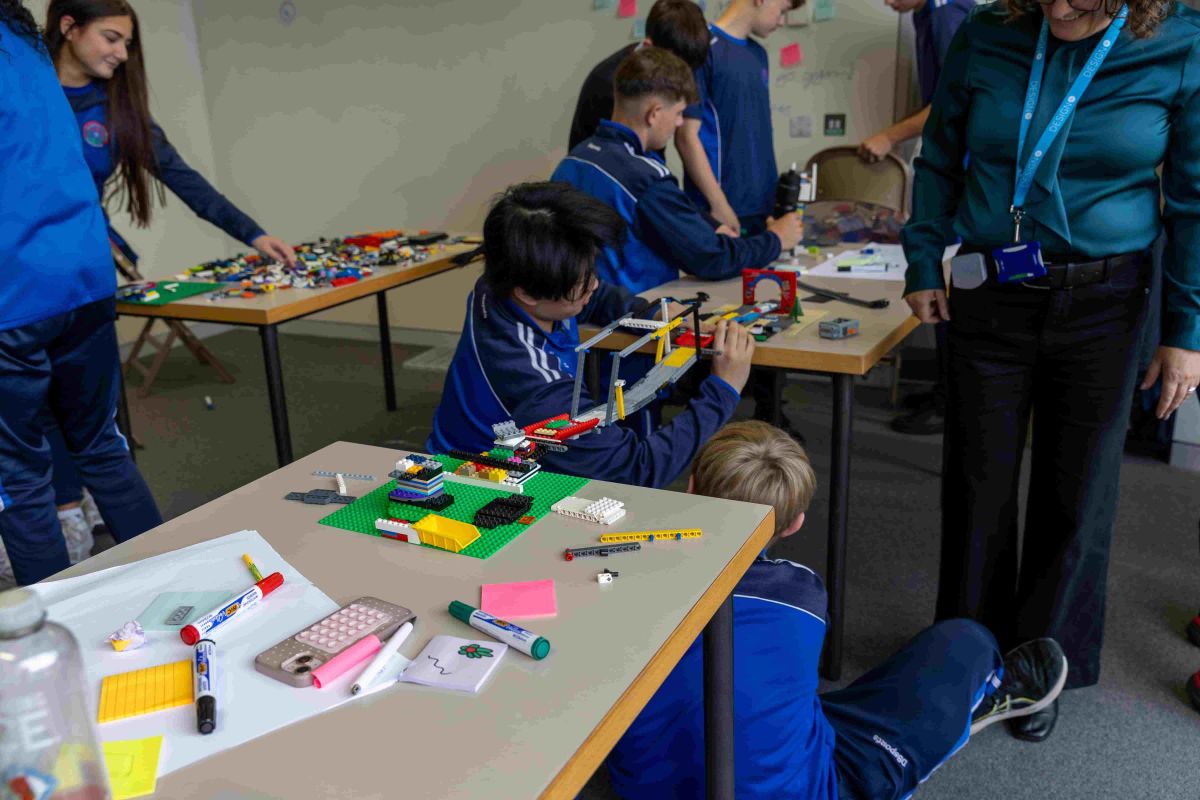
Throughout the programme, students participated in a series of fun, interactive challenges designed to encourage teamwork, creative thinking and problem-solving.
Working in groups, students explored different approaches to everyday challenges, developed ideas, built LEGO prototypes, tested their solutions and made improvements based on what they learned.
The practical activities encouraged students to experiment, learn from mistakes, build on each other's ideas and develop the confidence to try something new.
Developing future innovators
Over the six days, students were introduced to the fundamentals of innovation and Design Thinking, exploring what they mean, why they matter and how they can be used to solve real-world problems. Students learned the importance of understanding the user, identifying the problem and exploring different possibilities before developing solutions. Through the five stages of Design Thinking, they discovered how ideas can be generated, developed, tested and improved, reinforcing the importance of curiosity, collaboration and learning by doing.
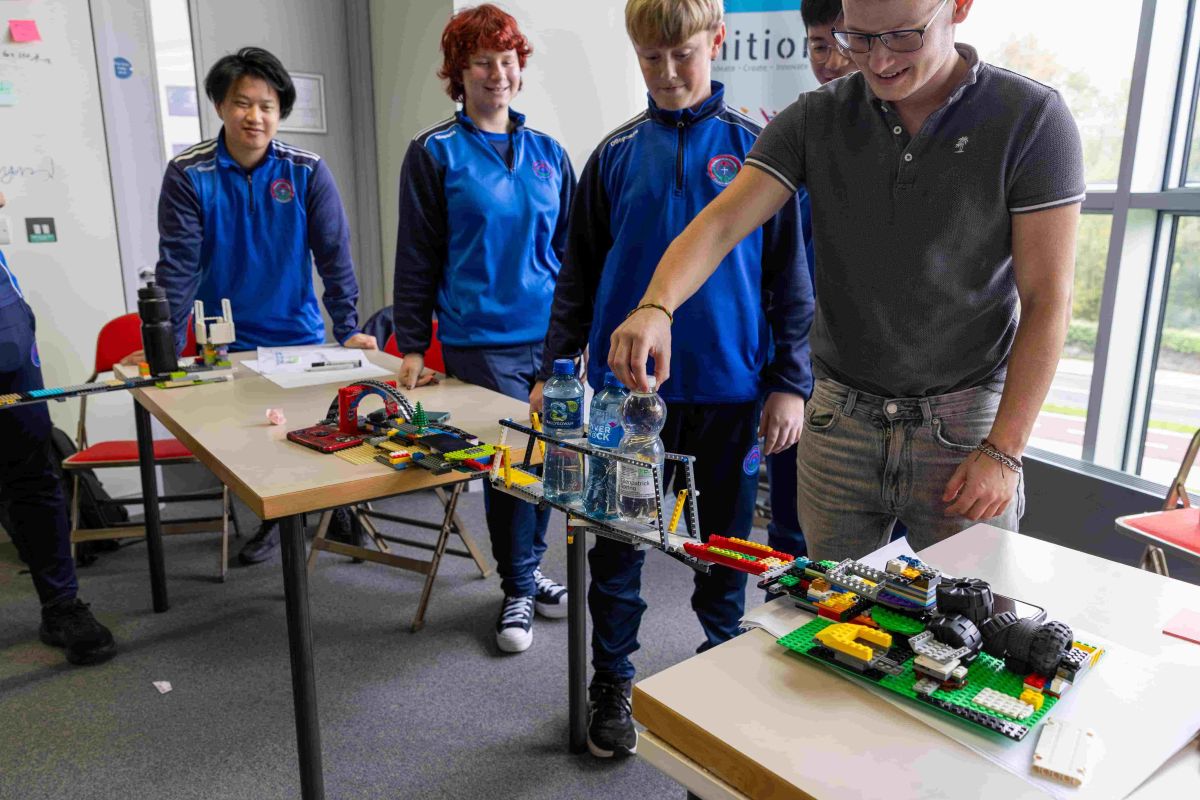
Ignition ’26 provided students with an opportunity to develop valuable creative thinking and problem-solving skills that can support them in their future education, careers and everyday lives.
The programme demonstrated that innovation does not always begin with a big invention, sometimes it simply starts with noticing a problem and asking, "Could there be a better way?"
For more information, contact [email protected]