


South East Technological University (SETU) has contributed to a new national educational resource designed to help students and aspiring entrepreneurs develop innovative business ideas that respond to global sustainability challenges.
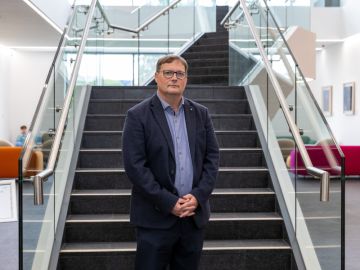
Brian Ogilvie, Head of Entrepreneurship, Research Services and Regional Impact at SETU, is among a group of entrepreneurship education specialists from higher education institutions across Ireland who have collaborated on A Toolkit for SDGs-Driven Entrepreneurship, developed through a project funded by the Higher Education Authority (HEA).
The HEA-funded toolkit aims to strengthen the integration of the United Nations Sustainable Development Goals (SDGs) into entrepreneurship education, encouraging students to consider how their business ideas can contribute to a more sustainable future. The SDGs address some of the world's most pressing challenges, including climate change, inequality, responsible consumption and economic development.
Bringing sustainability into business development
As part of the initiative, Brian Ogilvie developed the SDGs-Driven Entrepreneurship Canvas, one of six practical resources included in the toolkit.
The canvas is designed to help students and aspiring entrepreneurs explore how sustainability can be incorporated into their business ideas from the outset, whether by developing solutions to specific environmental or societal challenges or by introducing sustainable practices into more traditional business models.
The resource reflects the growing importance of entrepreneurship education in equipping future business leaders with the knowledge and skills to balance commercial opportunities with wider social and environmental responsibilities.
The Sustainable Development Goals provide a useful framework for encouraging students to think differently about the opportunities they identify and the solutions they develop."
Brian Ogilvie, SETU
"When we talk about entrepreneurship, we often focus on identifying opportunities, developing innovative ideas and building successful businesses. But it's equally important to consider the wider impact those businesses can have," said Brian Ogilvie, Head of Entrepreneurship, Research Services and Regional Impact at SETU.
"The Sustainable Development Goals provide a useful framework for encouraging students to think differently about the opportunities they identify and the solutions they develop."
Through the Entrepreneurship Canvas, Brian hopes to encourage students to make sustainability a practical consideration from the earliest stages of developing a business idea, rather than treating it as something to address later.
A collaborative approach to entrepreneurship education
Developed over two years, the toolkit brings together the expertise of educators and entrepreneurship specialists from institutions including SETU, University College Cork, Munster Technological University, Trinity College Dublin, Dublin City University and Dundalk Institute of Technology.
Edited by Professor Joseph Bogue and Dr Lana Repar of University College Cork, the toolkit features six complementary resources covering creative approaches to future products and services, sustainability-focused business modelling, stakeholder analysis, communicating impact and organising SDG-focused hackathons.
Designed for use in undergraduate, postgraduate and executive education, the toolkit can also support entrepreneurship activities such as summer schools, innovation challenges and business bootcamps.
By providing practical exercises and adaptable teaching resources, the initiative seeks to make sustainability a more accessible and integral part of entrepreneurship education across Irish higher education.
Supporting entrepreneurship with impact
SETU's involvement in the initiative reflects the University's commitment to supporting entrepreneurship, innovation and sustainable regional development.
Through its engagement with students, researchers, businesses and enterprise partners, SETU works to encourage entrepreneurial thinking and support the development of innovative ideas that can deliver meaningful economic and societal benefits.
The new toolkit provides a further opportunity to embed these principles in entrepreneurship education, helping future entrepreneurs recognise that commercial success and positive societal impact can go hand in hand.
The toolkit is not yet available online, but hardcopies are available through UCC, or by contacting [email protected]