


To mark International Women’s Day, Dr Méabh Savage reflects on research conducted during her time as the inaugural Honorary Vicky Phelan Chair in Equality in Education for women and girls.
Working with women seeking international protection, the project highlights the barriers they face in accessing education and the role universities can play in creating more inclusive learning environments.
Learning from women seeking international protection: a reflection for International Women’s Day
International Women’s Day (IWD), marked annually on 8 March, celebrates the social, political, cultural, and economic achievements of women. It also provides an opportunity to reflect on progress made in advancing gender equality, while recognising that significant challenges remain.
Women’s experiences are diverse and shaped by intersecting factors such as race, class, and disability. While progress has been made for many women, others continue to face significant barriers. International Women’s Day therefore also serves to highlight these inequalities and to encourage action towards greater equity for all women.
This article reflects on learning from research conducted with women seeking international protection during her time as the inaugural Honorary Vicky Phelan Chair in Equality in Education for women and girls. Based on this, Méabh also produced a video highlighting some of the barriers women identified in accessing and participating in education. Together, the article and video aim to encourage reflection on the role universities can play in promoting more inclusive learning environments.
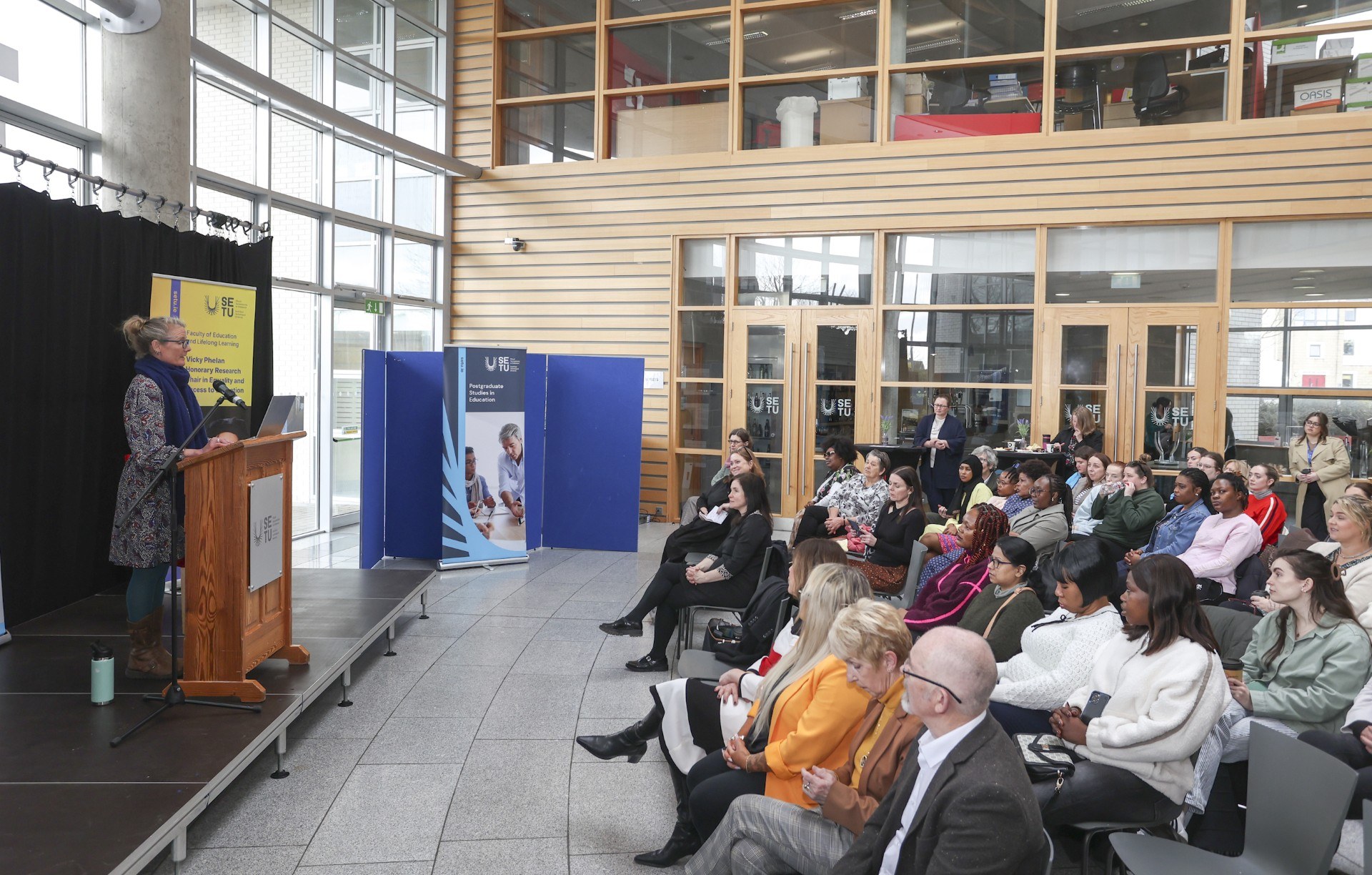
Research with women seeking international protection
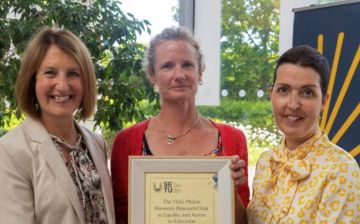
As part of her role as the inaugural Honorary Vicky Phelan Chair, Dr Méabh Savage carried out a participatory action research project with women and mothers seeking international protection. The research took place over three years and involved building relationships with the women and their communities.
This included engaging with their social networks, attending community events, and spending time in local spaces where the women gather. At South East Technological University (SETU), she also joined the University Sanctuary Working Group, and more recently the University of Sanctuary Ireland Working Group.
A key aim of the project was to explore women’s lived experiences of equality in education and the value they place on education in their lives.
Through a series of creative workshops, participants used photography to represent their experiences of education and the realities shaping their lives. These workshops enabled the women to reflect on the barriers they encounter while also sharing the hopes and aspirations they have for themselves and their families.
The images and reflections created during the workshops formed what she describes as the women’s “visual voices”. These photographs offer a powerful way for participants to share their perspectives and to communicate their lived experiences.
An exhibition of the women’s visual voices was held during International Women’s Day last year to launch the research. The event brought together educational providers, practitioners working with new communities, and the women and their peers.
This year, a short video has been created to continue sharing the women’s stories and to highlight the importance of listening to these perspectives when designing inclusive education systems.
The role of universities
Inclusive practices and approaches to knowledge are central to achieving gender equality in education.
A UNESCO report on gender equality in education highlights the important role universities play in supporting access, participation, and success for women and girls. Universities therefore have an opportunity to promote gender equality through their policies, teaching practices, and research.
This includes supporting equitable access to education, embedding gender equality within curricula, and ensuring that research reflects the experiences of diverse communities.
At the same time, research can unintentionally reproduce inequalities if the voices of marginalised groups are not included. Participatory approaches to research help address this by creating space for those voices to shape how knowledge is produced.
The women’s visual voices offer an important reminder of the role universities can play in promoting equality in education. By listening to and learning from these experiences, educational institutions can help create more inclusive environments that support access, participation, and positive outcomes for all women.