


Research commissioned by the Psychological Society of Ireland (PSI) examines what statutory regulation under CORU could mean for psychologists, career pathways and the wider discipline
New research commissioned by the Psychological Society of Ireland (PSI) and carried out by SETU researcher Dr Dean McDonnell, has highlighted key opportunities and challenges as psychology moves towards statutory regulation in Ireland.
The research found broad support among psychologists for regulation as a means of protecting the public, maintaining professional standards and strengthening accountability.
However, participants also raised concerns about what the changes could mean for the wider profession, including who will be recognised as a psychologist, how different routes into the profession will be treated, and where academic and research psychologists will fit within the new system.
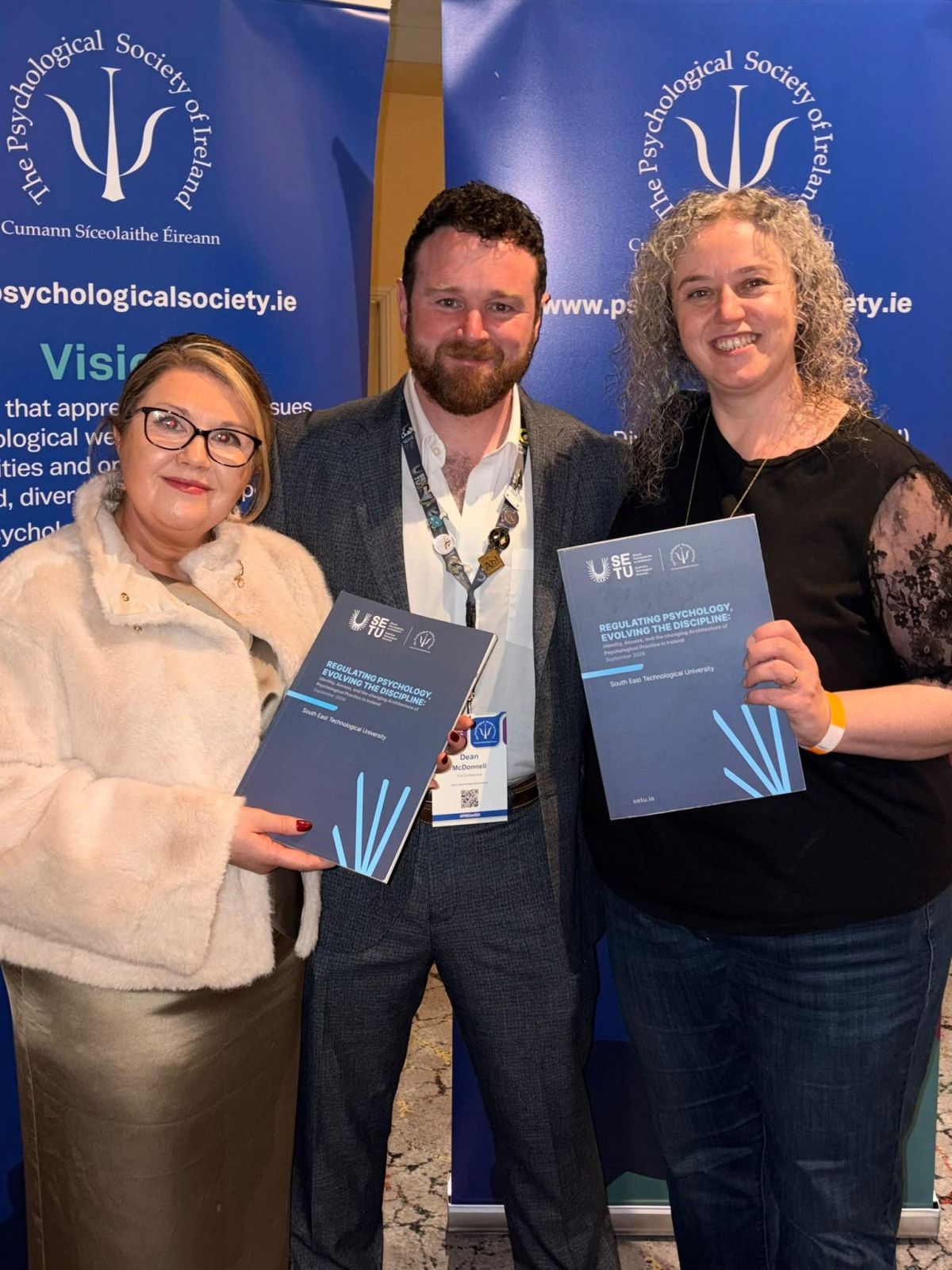
The report, Regulating Psychology, Evolving the Discipline: Identity, Access, and the Changing Architecture of Psychological Practice in Ireland, was led by Dr Dean McDonnell, Lecturer in Psychology at SETU, and involved psychologists from a range of specialisms, career stages and professional settings.
Regulation should strengthen standards without narrowing psychology
One of the clearest messages from the research is that regulation is not simply about registration or professional titles. It also raises questions about how psychology is defined and how the breadth of the discipline will be recognised.
“Statutory regulation represents an important step in the continued development of psychology in Ireland. Our findings show that psychologists recognise the value of public protection, professional accountability, and maintaining high standards.
But psychology extends well beyond clinical and applied practice. It encompasses research, education and a wide range of specialisms. Regulation should standardise competence, not narrow the discipline’s identity. We need to ensure that strengthening professional standards does not unintentionally create barriers for those working across the wider field of psychology.”
Key recommendations for the transition
The report makes six overarching recommendations to support an inclusive and transparent transition to statutory regulation.
Among them, researchers call for:
- a competency-based approach to recognising qualifications.
- greater clarity for academic and research psychologists under the new regulatory system.
- clearer approaches to professional titles and categorisation.
- continued communication and engagement with psychologists as regulation develops.
The research also points to an important ongoing role for the PSI once statutory regulation is introduced.
While CORU will assume responsibility for statutory registration and regulation, the PSI will continue its role as a professional and learned society, advocating for the profession, supporting education and professional development, and representing the diversity of psychology in Ireland.
“Statutory regulation is one of the most significant developments psychology has faced in Ireland in decades. What comes through clearly in this research is that psychologists are not simply asking whether regulation should happen, but how it happens and who it includes.
As CORU assumes responsibility for statutory registration and regulation, the PSI’s role does not diminish; it sharpens. We remain committed to advocating for the full breadth and diversity of psychology and supporting our members through this transition with clarity, honesty and open dialogue.”
Informing the future of psychology in Ireland
The research was commissioned by the PSI to help inform discussion around the introduction of statutory regulation and its implications for psychologists and the wider discipline. The research was led by Dr Dean McDonnell, Department of Humanities, within the Faculty of Arts and Humanities at SETU. Dr McDonnell, worked alongside researchers from the PSI: Clementine de Cabissole, Claire Connor, Aiste Sabaliauskaite, Niamh Laste, Kennedy Fiorella, and Dr Sharon Lambert.
Its findings provide an evidence base for continued engagement between psychologists, the PSI, educational institutions and regulatory stakeholders as the regulatory framework develops.