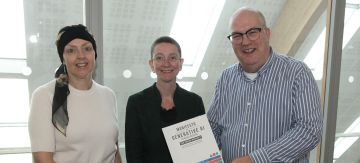
The Manifesto for Generative AI in Higher Education – The Book Project was formally launched by Professor Harriet Dunbar-Morris, Deputy President and Chief Academic Officer at SETU.
An international collaboration involving more than 40 higher education contributors has resulted in a new open-access book exploring how generative AI is reshaping teaching, learning and the future of higher education.
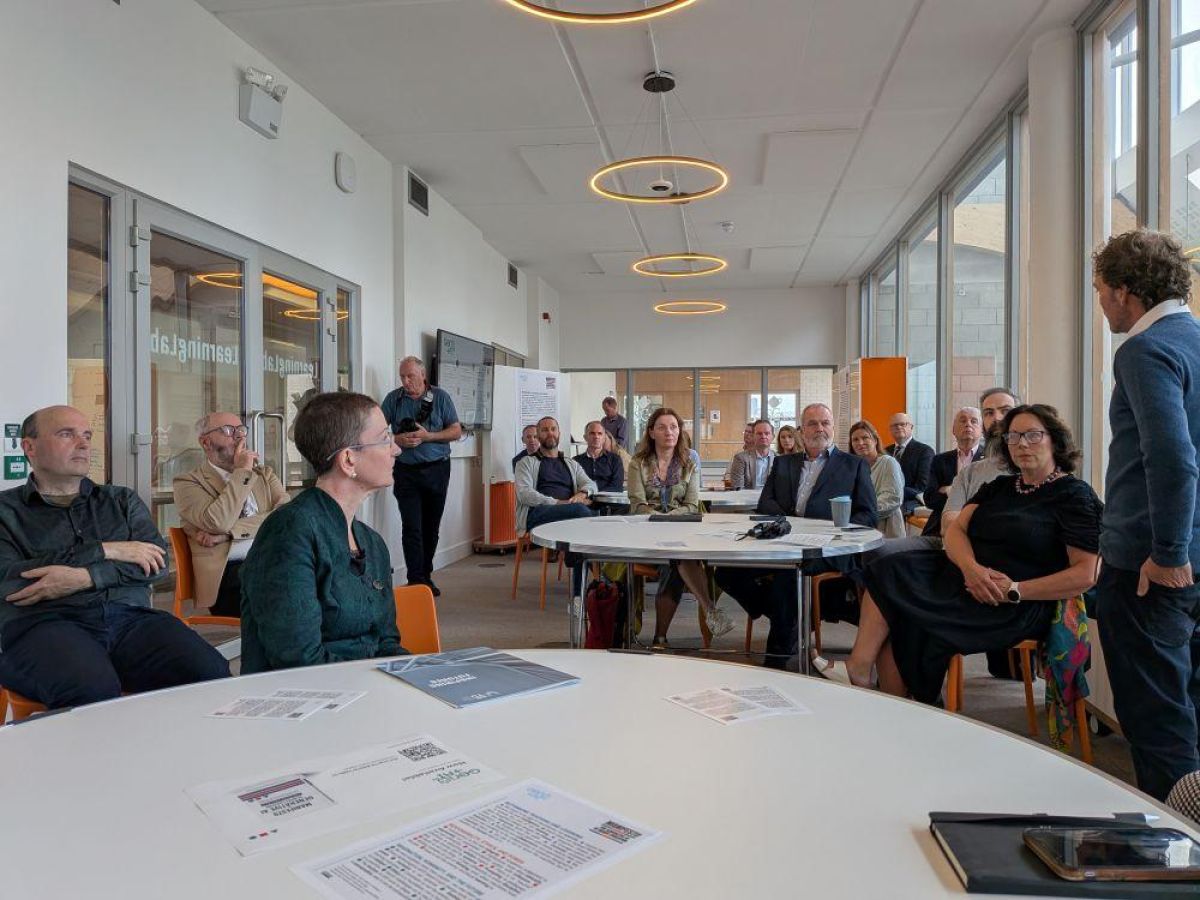
The Manifesto for Generative AI in Higher Education – The Book Project was formally launched by Professor Harriet Dunbar-Morris, Deputy President and Chief Academic Officer at SETU, at a hybrid event on the University’s Cork Road Campus in Waterford on Thursday, 24 September.
Around 25 people attended the launch in person, with more than 50 joining online.
Published by GenAI:N3, the book is edited by Dr Hazel Farrell and Ken McCarthy of SETU and brings together contributors from higher education institutions across Ireland, UK, Spain, USA and Canada.
Building on existing Manifesto
The book builds on the Manifesto for Generative AI in Higher Education, created by Farrell and McCarthy and published in 2025. Its 30 statements are organised around three themes: Rethinking Teaching and Learning; Responsibility, Ethics, and Power; and Imagination, Humanity, and the Future.
The Book Project invited educators and researchers to respond to individual Manifesto statements, resulting in a collection of perspectives exploring the opportunities, tensions and questions emerging as GenAI becomes increasingly embedded in higher education.
“This book has been something of a labour of love for us over the past few months. What began as 30 statements intended to provoke conversation has brought together more than 40 contributors from five countries, each bringing their own experiences and perspectives. After several months compiling and editing the collection, we are delighted to be able to share it openly with the wider higher education community.”
Dr Hazel Farrell and Ken McCarthy, SETU, co-editors of The Manifesto for Generative AI in Higher Education – The Book Project
Speaking at the launch, Professor Dunbar-Morris described the publication as a “genuinely collective endeavour”, recognising the more than 40 authors who contributed and the collaborative spirit running through the project.
She highlighted the Manifesto’s description of itself as “a living reflection on teaching, learning, and technology in an age of abundance”, noting that the work is intended to create space for reflection, discussion, debate and questioning rather than provide a rulebook or final verdict on AI in education.
Labour of love
Reflecting on the journey from the original Manifesto to the completed book, editors Hazel Farrell and Ken McCarthy said:
“This book has been something of a labour of love for us over the past few months. We have been genuinely humbled by the response to the original Manifesto and then to our call for contributions to the Book Project. What began as 30 statements intended to provoke conversation has brought together more than 40 contributors from five countries, each bringing their own experiences and perspectives. After several months compiling and editing the collection, we are delighted to be able to share it openly with the wider higher education community.”
Open access
A key principle of the project is open access. The complete book is freely available online, allowing educators, students, researchers and institutions anywhere in the world to read, share and engage with it. Individual chapters have also been assigned DOIs, allowing contributions to be referenced and cited independently.
Collaborative
The collaborative nature of the project was reflected throughout the launch. Six chapter authors shared short reflections on the statements that inspired their contributions, while Dr Leigh Graves Wolf, Dr Tom Farrelly and Sue Beckingham reflected on the book’s three overarching themes. Participants in Waterford and online also contributed to the conversation through live interactive activities.
Professor Dunbar-Morris concluded by reflecting on the challenge facing higher education: “Not to surrender our agency to technology, but to orchestrate it wisely. Not to replace human thought, but to deepen it. Not to diminish education, but to reimagine it.”
The Manifesto for Generative AI in Higher Education – The Book Project is available, open access, here.