


Following the success of the Pathway Moz project in 2024, researchers from SETU and Universidade Rovuma (UR), Niassa, Mozambique, have launched the second phase of their collaborative research exchange.
This partnership focuses on empowering women and youth through agri-entrepreneurship, food science, and technology, with a strong emphasis on community engagement and capacity building.
Academic exchange
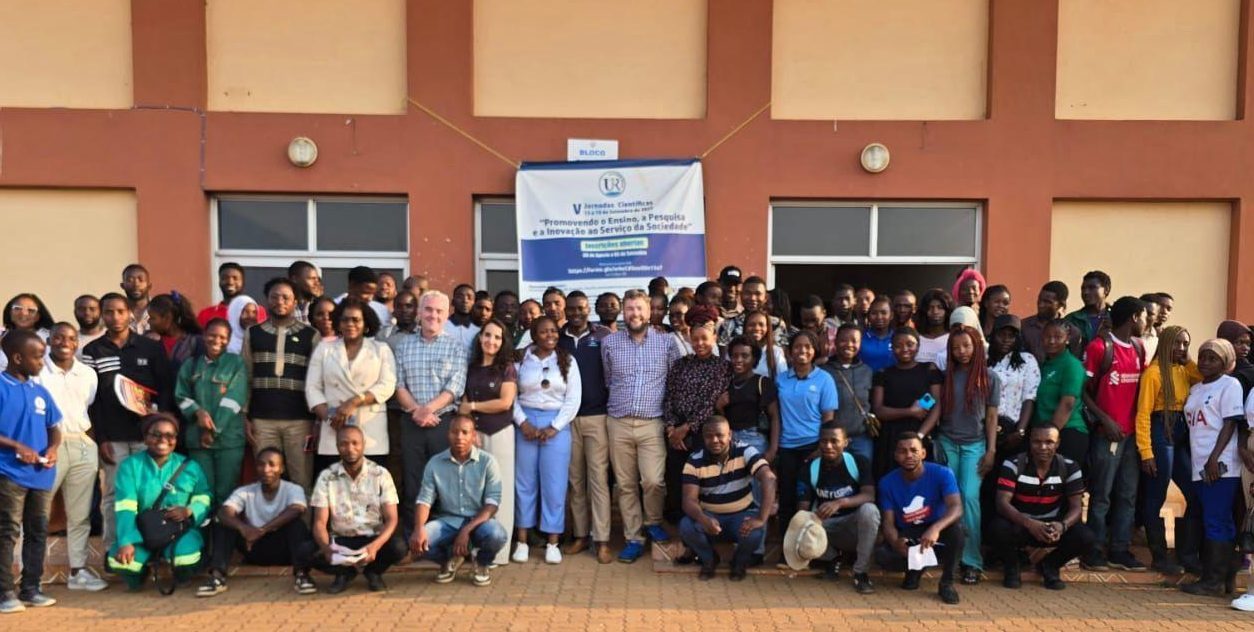
Supported by the Embassy of Ireland Mozambique and Irish Aid, the first part of the exchange took place from September 26 to October 3, 2025. SETU researchers from the Faculty of Science and Computing, Dr Adriana Cunha Neves, Dr Ultan McCarthy, and Dr Stephen Whelan travelled to Niassa Province to deepen academic and community ties. Their visit included high-level meetings with provincial officials and a full-day seminar at Universidade Rovuma, where they led sessions on animal nutrition, artificial intelligence in agriculture, and research methodologies for students and faculty in the Agrarian Science Department.
Community workshops with NGOs and women producers
The team also engaged with local NGOs, including United Purpose, and met with women producers from the Chimbunila communities. It was led by UR researchers, Dr Celina Bahule, Sonia Nido, and their students, the workshops featured hands-on demonstrations of alternative enrichment and preservation of foods to improve nutrition and promote sustainable practices.
“Travelling to Mozambique was essential for us to truly understand the context on the ground. Experiencing Niassa first hand has left us energized, inspired, and full of ideas for the future. We return with a deep sense of hope that this partnership with the Irish Embassy and Universidade Rovuma will spark meaningful, impactful initiatives that can bring lasting benefits to the region."
Dr Adriana Cunha Neves Lecturer at SETU.
Driving agricultural solutions
The additional field visits included the Ngauma Agricultural Centre, where SETU researchers observed potato demonstration plots managed by the International Potato Centre (CIP) and the CIMMYT Research Centre in Lichinga. Here, SETU researchers learned first-hand how work supported by the Irish Embassy is enabling research into advancing the sustainability of crops like potato and sweet potato as well as poultry nutrition. SETU researchers exchanged insights with local farmers and scientists.
“By visiting the research stations and the university, we were able to better understand the challenges faced by the farming communities in trying to realise the great potential of farmers to enhance the sustainability of food production in the Niassa province.”
Dr Stephen Whelan Programme Director in Sustainable Farm Management and Agribusiness, SETU.
Speaking on return from Mozambique, Dr Ultan Mc Carthy commented, “The support of the Embassy of Ireland Mozambique and Irish Aid allowed us to quickly identify shared challenges with respect to food security, and provided us an opportunity to shape plans to tackle these challenges together in areas of society which will have directed and meaningful impact.”
Next steps: Growth of agribusiness and empowerment partnership
Phase two of the exchange will take place in February 2026, when UR researchers, Dr Celina Bahule, and Sonia Nido will travel to Ireland. Hosted by SETU, their visit will include training in grant writing, project management, and entrepreneurship, along with lab-based research on soy protein extraction. They will also present findings from a joint study on eating habits in Mozambique and collaborate with partners in SETU on a proposal to establish a Centre of Excellence in Entrepreneurship and Agribusiness in Niassa.
Speaking on the exchange Sonia Nido said, "The exchange strengthened our bonds and enriched our research and academic collaborations focused on entrepreneurship related to youth and women in Niassa. The academic community was very receptive to the topics discussed, especially due to their relevance and social impact."
For more information, please contact Dr Sheila Long at [email protected].