

Please note that EU-CONEXUS students are eligible to apply for this programme.
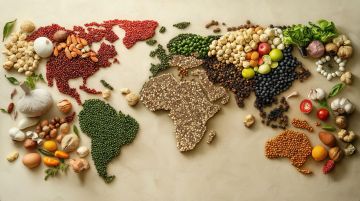
This course aims to develop the learner’s competence in global agri-food systems. It reviews current agri-food systems, how they function and their interconnectedness. It also discussed the inefficiencies as well as their causes with respect to food systems and food security. With respect to food security it reviews the current challenges faced by our global agri-food systems and discusses possible solutions and their need to be broad reaching to have impact. Specific technical areas of discussion will include, but are not limited to, global agri-food systems, agri-food system footprint, global food security, UN SDG’s.
Unique Features:
The module will follow a blended delivery mode consisting of lecture material being released once a week (asynchronous), and 3 days of in person practicals and tutorials. During the practicals the learners will avail of group learning and discussions and peer to peer development. Case study assessments, assignment and instructor-led discussion boards will be held during the semester at spaced intervals.
The aims and objectives of the programme are to enable participants, who already hold a third-level qualification, to upskill and develop their knowledge and competence in global agri-food systems. The Certificate in global agri-food systems will provide students with the skills, experience, and confidence to:
- Critically and creatively evaluate the complexity of agri-food systems and
- Engage in practices that can reform and realign existing agri-food systems
- Identify current and future challenges in a global context and apply systems thinking to coordinate all the actors and activities necessary to produce safe and nutritious food.
Applicants for the Certificate in Global Agri-Food Systems should hold National Framework of Qualifications (NFQ) Level 8 honours degree with a minimum upper second-class honours or equivalent in Agriculture, Food, Science, or Environmental / Land Science related degree programme.
Applicants who do not hold a degree in the cognate areas specified above but who have relevant industry or practical experience in agricultural and biological systems or equivalent, in conjunction with a Level 8 degree in a non-cognate area, may be considered for entry under SETU’s Recognition of Prior Learning (RPL) mechanism on an individual basis. Guidelines on the University’s RPL policy and procedures are available here. In addition, applicants whose primary language is not English must meet the SETU English language requirements.
Graduates of the Certificate in global agri-food systems may continue to complete other Level 9 Certificates (Certificate in sustainable and resilient agri-food supply chains and Certificate in circular bioeconomy in agri-food systems). Graduates may also continue their studies and graduate with a Level 9 Postgraduate Diploma in Science in Sustainable Agri-Food Systems (60 credits) or a Masters of Science in Sustainable Agri-Food Systems (90 credits). This will facilitate students to progress their academic education to Level 10 or opt to remain in a research, development, and innovation environment.

Course question

Have a question about
this course?
Our team is here to help.
If you have any questions about this course, please get in touch and we'll be happy to assist.
Postgraduate Prospectus
Explore our Postgraduate Prospectus to view the full range of postgraduate study options, including course details, entry requirements, and progression routes. Download the prospectus to help you choose the programme that best suits your goals.
View Here