What is Mechanical & Manufacturing Engineering?
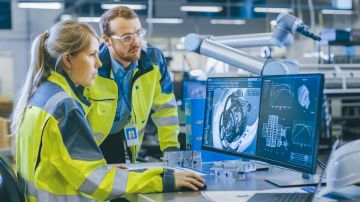
This is a broad area focusing on the design and development of products and processes. Mechanical engineering has a strong product and equipment design element, while manufacturing engineering analyses the processes and systems required to produce goods.
What is the BEng (Hons) in Mechanical & Manufacturing Engineering course?
This is a four year honours degree, which prepares students for employment in a very broad range of engineering situations.
This course has recently been modified to include the following specialised streams:
- Mechanical/Manufacturing
- Additive Manufacturing
- Biomedical Engineering
- Green Technology and Alternative Energy Systems
- Robotics & Automation
- Systems Integration and Industry 4.0.
- These streams may also be reflected in the Placement module in Year 3 and in the two-semester long Final Year Project. This will allow the students to accumulate a possible 60 credits in their chosen stream in the final two years of this programme.
- Please note that not all streams may run in any given year.
Industrial Placement
Industrial placement takes place in semester 6, which can be up to six months duration (March - September). These placements have been very successful at providing for the students a perspective on the broad variety of material that they have covered in the course.
Students have been previously placed in Bausch & Lomb (Waterford), Honeywell (Waterford), Intel (Leixlip), Janssen Pharmaceutical (Cork), Lipton's (Cork), Servier (Wicklow), Schering-Plough (Wicklow), and Stryker (Cork).
Field Trips
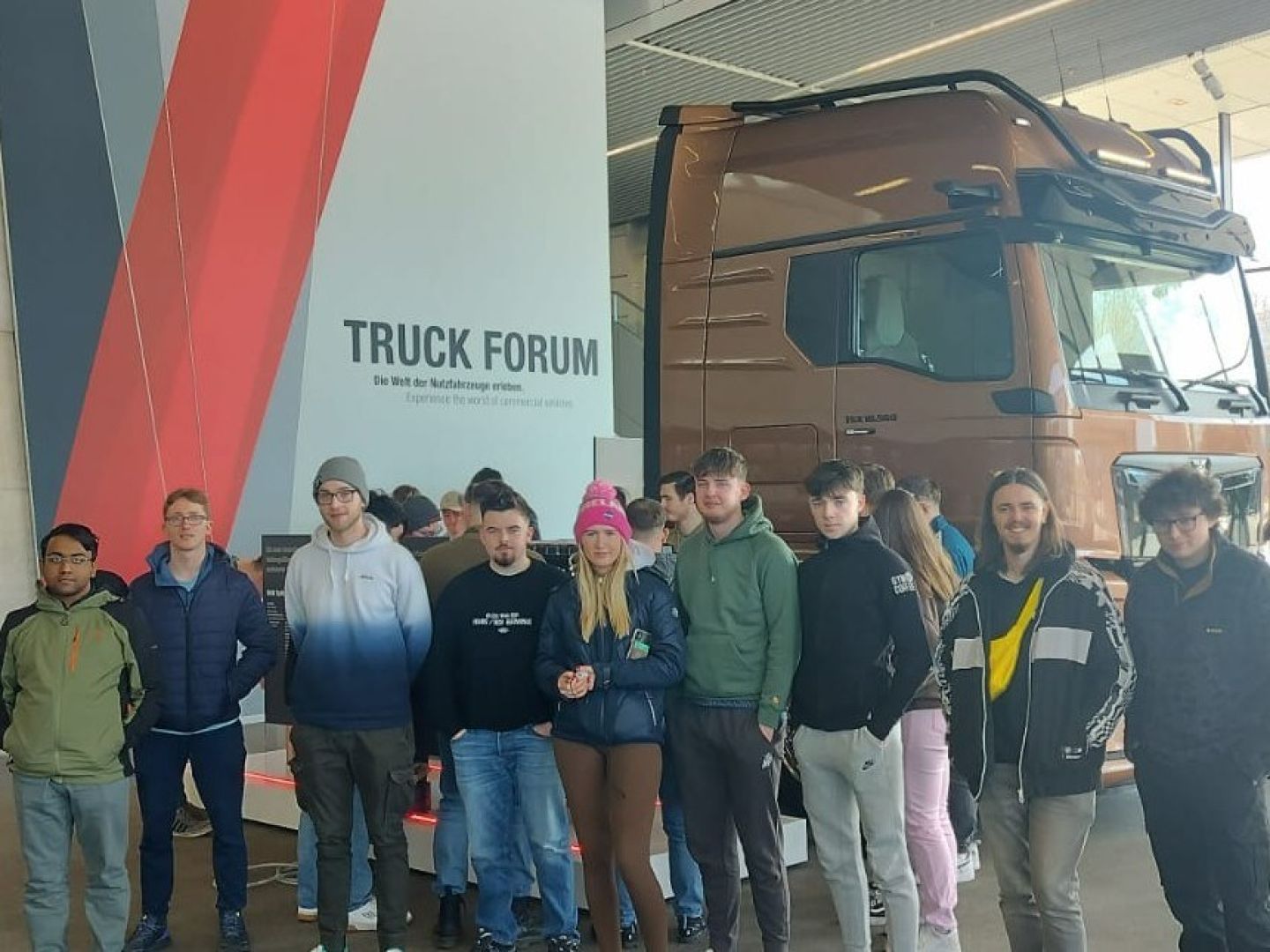
Industrial visits are an integral part of the course, providing the students with examples of authentic applications of course material. Other events, such as visiting lecturers or Engineering Society trips, occur on a regular basis.
Course outline is subject to change.
Year 4
In year four, students choose from one of six streams.
Mechanical / Manufacturing FEA & Design Tools Process Control 8.1 Energy Conversion Supply Chain Management | Additive Manufacturing FEA & Design Tools Additive Manu. 1 Additive Manu. 2 Design for Manufacture and 3D Printing |
Biomedical Engineering Introduction to Convergent Technologies Sustainability & Validation Pharmaceutical Compliance & Law Biomedical Engineering | Green Technology & AES Passive Building Design Strategies Sustainability & Validation Energy Conversion Sustainable Energy Recovery & Utilisation |
Robotics & Automation Introduction to Convergent Technologies Process Control 8.1 Robotics & Vision Advanced Programmable Logic Controllers | Systems Integration & Industry 4.0 Introduction to Convergent Technologies MES / Networks & IoT Industry 4.0 Application of the Internet of Things |
Year 1
| Semester 1 | Semester 2 |
|---|---|
| Engineering Maths 1 | Introductory Engineering Calculus |
| Physics | Electrical Science |
| Materials 1 | Manufacturing Technology 1 |
| Mechanical Systems | Engineering Mechanics |
| Engineering Drawing | Computer Aided Draughting |
| Engineering Professionalism | Manufacturing Systems |
Year 2
| Semester 3 | Semester 4 |
|---|---|
| Electrical Engineering | Computer-Aided Design |
| Engineering Maths 2 | Thermodynamics |
| Engineering Design | Manufacturing Technology 2 |
| Applied Mechanics | Production Systems |
| Introduction to Programming | Intermediate Engineering Calculus |
| Materials 2 | Electronic Engineering |
Year 3
| Semester 5 | Semester 6 |
|---|---|
| Quality Management | Industrial Studies & Placement |
| Automation and Control | |
| Mechanics of Materials | |
| Dynamics & Vibrations | |
| Enterprise Resource Management | |
| Fluid Mechanics |
Year 4
| Semester 7 | Semester 8 |
|---|---|
| Heat and Mass Transfer | Advanced Materials & Process Selection |
| Facility Simulation & Reliability | Applied Fluid Mechanics |
| Operations Strategy | Manufacturing Facilities |
| Project 1 | Project 2 |
| Elective 1 | Elective 3 |
| Elective 2 | Elective 4 |
Leaving Cert: Minimum entry requirements
2 subjects: H5
4 subjects: O6/H7
English or Irish: O6/H7
Mathematics: O3/H7
H5 or better in a Laboratory Science (Physics, Chemistry, Biology, Physics with Chemistry and Agricultural Science) or Technical (Engineering, Technology, Technical Drawing, Design & Communications Graphics) subject compensates for not making the required grade in Mathematics (O3/H7).
Advanced and Equivalent Entry:
Graduates of this course are eligible to proceed to taught and research postgraduate programmes in SETU Waterford and other colleges.
Graduates of the course may find work in the following areas:
- Process Design and Improvement
- Enterprise Resource Management
- Product Design & Development
- Manufacturing Engineering
- Quality Management
- Past graduates are employed in a variety of companies including Bausch & Lomb, Hewlett-Packard, Intel, Mercury Engineering, Radley Engineering and abroad.
Stories





Course question

Have a question about
this course?
Our team is here to help.
If you have any questions about this course, please get in touch and we'll be happy to assist.