
What is the BSc in Food Science?
This is a three year full time course is designed to train you in modern food processing methods, food safety management, analytical testing relevant to the food industry. The agri-food industry is one of Ireland’s key indigenous economic sectors and food science graduates are in high demand to work in all aspects of food production.
What subjects will I study?
At the outset there is a strong emphasis on the sciences such as biology, chemistry and physics to provide you with a good basis for the following years. In years 2 and 3 you will study specialist modules in food chemistry, processing, microbiology, nutrition and quality management.
What are the unique features of BSc in Food Science?
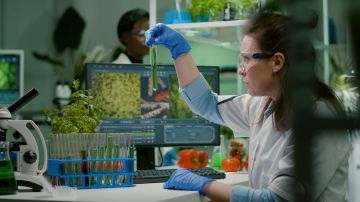
You will learn key practical skills in SETU Waterford laboratories, which are highly valued by employers in the food industry. Our close links with industry ensure that you will be trained in all the current technologies used in the Irish food industry. In year 3 students complete an industrial placement to allow learners to apply and develop their skills in the food industry.
BSc in Food Science industrial placement
An twelve week industrial placement (minimum 15 weeks) in the food industry occurs is undertaken. This is supported by our food industry partners and is seen as critical to the overall learning experience and development of the students. The industrial placement will be organised by SETU staff and monitored by both the employer and SETU staff, with the student keeping a reflective work log. Work placement can be organised for Ireland or abroad.
The Industrial Placement will allow learners to apply and develop their skills in the food industry. The placement is designed to meet the needs of industry whilst providing the student with a broader skills-base. It is envisaged that the practical element of employment will complement the course content and help develop skills that are essential in today’s work environment.
Innovative teaching
This programme recently won the ‘Most impactful use of Pearson courseware or services’ award in recognition of the blended learning approach in the delivery of the programmes. The common science programmes use an integrated on-line tutorial system that is delivered to small groups in an IT room supported by one or two members of staff. These weekly formative tutorials allow students to apply or practice the material covered in class that week and student receives individual attention and help at tutorials.
Year 1
| Semester 1 | Semester 2 |
|---|---|
| Introductory Biology | Cell Biology and Biochemistry |
| Introductory Chemistry | Physical and Organic Chemistry |
| Introductory Physics | Physics for Scientists |
| Introductory Mathematics | Mathematics for Scientists |
| Introduction to ICT for Scientists | Introduction to Food Science |
| Good Lab Practice & Core Skills | Primary Food Production |
Year 2
| Semester 3 | Semester 4 |
|---|---|
| Food Analysis | Food Microbiology |
| Microbiology 1 | Food Process Technology |
| Introduction to Nutrition and Human Physiology | Food Marketing and Regulation |
| Laboratory Data Analysis & Presentation | Environmental Monitoring |
| Bioanalytical Methods for the Food Industry | Chromatographic and Electrophoretic Techniques |
| Statistics for Scientists | The Professional Individual |
Year 3
| Semester 5 | Semester 6 |
|---|---|
| Placement | Food Formulation |
| Food Safety Management Systems | |
| Sensory Analysis | |
| Nutrition and Public Health | |
| Total Quality Management | |
| Introduction to Research Methods |
Leaving Cert: Minimum entry requirements for BSc in Food Science
5 subjects: O6/H7
English or Irish: O6/H7
Mathematics: O6/H7
Advanced and Equivalent Entry for BSc in Food Science
Recommendations for applicants of the BSc in Food Science
Applicants should note that a science subject (Biology, Chemistry, Physics with Chemistry or Agricultural Science) at Leaving Certificate is recommended for this programme.
Students who complete this level 7 degree programme can choose either to graduate after three years or progress on to a related level 8 degree.
Completion of a level 8 programme will also enable students to undertake taught Masters programmes or Masters degrees by research at SETU or other third-level colleges.
Information on how to progress is on our advanced entry page.
What career opportunities have I?
There are many career opportunities, for instance you could become a
• Quality Control supervisor
• Production manager
• Food product development scientist
• Sales and marketing representative
What follow on study options have I?
After completion of the programme you will be eligible to transfer into year 4 of the BSc (H) in Food Science and Innovation programme.
Stories







Course Leader

Course question

Have a question about
this course?
Our team is here to help.
If you have any questions about this course, please get in touch and we'll be happy to assist.